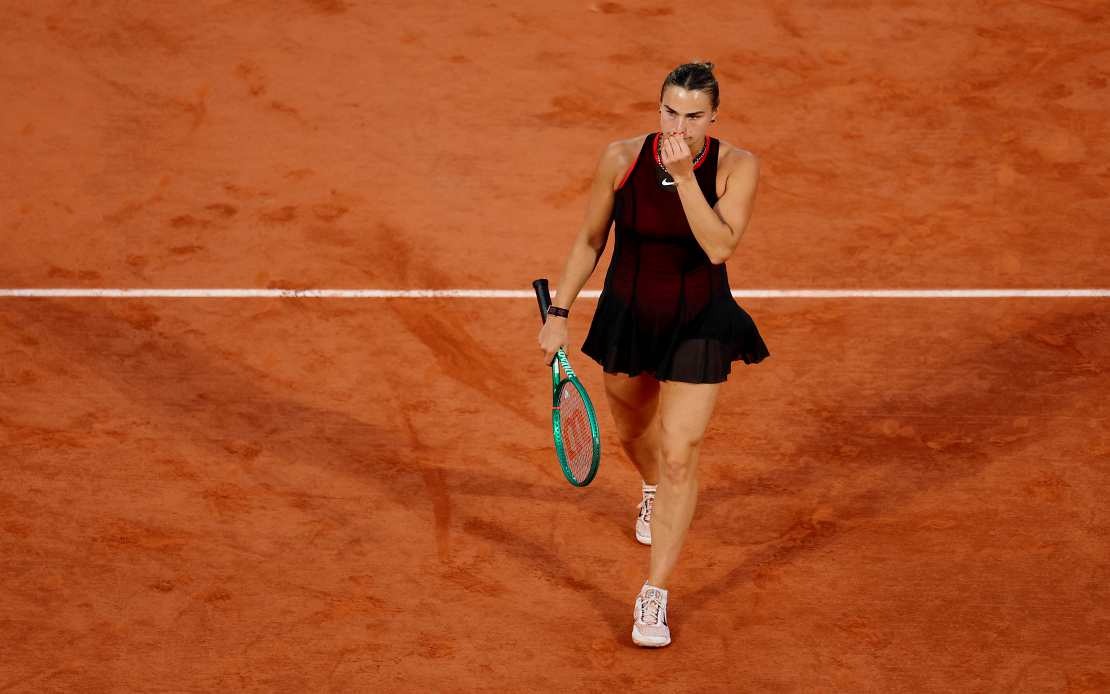
Japan's former world No. 1 Naomi Osaka delivered a stunning upset victory over top-seeded Aryna Sabalenka of Belarus, winning 6-2, 7-6(2) in a fourth-round clash at Wimbledon on Sunday. The result propelled the 14th-seeded Japanese champion into the quarterfinals of the prestigious grass-court tournament for the first time in her storied career, marking a significant breakthrough at one of tennis's most coveted venues.
Osaka's advancement represents a watershed moment for Japanese women's tennis on the Wimbledon stage. The last time a Japanese woman competed in the quarterfinals at the All England Club was Ai Sugiyama, who achieved the feat in 2004 nearly two decades ago. In reaching this milestone, Osaka has not only reclaimed her competitive edge but also revived her profile at a Grand Slam tournament where grass-court mastery remains essential for success against the sport's elite.
The victory held particular emotional resonance for Osaka, whose relationship with the court and competitive tennis has undergone considerable evolution in recent years. During her on-court interview, she reflected on the profound satisfaction of her performance, noting that the joy she experienced in competition had been absent for an extended period. The four-time Grand Slam champion's remarks underscored a personal renewal, suggesting that her Wimbledon run represents more than statistical achievement but rather a reconnection with the sport's fundamental pleasures.
This triumph also marked a decisive turning point in Osaka's head-to-head record against Sabalenka, the current world No. 1 and one of tennis's most formidable competitors. The Belarusian's dominance had been evident throughout their recent encounters, with Sabalenka having secured three consecutive victories over Osaka, including a fourth-round encounter at the French Open earlier in the same calendar year. That streak of losses had clearly weighed on Osaka's mindset entering the match at Wimbledon.
Osaka acknowledged the psychological burden of her losing sequence against Sabalenka, describing the situation candidly as deeply frustrating. She emphasized that entering the fourth round with three straight defeats to the same opponent created substantial motivation to reverse their trajectory. Her ability to execute precisely when the stakes were highest demonstrated the mental fortitude and tactical acumen that had elevated her to world No. 1 ranking previously.
The manner of Osaka's victory proved significant in its own right. Rather than requiring multiple deciding sets or extended tactical rallies, Osaka controlled the first set emphatically and maintained pressure throughout the second, prevailing in a tiebreak that rarely remained competitive. This dominance against the world's top-ranked player suggested that Osaka's form extended beyond a single-match performance and reflected genuine improvement across multiple technical dimensions.
The surface dynamics at Wimbledon, fundamentally different from clay courts where Sabalenka has established particular dominance, likely contributed to Osaka's ability to counter the Belarusian's powerful groundstrokes. Grass demands different movement patterns, quicker decision-making, and varied shot selection—elements where Osaka's versatile playing style proved advantageous. Her capacity to serve effectively on grass and finish points at the net represented tactical adjustments that neutralized Sabalenka's typical patterns of play.
Osaka now faces Czech 10th seed Karolina Muchova in the quarterfinals, a matchup that carries its own intrigue. Muchova, known for her innovative stroke production and tactical intelligence, presents a distinctly different challenge from Sabalenka's power-oriented game. The opportunity to contest a semifinal berth provides Osaka with a genuine platform to demonstrate sustained improvement and claim her first Wimbledon semifinal appearance.
Meanwhile, Japan's broader representation at Wimbledon suffered a setback as qualifier Shintaro Mochizuki's impressive run concluded in the fourth round. The world No. 151, who had exceeded all expectations by advancing through qualifying and multiple rounds, encountered defending champion and top seed Jannik Sinner of Italy. Mochizuki's straight-set defeat (6-3, 7-6(0), 6-3) ended his improbable tournament journey, though his presence in the later rounds had already vindicated the qualifying pathway and demonstrated emerging competitive depth within Japanese men's tennis.
Sinner's commanding performance reaffirmed his status as the men's tournament favorite, his flawless second set particularly indicative of the precision required at Wimbledon's elite level. The Italian's defensive solidity and aggressive baseline play presented a formidable obstacle for Mochizuki, whose relatively modest ranking belied his tactical sophistication and fighting spirit throughout the tournament.
For Malaysian and Southeast Asian readers, Osaka's breakthrough carries broader implications regarding player development and sustained engagement with grass-court tennis. As professional circuits increasingly gravitate toward hard courts and clay throughout the calendar year, grass-court expertise has become comparatively specialized. Osaka's demonstration that elite players can resurrect form through strategic focus on specific surfaces offers instructive lessons for regional development programs seeking to compete at tennis's highest tiers.

