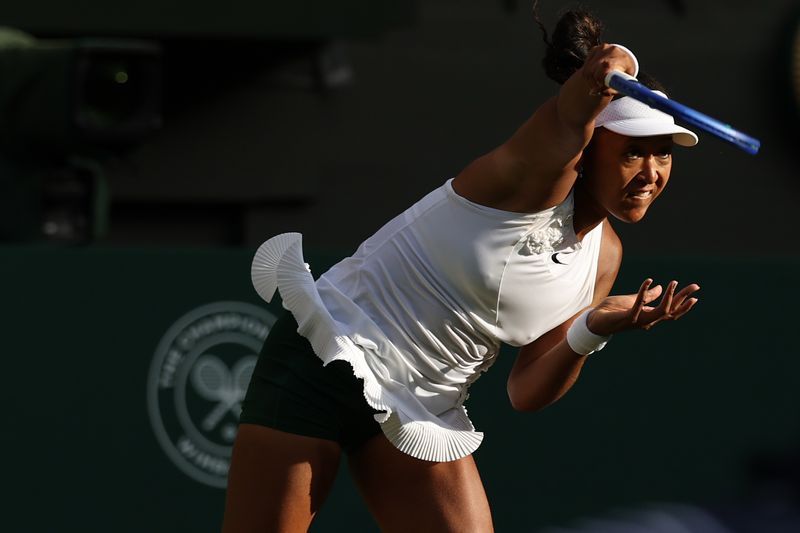
Naomi Osaka made a commanding statement at Wimbledon by dispatching top seed Aryna Sabalenka in the fourth round, securing a 6-2, 7-6(2) victory that sent shockwaves through the women's draw on a warm and sunny day at the All England Club. The 14th-seeded Japanese star, who arrived at the tournament in a striking kimono-inspired outfit paying homage to her favourite 'Kill Bill' character, showcased the same ruthless tennis that propelled her to four Grand Slam titles during her career renaissance. Her breakthrough to the quarter-finals represents her first appearance at this stage of Wimbledon and marks her most significant victory since returning from maternity leave earlier this year.
Osaka's triumph over Sabalenka assumes even greater significance given the recent history between the two players. After Osaka defeated Sabalenka en route to capturing the 2018 U.S. Open, their paths diverged sharply for nearly eight years. When they finally resumed their rivalry this season, Sabalenka dominated the matchup, winning three consecutive encounters against the Japanese star. The psychological weight of those recent setbacks made Osaka's reversal of fortunes particularly meaningful, as she dismantled her opponent with sustained power and precision that left Sabalenka visibly frustrated on Centre Court.
The nature of Osaka's victory extends beyond the scoreline itself. Rather than the explosive power showdown many anticipated between two formidable hitters, Osaka instead produced a serene, controlled masterclass that neutralised her opponent's strengths. Where Sabalenka typically imposes her will through aggressive stroke-making, she found herself constantly defensive against Osaka's superior accuracy and court positioning. The absence of competitive fireworks belied the quality of Osaka's play, as her composed demeanour stood in stark contrast to Sabalenka's mounting frustration throughout the match.
Osaka's progress comes amid a seismic disruption to the tournament's competitive hierarchy. The elimination of top three seeds now appears inevitable after defending champion Iga Swiatek and 2022 winner Elena Rybakina both fell in the third round, with Aryna Sabalenka joining them in early elimination. The departure of Barbora Krejcikova in the fourth round to fellow Czech Karolina Muchova further destabilises the expected trajectory of the women's championship. This unprecedented collapse of established talent guarantees that Wimbledon will crown a first-time champion for the ninth successive year, fundamentally altering the tournament's competitive landscape.
Meanwhile, Novak Djokovic's path to an eighth men's title, which would equal the all-time record, continues despite an unconvincing performance against Russian qualifier Roman Safiullin. The 39-year-old Serbian champion extracted a 7-6(6), 6-3, 3-6, 6-3 victory marked by scrappy exchanges and inconsistent play rather than the dominant performances fans expect from the defending champion's greatest rival. Djokovic's own assessment revealed his dissatisfaction with his tennis, acknowledging he had not felt genuinely comfortable on court and describing his performance as lacking both satisfaction and enjoyment. Nevertheless, the victory proved sufficient to advance him to his 17th Wimbledon quarter-final appearance.
Djokovic's progress assumes historical significance as he surpassed Swiss legend Roger Federer's men's record of 105 Wimbledon match victories. The 39-year-old's continued competitive longevity at tennis's highest level during what should be the twilight of his career demonstrates his relentless appetite for major championship contention. His advance positions him one victory away from a potential semi-final confrontation with defending men's champion Jannik Sinner, setting the stage for a potential collision between the tournament's most dominant forces.
The Serbian champion's next opponent will be Canadian third seed Felix Auger-Aliassime, who outlasted Spain's remaining representative Alejandro Davidovich Fokina in an epic four-hour 26-minute encounter. The intensity of that gruelling fourth-round match, which concluded 6-7(4), 7-6(6), 6-3, 6-7(2), 6-1, even prompted an angry verbal exchange between the players at the net. Should Djokovic successfully navigate this challenge, the prospect of facing Sinner would create one of the tournament's most compelling semi-final matchups.
The men's draw saw further drama when Poland's Hubert Hurkacz was forced to withdraw due to injury during the fifth set of his fourth-round encounter against Germany's Jan-Lennard Struff. Struff's advancement proved particularly remarkable given the 36-year-old veteran's age, making him the oldest player to reach a Grand Slam quarter-final in the modern era. The injury retirement highlighted the physical toll exacted by extended clay and grass court campaigns, particularly for players engaged in the gruelling Grand Slam calendar.
Osaka's calm demeanour during her post-match interview revealed an athlete deliberately recalibrating her approach to tournament tennis. When questioned about her toned-down entrance outfit on Centre Court, she explained that she consciously prioritised match focus over spectacle, representing a deliberate strategic choice to dial back the theatricality that characterised her earlier in the week. This philosophical shift suggests Osaka is approaching her tennis with renewed maturity and discipline, attributes that often prove decisive during Grand Slam campaigns. Her determination to concentrate exclusively on tennis rather than ancillary distractions underscores her commitment to maximising this resurgence following her maternity break.
Osaka's quarter-final opponent will be 10th seed Karolina Muchova, who navigated a tight straight-sets victory over defending 2024 champion Barbora Krejcikova with a 7-5, 5-7, 6-3 scoreline. The match between Osaka and Muchova promises to showcase contrasting styles, with Osaka's overwhelming power against Muchova's more nuanced technical approach. This encounter could prove decisive in determining whether Osaka successfully extends her run or whether Muchova's retrieval and adaptability prove sufficient to contain the Japanese star's current momentum.
The women's draw has witnessed an unprecedented American resurgence with five American women advancing to the round of 16, the largest contingent since 2002. American fourth seed Jessica Pegula advanced past 18-year-old Iva Jovic 4-6, 6-3, 6-1 on Court One, capitalising on her vastly superior experience to dismantle her teenage opponent during what proved to be an education in match management and pressure handling. Pegula has now matched her best Wimbledon performance, positioning herself for further advancement. The potential emergence of another American quarter-finalist if Coco Gauff defeats Belinda Bencic would further strengthen the American presence in the latter stages of the championship, suggesting a remarkable seasonal shift in female tennis dominance.

