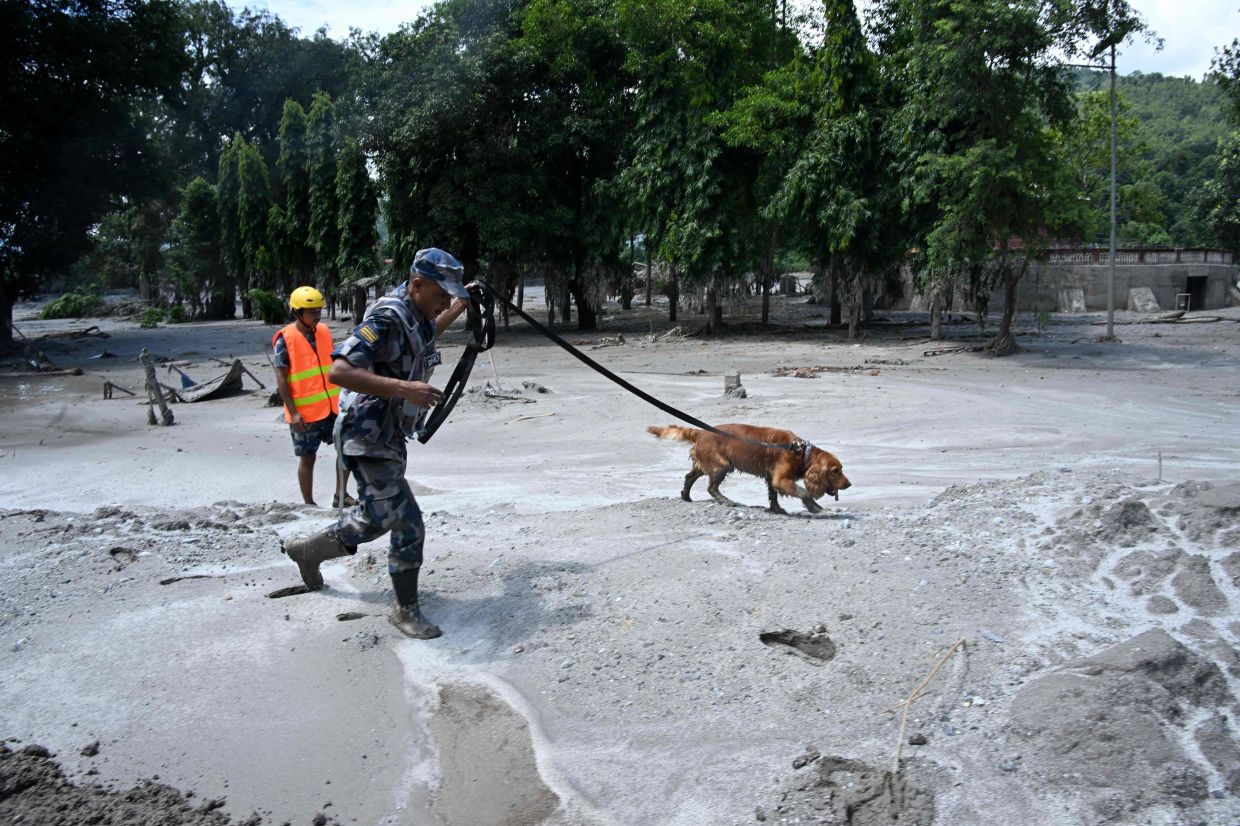
Catastrophic flash floods and landslides near the Nepal-Tibet border have killed at least 392 people and left more than 1,400 unaccounted for, according to official reports released on Thursday. The disaster has triggered an international search and rescue operation, with nations from across Asia, Europe, North America and beyond scrambling to locate and assist their missing citizens caught in one of the region's most severe natural disasters in recent years.
The scale of the missing persons challenge reflects both the international nature of tourism in Nepal's mountainous regions and the inherent chaos that follows major natural catastrophes. Officials caution that these figures will likely fluctuate as rescue operations continue and authorities work to reconcile competing counts. Double-counting of individuals holding multiple passports, the difficult process of identifying remains, and the general disorder accompanying such large-scale emergencies all contribute to shifting casualty and missing person numbers in the immediate aftermath of disasters.
Nepal's disaster management agency reported 910 people missing on Thursday, including at least 517 foreigners whose nationalities have not been fully itemised. Across the international border, China's authorities documented 558 unaccounted for individuals, comprising 260 foreign nationals and 298 Chinese residents. When combined, these figures suggest approximately 1,468 people remain missing across both sides of the border region, underscoring the transnational scope of the emergency.
The toll on Malaysian nationals represents a particularly significant impact for the Southeast Asian region. Prime Minister Anwar Ibrahim confirmed that more than 50 Malaysians in Nepal had become unreachable following the disaster, with Nepal's tourism board putting the figure at 51. This marks one of the largest contingents of missing Southeast Asian nationals, reflecting Malaysia's robust tourism presence in Nepal and the popularity of the country's trekking routes among Malaysian adventurers. The situation highlights the vulnerability of regional tourists to geological hazards in high-altitude zones.
Chinese nationals comprise a substantial portion of the missing across both territories. While China's foreign ministry indicated nearly 100 Chinese were unaccounted for within Nepal, the Nepal Tourism Board recorded only 24, suggesting significant discrepancies in how different agencies are counting foreign nationals. On the Chinese side of the border, 260 foreigners are among the missing, creating a complex cross-border accounting challenge that may not be fully resolved for weeks.
The United States has reported 90 citizens missing, according to the State Department, which noted that three had been rescued and no American deaths had been confirmed thus far. However, Nepal's tourism board provided a lower figure of 65 unaccounted for Americans earlier in the day, indicating real-time adjustments to missing person counts as verification processes advance. India has seen 178 nationals listed as missing, with 11 others confirmed rescued, positioning Indian nationals among the largest groups affected by the disaster.
European nations have also suffered significant losses. Canada faces the disappearance of at least 30 citizens and permanent residents, according to Foreign Minister Anita Anand, surpassing the tourism board's initial count of 25. The United Kingdom has 33 nationals unaccounted for, while Australia's Foreign Minister Penny Wong reported on Friday that 39 Australian nationals are among the missing. Ukraine's foreign ministry stated that 56 Ukrainians remain out of contact, though they noted that verified information suggests no Ukrainians have been killed or injured thus far.
The disaster has created unusual challenges for diplomatic coordination across the Nepal-Tibet boundary. South Korea's foreign ministry reported nine hydropower workers missing in the Rasuwa district, though the tourism board indicated four South Koreans had been rescued by Thursday. New Zealand's government, alongside the tourism board, confirmed five nationals missing, while France reported four unaccounted for. These disparities between different countries' official counts and Nepal's tourism board figures underscore the difficulty of maintaining accurate registers during active disaster response operations.
Smaller but still significant groups from various nations round out the missing persons list. Nine Singaporeans remain unaccounted for, alongside eight German citizens and eight Russians, of whom two have been rescued. South Africa, Latvia, Japan and several other nations have also reported missing citizens, with Latvia and South Africa each accounting for six unaccounted individuals. The geographic breadth of missing persons demonstrates how thoroughly international the tourism economy in Nepal's mountainous frontier regions has become.
The incident underscores the specific vulnerability of the Nepal-Tibet border region to geological hazards, where altitude, precipitation patterns, and terrain combine to create conditions favourable for both flash flooding and landslide activity. As a major hub for international trekking and mountaineering expeditions, the area attracts thousands of foreign visitors annually. For Malaysia and other Southeast Asian nations, the disaster serves as a sobering reminder of the environmental risks associated with adventure tourism in high-altitude frontier zones, even as it highlights the importance of maintaining robust consular networks and emergency response protocols for citizens abroad.

