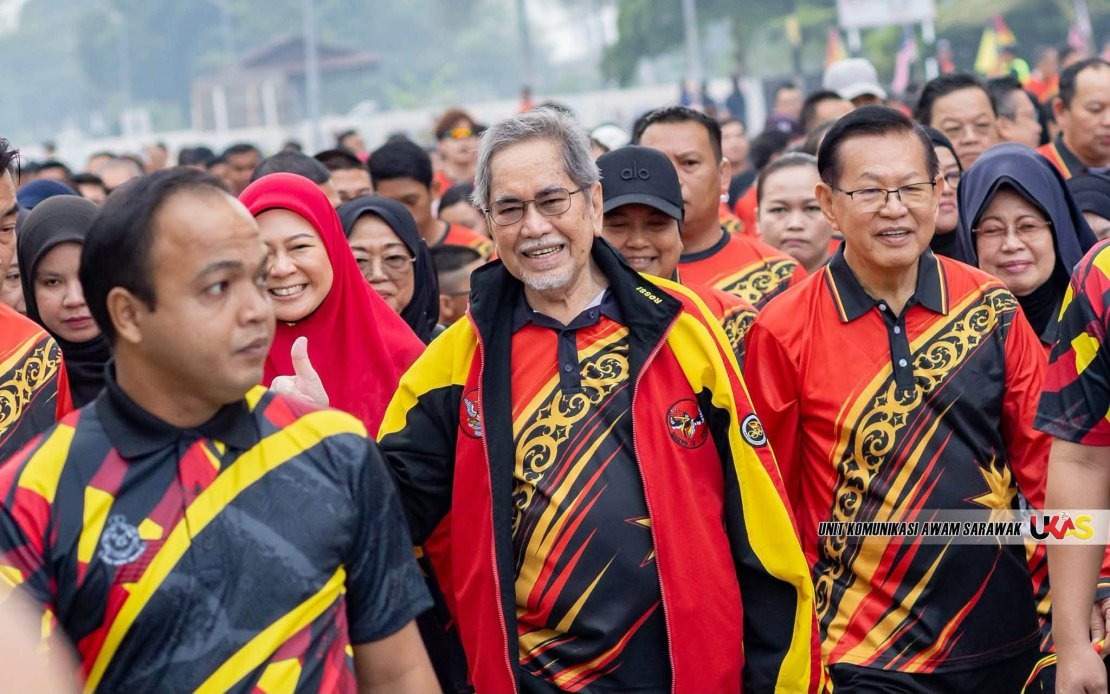
The streets of Sibu came alive on July 22 as more than 10,000 Sarawakians converged at Dataran Tun Tuanku Bujang for the Sarawak Day Unity Walk 2026, transforming the civic square into a vibrant display of cultural harmony. Dressed predominantly in red, yellow and black, the sea of participants reflected the rich diversity that defines modern Sarawak, with families, community members and officials from across the state joining together in a public declaration of unity and shared identity.
The near five-kilometre procession wound through some of Sibu's most recognisable streets, including Jalan Kampung Datu, Jalan Kampung Hilir and the Simpang 3 Roundabout, before circling back to the starting point. As the crowd moved through the city's heart, Sarawak flags fluttered alongside the Jalur Gemilang, while participants chanted "Sarawak Maju Makmur" and sang patriotic songs that resonated through the downtown area. The march represented more than ceremonial celebration; it embodied a statement of provincial identity within the larger Malaysian federation, underscoring Sarawak's distinct political and cultural positioning.
Governor Tun Dr Wan Junaidi Tuanku Jaafar, accompanied by his wife Toh Puan Fauziah Mohd Sanusi, formally launched the walk, setting the tone for an event that drew substantial representation from the state's political establishment. The presence of Sarawak Minister for Transport Datuk Seri Lee Kim Shin; Minister of Tourism, Creative Industry and Performing Arts Datuk Seri Abdul Karim Rahman Hamzah; and Minister for Women, Childhood and Community Wellbeing Development Datuk Seri Fatimah Abdullah alongside multiple other ministers, deputy ministers and elected representatives underscored the official significance placed upon the occasion.
What distinguished this particular gathering was the genuine cross-community participation that characterised the march. Malay, Melanau, Iban, Bidayuh, Chinese and Orang Ulu participants walked alongside one another in an open demonstration of the intercommunal cohesion that Sarawak has long sought to cultivate. This inclusive representation contrasts with occasional tensions in other Malaysian states and reflects Sarawak's established tradition of managing ethnic and religious diversity through established power-sharing arrangements. The participation of families—including elderly citizens, youth and children—transformed the event from a political ritual into a genuine community gathering that engaged multiple generations.
Following the march, Governor Wan Junaidi and his delegation visited the Sarawak Day 2026 History Exhibition, a curatorial effort that traced the state's trajectory towards self-government and contemporary autonomy. The exhibition served an educational function, reminding participants of Sarawak's distinct constitutional position and historical journey towards greater self-determination within Malaysia. This historical component carries particular weight in Sarawak's public discourse, where the state's entry into Malaysia in 1963 remains a defining constitutional moment regularly invoked in discussions of federal-state relations and resource rights.
The festivities continued with refreshments at Sibu Kitchen, reflecting the deliberate integration of cultural celebration with everyday community engagement. Rather than confining celebrations to formal government spaces, organisers embedded the event within civilian commercial areas, encouraging ordinary Sibu residents to participate and witness the proceedings. This approach democratised what might otherwise have been perceived as an exclusively official occasion, extending its reach and resonance among the broader populace.
The focal point of this year's Sarawak Day commemoration extends beyond the morning's unity walk. The Sarawak Day Assembly and People's Concert scheduled for the same evening at Dataran Tun Tuanku Bujang promised to sustain momentum, with Sarawak Premier Tan Sri Abang Johari Tun Openg set to officiate. This two-part structure—morning civic procession followed by evening entertainment and assembly—reflects a comprehensive strategy to maintain public engagement throughout the day and reinforce state identity across multiple formats and constituencies.
For Malaysian observers beyond Sarawak's borders, the event illustrates how individual states within the federation maintain and project distinctive identities. Sarawak's emphasis on intercommunal unity walks and cultural exhibitions reflects a particular brand of state patriotism that operates alongside, rather than in tension with, national Malaysian identity. The prominence of state flags, state-specific slogans and emphasis on Sarawak's particular constitutional history demonstrates how devolved governance structures allow constituent states to cultivate their own civic cultures and public commemorative practices.
The successful turnout and apparent goodwill characterising the unity walk carries broader implications for Sarawak's political environment. When major public events draw substantial participation across ethnic lines, they typically indicate underlying social stability and effective political management of diversity. For a state that has experienced historical tensions related to resource distribution, indigenous rights and federal-state relations, the ability to mobilise large cross-community gatherings remains politically significant. Such events provide platforms for political leaders to demonstrate their capacity to maintain social cohesion while addressing constituent grievances through existing institutional frameworks.

