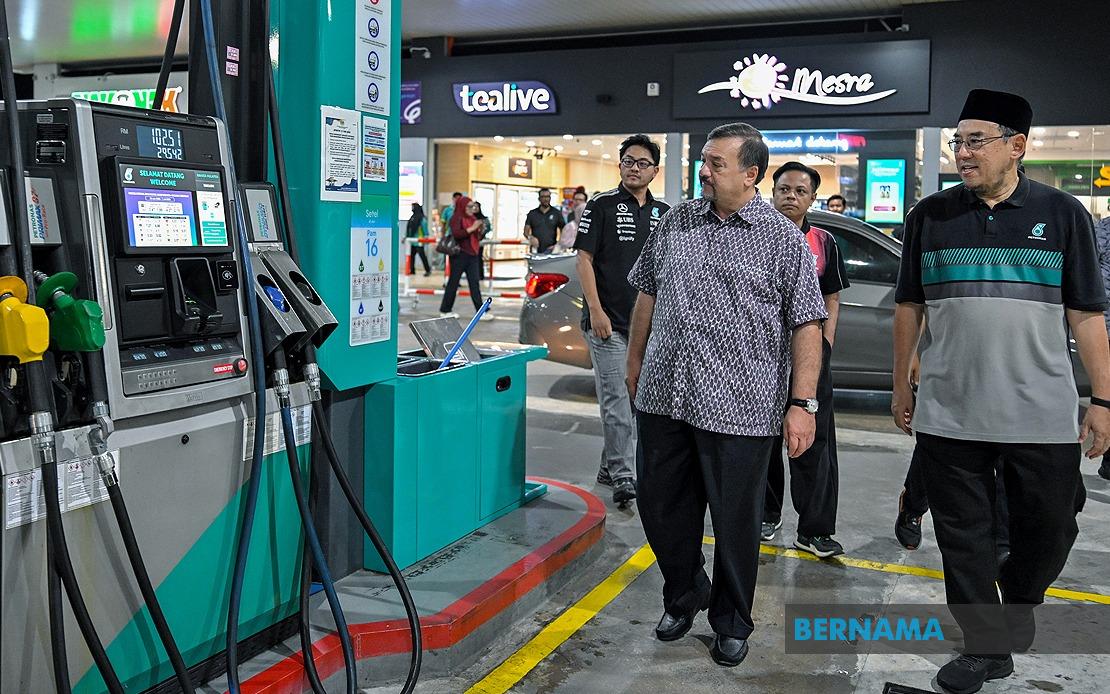
The government's BUDI MADANI Diesel programme is off to a robust start, having processed more than 18,000 applications for supplementary fuel allocations during its first two days of operation in Peninsular Malaysia. Speaking on June 28, Second Finance Minister Datuk Seri Amir Hamzah Azizan revealed that the official BUDI MADANI portal had received the substantial volume of submissions from eligible owners of diesel-powered pickup trucks and sport utility vehicles seeking an additional 100 litres of subsidised fuel per month. Alongside the application surge, the system has already processed over 40,000 transactions since the scheme's June 27 commencement, demonstrating considerable uptake among motorists seeking relief from elevated fuel costs.
The rollout reflects growing consumer interest in the initiative, which offers eligible users subsidised diesel at RM2.15 per litre during this introductory phase, with the price scheduled to drop further to RM2.10 from July 1 onwards. The flexible quota structure permits users to draw up to 200 litres monthly, subject to individual eligibility criteria. The government had positioned BUDI Diesel as a targeted measure to support commercial vehicle operators and rural users whose livelihoods depend on diesel consumption, representing a refinement of Malaysia's broader fuel subsidy framework.
A key focus for Amir Hamzah during his site visit to the NKVE Damansara Bound Petronas petrol station was confirming the operational integrity of the digital infrastructure underpinning the scheme. He emphasized that no technical complications or system failures had surfaced during the initial rollout phase, a critical reassurance given the volume of simultaneous transactions flowing through the BUDI MADANI portal. This operational success matters considerably for Malaysian digital government initiatives, which have faced credibility challenges in past years; a glitch-free debut sends a positive signal about the maturity of financial technology deployment within federal agencies.
Accessing the additional quota requires applicants to navigate the BUDI MADANI portal, though the government has deliberately created multiple support pathways to prevent digital exclusion. Eligible individuals can obtain assistance from officers stationed at Inland Revenue Board (LHDN) offices nationwide, through Urban Transformation Centres (UTCs) established across major towns, and at service counters operated by partnering petroleum retailers. This multi-channel approach acknowledges that not all potential beneficiaries possess equal comfort with online procedures, particularly older users or those in less urbanised regions where internet infrastructure remains variable.
A notable dimension of the BUDI Diesel framework is the quota transfer mechanism, which addresses practical realities where registered vehicle owners differ from actual drivers. This feature proves particularly relevant in Malaysia's commercial transport sector, where vehicles are frequently operated by employees, family members, or hired drivers rather than the formal proprietor listed in registration documents. The transfer system allows quota holders to designate another individual as the actual beneficiary, with the allocation remaining permanently linked to the recipient's identity card number once authorised. When the transferred quota is activated at petrol stations, the system automatically recognises the reassignment and releases fuel at the subsidised rate.
The verification process hinges on identity card cross-referencing at point-of-purchase, creating a biometric-style accountability layer that the authorities believe will prevent quota trading or misappropriation. When a quota transfer receives ministerial approval, the fuel station's systems update to associate the allocation with the new user's IC number, effectively creating a digital chain of custody. This technical architecture reflects lessons drawn from previous subsidy schemes, where leakage—fuel purchased at subsidised rates being resold at profit—depleted programme budgets and benefited middlemen rather than intended recipients. The IC-based linkage theoretically closes these loopholes, though enforcement effectiveness will depend on consistent point-of-sale compliance and periodic auditing of transaction patterns.
For Malaysian businesses operating commercial vehicle fleets, the BUDI Diesel initiative carries meaningful implications for cost structures. Pickup truck owners engaged in logistics, agriculture, or trades can potentially reduce fuel expenses by RM5 to RM10 per vehicle monthly, depending on actual consumption patterns. For operators running multiple vehicles, these savings aggregate into material cost reductions that may enhance competitiveness and profitability. However, the scheme's targeting restrictions—limiting eligibility to specific vehicle categories—creates a tiered subsidy system where some business operators benefit substantially whilst others derive no advantage, raising questions about horizontal equity and fairness across different economic sectors.
The government's decision to reduce the subsidised price from RM2.15 to RM2.10 per litre commencing July 1 signals confidence in programme sustainability and hints at confidence in future funding availability. The interim pricing structure, in place only for the first few days, appears designed to encourage rapid initial uptake whilst the scheme establishes operational momentum. Whether the lower rate represents the final stable price point or functions merely as another transitional step remains unclear, though officials have avoided telegraphing future adjustments that might dampen current participation rates.
Regional observers will note that Malaysia's approach to targeted diesel subsidies differs conceptually from broader fuel price caps attempted by some neighbouring economies. Rather than freezing prices for all consumers—an approach that typically proves fiscally unsustainable and economically distortionary—Malaysia has segmented eligibility and capped the volume of subsidised fuel any individual can access monthly. This architecture aims to concentrate government expenditure on defined beneficiary groups whilst preserving market pricing signals for non-eligible consumers. Whether this precision targeting can be maintained as political pressure mounts for programme expansion will ultimately determine the initiative's long-term viability.
Treasury Secretary-General Tan Sri Johan Mahmood Merican's presence at the inspection site underscored the programme's status as a significant fiscal and administrative undertaking, requiring coordination across petroleum retailers, revenue authorities, and transport regulators. The Treasury's direct involvement indicates that officials are treating implementation success as a priority, with senior officials personally monitoring operational performance rather than delegating oversight to junior staff. This hands-on approach suggests recognition that initial months will prove critical for establishing credibility and identifying friction points before they crystallise into systemic problems.
As the BUDI MADANI Diesel programme transitions beyond its introductory phase, the 18,000 applications recorded in 48 hours provide an initial data point for assessing demand elasticity and programme take-up rates. Analysts will scrutinise whether application volumes plateau rapidly or sustain at elevated levels, with different trajectories carrying distinct implications for government spending forecasts and budgetary sustainability. The coming weeks will likely reveal whether the scheme has genuinely solved a critical pain point for commercial vehicle operators or primarily benefited motorists already using diesel-powered vehicles for personal purposes.
Looking forward, programme administrators will face ongoing challenges in managing the boundary between legitimate eligible users and those attempting to circumvent eligibility criteria through fraudulent transfers or falsified claims. The identity card-based verification system provides a technical control mechanism, but enforcement effectiveness ultimately depends on consistent implementation discipline across the nation's thousands of petrol stations and ongoing government commitment to combating subsidy leakage. The early success in avoiding technical glitches represents only the first test; sustained operational excellence across months and years will prove far more demanding.

