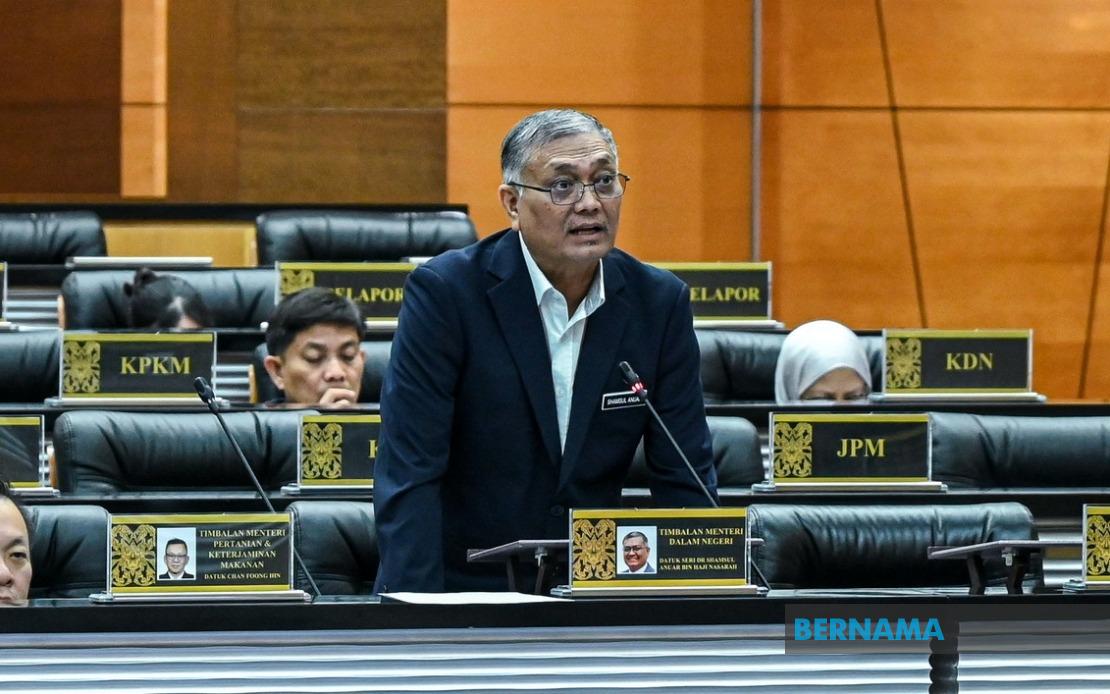
The Home Ministry has disclosed that a significant backlog of citizenship applications continues to challenge authorities in Sabah, with figures as of May 31 showing 3,640 cases still awaiting resolution. During parliamentary questioning on July 16, Deputy Home Minister Datuk Seri Dr Shamsul Anuar Nasarah provided a detailed breakdown of the citizenship bottleneck affecting one of Malaysia's largest states, acknowledging the urgent need for administrative improvements in a matter that directly impacts vulnerable populations seeking recognition and access to fundamental rights.
In contrast to the substantial pending caseload, progress on completed applications has been modest. Only 10 citizenship applications in Sabah have received final approval, with citizenship certificates already issued to successful applicants. This disparity underscores the scale of delays plaguing the system and raises questions about processing capacity and resource allocation within the National Registration Department's Sabah offices. The snail's pace of approvals, measured against the accumulating applications, suggests systemic challenges that extend beyond simple administrative inefficiency.
The situation appears somewhat more promising for late birth registration cases, where the ministry reported approval of 2,659 applications while 611 remain under review. Late birth registration represents a critical pathway for individuals, particularly children born in remote areas or to parents with limited awareness of registration requirements, to obtain official documentation and ultimately pursue citizenship status. The relatively higher approval rate for this category suggests that targeted interventions in specific problem areas can yield tangible results, though the ongoing processing of over 600 cases indicates work remains substantial.
Deputy Minister Shamsul Anuar emphasised that the Home Ministry has committed itself to reducing delays through procedural enhancements and increased operational transparency. The ministry has established a standardised processing timeline of one year from receipt of complete documentation to final decision under Articles 15A, 15(2) and 19(1) of the Federal Constitution. This timeframe, while still lengthy, represents an attempt to impose predictability on a process that has historically left applicants uncertain about their status and future prospects.
Accessibility has been expanded significantly through enabling late birth registration applications at all National Registration Department offices nationwide, rather than restricting such services to major urban centres. The rollout of the Menyemai Kasih Rakyat (MEKAR) programme represents an additional outreach mechanism, with particular emphasis on extending services into rural and remote communities where awareness and access barriers have historically been most acute. This geographical democratisation of services acknowledges that citizenship complications disproportionately affect populations in peripheral regions who lack easy access to government facilities.
The Sabah Special Committee on Citizenship Status, scheduled to convene at the end of July or early August, carries significant expectations with 1,018 applications requiring consideration. This specialised committee mechanism suggests recognition that Sabah's unique demographic and historical context warrants dedicated institutional attention. The committee's workload and deliberation pace will likely determine whether the backlog stabilises, shrinks, or continues expanding relative to incoming applications.
Decision-making authority for late birth registration cases has been delegated to regional NRD offices in Sabah, a structural reform designed to reduce bureaucratic layers and accelerate approvals at the point of application. Centralised decision-making in Kuala Lumpur previously created inevitable delays as files moved through the administrative hierarchy. By empowering field offices with authority to resolve straightforward cases, the ministry has attempted to address a common source of processing gridlock.
The ministry has simultaneously strengthened institutional cooperation involving the NRD, Sabah state government, community leaders, hospitals, schools, welfare agencies and civil society organisations. This multi-stakeholder approach recognises that citizenship and identity documentation challenges extend beyond the regulatory domain, intersecting with public health, education, social welfare and grassroots community support systems. Hospitals and schools represent critical contact points where undocumented individuals, particularly children, interact with government infrastructure. Coordinating across these sectors creates opportunities for identifying and assisting individuals who have fallen through administrative cracks.
Parliamentary member Vivian Wong Shir Yee of Sandakan had specifically inquired about progress and pending caseloads for 2025 and 2026, reflecting constituent concerns about processing timelines. The deputy minister's response, while detailing various initiatives, did not provide forward projections or commitments regarding expected resolution timelines for the current backlog. This absence of concrete targets raises questions about whether existing initiatives possess sufficient momentum to substantially reduce the 3,640 pending cases within definable periods.
Deputy Minister Shamsul Anuar clarified a technical distinction between applications formally approved by the Home Ministry and those recorded as processed by the NRD system. Applications approved for citizenship but awaiting certificate printing and issuance remain categorised as processing, not approved. This classification methodology partly explains the apparent disparity between ministry actions and public-facing statistics, though it does not diminish the reality that thousands of applicants remain in limbo while administrative machinery processes their documentation.
The deputy minister attributed delays in late birth registration primarily to parental and guardian awareness deficits regarding timely registration requirements, family-related complications, financial constraints preventing document acquisition, and incomplete submission of supporting evidence. These root causes reveal that citizenship administration intersects with poverty, education, social vulnerability and domestic circumstances beyond government control. Addressing delays therefore requires interventions spanning beyond procedural streamlining to encompass public education, financial assistance programmes and support systems helping vulnerable families navigate documentation requirements.
Sabah's citizenship challenges carry particular significance given its status as Malaysia's eastern anchor and a region where documented identity matters profoundly for border security, social service access and political stability. The accumulation of pending applications reflects broader questions about whether Malaysia's citizenship administration possesses capacity and coordination mechanisms adequate for contemporary demographic realities. The ministry's piecemeal reforms, while constructive, suggest ongoing systemic strain rather than confident resolution of underlying structural problems.

