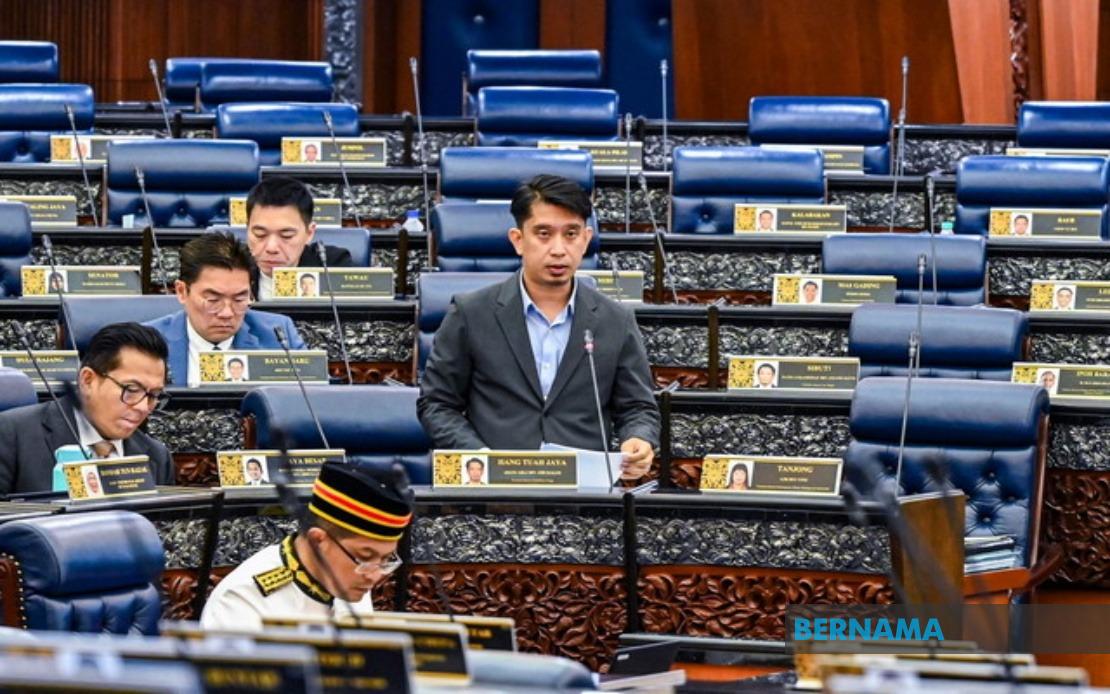
Malaysia's commitment to Science, Technology, Engineering and Mathematics education is crystallising in substantial enrolment numbers at public institutions of higher learning. Between 2023 and March 2026, more than 326,000 students chose STEM disciplines among the 556,556 diploma and first-degree students entering the country's IPTA system, Parliament heard on July 1. This concentration in science-focused fields represents nearly 59 per cent of total admissions, leaving 230,137 students pursuing alternative disciplines. The figures, drawn from the Ministry of Higher Education's MyMOHES database, underscore the systematic redirection of Malaysia's higher education towards technology-intensive fields.
Deputy Minister Adam Adli Abd Halim presented these enrolment trends during Question Time, framing them as evidence of institutional alignment with national economic priorities. The emphasis on STEM represents more than bureaucratic preference; it reflects deliberate policy positioning ahead of anticipated shifts in the global economy. High-technology sectors including artificial intelligence, semiconductor manufacturing, automation, digitalisation and green technology increasingly define competitive advantage in the region. Malaysia's strategy recognises that human capital development in these domains will determine the nation's ability to capture opportunities in these expanding industries and avoid relegation to lower-value manufacturing.
The backdrop to this enrolment surge involves Malaysia's broader technological ambitions. The government has positioned itself as a potential semiconductor hub and regional AI innovation centre, aspirations that cannot materialise without a substantial workforce trained in relevant disciplines. Public institutions bear the primary responsibility for developing this talent pipeline, particularly for students from lower-income backgrounds who depend on subsidised higher education. The concentration of STEM admissions therefore represents an intentional redirection of public investment towards fields deemed strategically critical.
When questioned by Datuk Dr Ku Abd Rahman Ku Ismail from Kubang Pasu, deputy minister Adam Adli went beyond snapshot enrolment figures to address Malaysia's medium-term human capital requirements. The National Science, Technology and Innovation Policy framework spanning 2021 to 2030 does not operate through rigid quotas specifying exact numbers of engineers by specialisation. Rather, it adopts a systems-level perspective organised around the concept of a comprehensive ecosystem encompassing researchers, scientists, engineers and technicians—the RSET framework.
This ecosystem approach distinguishes Malaysia's strategy from simpler quantitative targets. By 2030, the policy aims to achieve a ratio of 200 RSET professionals for every 10,000 workers in the national economy. Given projected workforce expansion to approximately 17.06 million people, this translates into a requirement for roughly 341,200 RSET professionals within four years. The arithmetic is straightforward but the implications are profound: Malaysia currently falls substantially short of this target, and the gap must close through continuous expansion of university intake, training programme quality and retention of skilled graduates.
The significance of this 341,200 figure extends beyond academic planning into competitive positioning within Southeast Asia. Countries including Singapore, South Korea and Vietnam are simultaneously investing heavily in STEM talent development. Malaysia risks losing graduates to neighbouring economies offering superior remuneration or working conditions if the domestic employment landscape fails to expand proportionally. The higher education pipeline must therefore coordinate with industrial policy, infrastructure development and research funding to create conditions where advanced graduates remain committed to contributing locally rather than seeking international opportunities.
When responding to supplementary questions from Onn Abu Bakar concerning the expansion of expert lecturers, research laboratories and high-technology facilities, Adam Adli identified the Malaysian Technical University Network (MTUN) as the current focal point for capacity building. This concentration on four specific universities represents a strategic decision to develop centres of excellence rather than dispersing resources across the entire IPTA system. MTUN institutions would theoretically offer superior laboratory facilities, more experienced research staff and deeper industry partnerships that justify the selective investment approach.
The challenge underlying this infrastructure discussion involves the transformation lag between policy announcement and institutional realisation. Universities require substantial capital investment to establish semiconductor fabrication facilities or artificial intelligence research centres. Faculty recruitment in specialised technical fields faces global competition; Malaysian salaries must compete with offers from developed economies and wealthier emerging markets. Students completing rigorous STEM programmes often command high market value, and retention becomes increasingly difficult without commensurate career progression opportunities within Malaysia.
The ministry's stated intention to maintain alignment between programme offerings, institutional capacity and industry needs acknowledges an inherent tension within tertiary education planning. Industry demands shift rapidly—today's cutting-edge specialisation becomes tomorrow's commodity skill. Universities operate on longer planning horizons; establishing new degree programmes, recruiting faculty and building laboratory infrastructure requires years of preparation. This structural mismatch between the pace of technological change and the timeline of institutional development remains a persistent challenge for Malaysian higher education policymakers.
For Malaysia's broader development agenda, the STEM enrolment surge represents both progress and incomplete implementation. That over 326,000 students are pursuing relevant disciplines indicates successful policy messaging and demonstrated student interest. Yet translating enrolment into sustained economic benefit requires the entire ecosystem to function cohesively. Graduates must find employment matching their qualifications; employers must have access to these skilled workers; research commercialisation pathways must exist; and international collaboration must supplement domestic capacity where gaps remain.
The regional implications extend beyond Malaysia's borders. As Southeast Asian nations compete for technology sector investment and talent, each country's success in developing STEM capacity influences intra-regional labour dynamics. A genuine oversupply of engineers in the region could drive down wages and encourage brain drain toward more developed economies. Conversely, coordinated regional approaches to STEM education and technology sector development could strengthen the entire region's competitive position. Malaysia's enrolment strategy therefore operates within this larger competitive and cooperative context.
Moving forward, the government's commitment to developing 341,200 RSET professionals by 2030 requires sustained investment beyond enrolment increases. The focus on four MTUN institutions offers efficiency but risks leaving other universities with inadequate resources for STEM education. Faculty development, international partnerships, industry engagement and research funding must expand proportionally to enrolment growth. Without these complementary investments, higher numbers of STEM graduates might simply produce unemployment or underemployment among advanced degree holders—an outcome that would undermine both individual opportunity and national development objectives.

