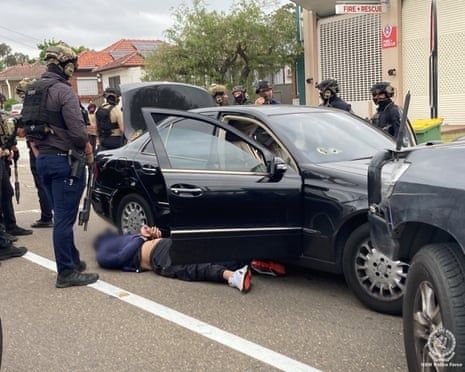
Australian authorities have intensified their response to crime on public transport in New South Wales, with police announcing the arrest of 356 individuals across a three-day operation that concluded on Saturday. The latest phase of Operation Waratah, now in its sixth iteration, represents a sustained effort by law enforcement to combat violent offences and sexual crimes aboard trains, light rail trams, buses and ferries throughout the state. This latest enforcement push has contributed significantly to the operation's cumulative toll of more than 1,800 arrests since the initiative was established in 2024.
The scale of the deployment underscores the commitment NSW Police has made to securing public transport networks, with more than 400 officers actively engaged on the streets each day throughout the three-day operation. These personnel were positioned across the state's sprawling transit infrastructure, which the operation touched through patrols of 539 trains, 127 buses and 29 light rail trams. Such intensive police presence sends a clear message to would-be offenders while also providing visible reassurance to commuters concerned about their safety during daily journeys.
Beyond arrest numbers, the operation yielded significant material results that illustrate the scale of weapon-related crime on public transport. Officers seized 28 knives or other weapons during the latest phase, addressing a persistent concern among transit users about personal safety. Additionally, police conducted 137 drug detections, indicating that substance-related offending often accompanies violent behaviour on transport networks. These findings suggest that public transport crime in NSW often involves multiple layers of criminality rather than isolated incidents.
The breadth of charges arising from the operation reflects the serious nature of offences being targeted. The 356 arrested individuals faced a combined 645 charges, averaging nearly two counts per person arrested. This multiple-charge pattern indicates that many of those detained were suspected of committing more than one offence, highlighting recidivist trends among persistent offenders who view public transport as a venue for criminal activity. The range of charges presumably spans from assault and sexual assault to weapon possession and drug-related offences.
Operation Waratah's establishment in 2024 marked a strategic shift in how NSW authorities approach transit security, moving beyond traditional reactive policing toward sustained, intelligence-led enforcement campaigns. The operation's continued expansion through six phases suggests that authorities have deemed the initiative effective enough to warrant sustained investment of police resources. This approach reflects broader global trends in law enforcement, where targeted operations combining prevention, enforcement and visible deterrence have become standard tools in addressing crime in specific environments.
For Malaysian and Southeast Asian observers, the NSW operation offers instructive examples of how developed democracies deploy police resources in response to public safety concerns. The emphasis on transparency—with police regularly announcing operation results and statistics—contrasts with approaches in some regional jurisdictions where policing data remains opaque. The operation also highlights how English-speaking nations have shifted toward specialized task forces and enhanced coordination across multiple transit modes rather than relying on traditional beat policing.
Public transport crime carries particular significance because it affects large segments of the population and can erode confidence in essential urban infrastructure. In major Asian cities including Kuala Lumpur and Singapore, transit authorities have similarly grappled with safety concerns, though the incidence and nature of offences may differ from NSW patterns. The Australian response—combining increased visible police presence with targeted apprehensions—represents one model for addressing these concerns, though its effectiveness and transferability to other jurisdictions remain debated among criminologists.
The operation's focus on violent and sexual offences reflects priorities established through consultation with transport operators and community feedback. This victim-centred approach stands in contrast to enforcement operations that target minor regulatory breaches or revenue-generating offences. By concentrating resources on offences that cause direct harm to individual passengers, NSW Police demonstrates a philosophy aligned with community expectations about appropriate policing priorities in shared public spaces.
Looking forward, the continuation of Operation Waratah into subsequent phases will likely depend on continued political support and evidence of impact on actual crime rates rather than merely arrest figures. While the operation has achieved substantial numbers—356 arrests in three days across the latest phase alone—the more significant measure will be whether these enforcement efforts translate into reduced violent incidents on public transport and increased passenger confidence. Authorities will need to balance enforcement intensity with broader strategies including improved surveillance infrastructure, community engagement and addressing root causes of transit-related offending.

