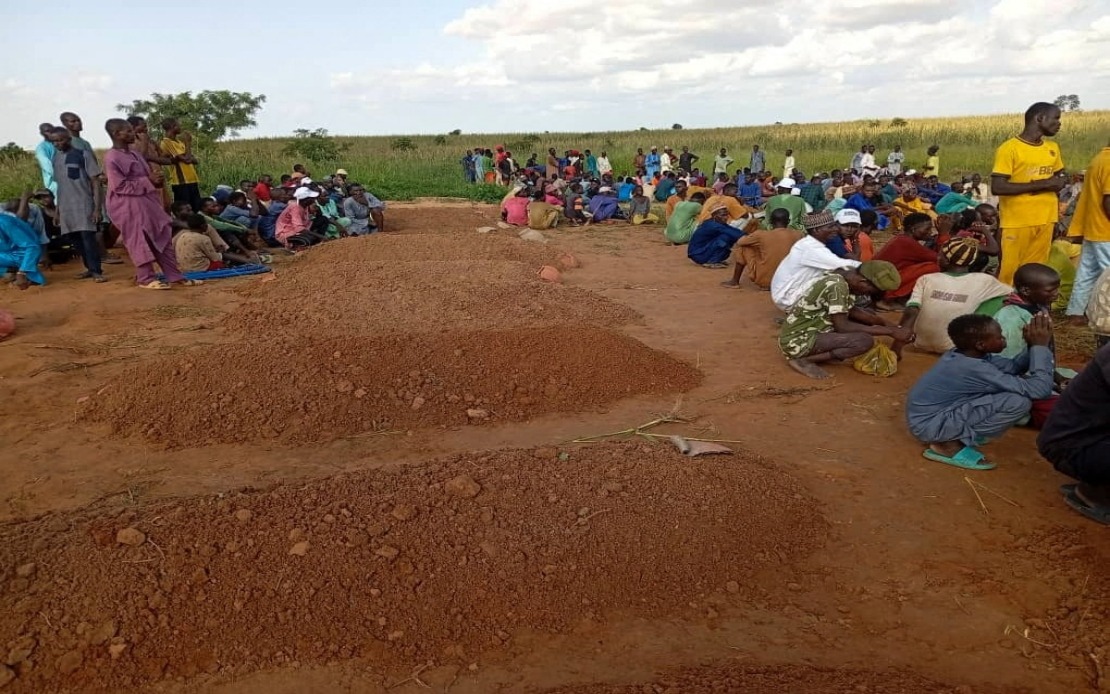
A devastating boat disaster in northwestern Nigeria has claimed the lives of more than 40 people, with the majority of victims being children, as the vessel became submerged while transporting agricultural workers across the Sokoto state waterway on Thursday. The incident occurred near Gorau town in Goronyo Local Government Area when the heavily laden craft overturned during what should have been a routine journey to farmland where passengers intended to engage in rice cultivation activities. The tragedy marks another chapter in a troubling pattern of maritime accidents plaguing Nigeria's inland water transport system, where regulation gaps and operational hazards continue to place vulnerable populations at risk.
Initial death toll assessments began at 40 confirmed fatalities, according to Abdulkadir Yusuf, who oversees operations for Nigeria's National Inland Waterways Authority in Sokoto state, though he acknowledged that verification work was still underway. However, witness accounts painted a more grim picture, with one observer reporting approximately 47 bodies arranged at a community mosque in Gorau, many respectfully wrapped in traditional cloth and mats as funeral preparations commenced that same evening. The discrepancy between official preliminary figures and ground-level observations reflects the chaos surrounding the immediate aftermath, when exact casualty counts proved difficult to establish amid ongoing rescue and recovery operations.
Lawmaker Nasiru Adamu, who represents the affected area in the Sokoto State House of Assembly, provided crucial details about the vessel's capacity and passenger composition. He indicated that the boat was carrying approximately 70 individuals at the time of capsizing, a load substantially exceeding safe limits. Among those aboard, the age demographic skewed heavily toward minors, with the majority ranging between 10 and 15 years old, suggesting that school-aged children made up a significant proportion of the fatalities. Adamu confirmed that whilst over 40 bodies had been recovered, rescue teams had also successfully extracted 16 survivors, indicating that the outcome could have been even more catastrophic had the rescue response been delayed further.
Personal testimonies underscore the human toll of the disaster. Samaila Garba, a 55-year-old community resident, recounted the loss of his 13-year-old granddaughter, Jamila Usman, who perished in the incident. Garba's independent count of at least 42 bodies at the recovery site corroborated broader casualty estimates, whilst his observation that most victims were women and children revealed the particular vulnerability of these demographic groups within the transport system. Such personal accounts transform statistics into lived tragedy, illustrating how a single accident ripples through family networks and entire communities.
Search and rescue operations extended into the evening and beyond, with local diving personnel methodically combing the waterway to locate any remaining survivors and recover additional bodies. The continuation of these efforts reflected both the uncertainty surrounding final casualty figures and the commitment of rescue personnel to account for all those aboard. The Sokoto waterway, a vital transportation corridor for rural and agricultural communities, became temporarily transformed into a site of organized grief and systematic recovery work.
This incident arrives within a broader context of systemic safety deficiencies that have plagued Nigeria's inland water transport sector. Experts and observers have consistently identified overcrowding as a primary hazard, where vessels regularly accept passenger loads far exceeding their designed capacity in pursuit of revenue maximization. Compounding this problem, inadequate maintenance practices leave many craft in deteriorating condition, with structural integrity compromised by age and neglect. Weak enforcement of existing safety regulations means that operators face minimal consequences for violations, creating perverse incentives that prioritize short-term profit over passenger protection. The combination of these factors has transformed inland waterway travel from a practical necessity into a documented risk for ordinary Nigerians.
The disaster parallels previous tragedies that have shocked Nigeria's inland shipping community. In January of this year, at least 25 individuals lost their lives when a leaking vessel sank in Yobe state, located in northeastern Nigeria. That accident similarly involved vessel seaworthiness concerns and demonstrated the recurring nature of preventable maritime catastrophes. The frequency of such incidents suggests that systemic interventions remain absent or ineffective, allowing dangerous practices to persist unchecked across different regions and communities.
For regional observers, particularly those in Southeast Asia where inland water transportation remains essential across countries like Cambodia, Laos, and parts of Indonesia, Nigeria's experience serves as a cautionary illustration of what happens when maritime safety infrastructure fails. The pattern of overloaded vessels, inadequate maintenance, and regulatory gaps that characterize Nigerian inland waterways mirrors challenges present in developing transportation systems across Asia and Africa. The tragedy demonstrates that without deliberate investment in safety culture, enforcement capacity, and vessel standards, waterborne transport will continue claiming lives preventably.
The broader implications extend beyond immediate humanitarian concern. Inland water transportation remains critical for agricultural communities and rural populations who lack viable alternatives for moving goods and people. Yet when the systems enabling this mobility become death traps, they undermine rural economic activity and discourage productive movement. Farmers and laborers who depend on waterway transport face impossible choices between economic necessity and personal safety. Rebuilding public confidence in inland water systems requires demonstrable commitment to comprehensive safety reform.
Nigerian authorities face mounting pressure to address the systemic failures enabling repeated disasters. Meaningful reform would necessitate rigorous vessel inspection regimes, strict passenger capacity enforcement, mandatory safety equipment provisioning, and operator licensing standards tied to demonstrated safety compliance. Training programs for boat operators and crew, combined with public education campaigns emphasizing maritime hazards, could shift cultural attitudes toward safety. Investment in alternative transportation infrastructure might reduce pressure on waterway systems to accommodate unsustainable passenger loads. However, implementing such measures requires both financial resources and political will to challenge entrenched economic interests that benefit from current unsafe practices.

