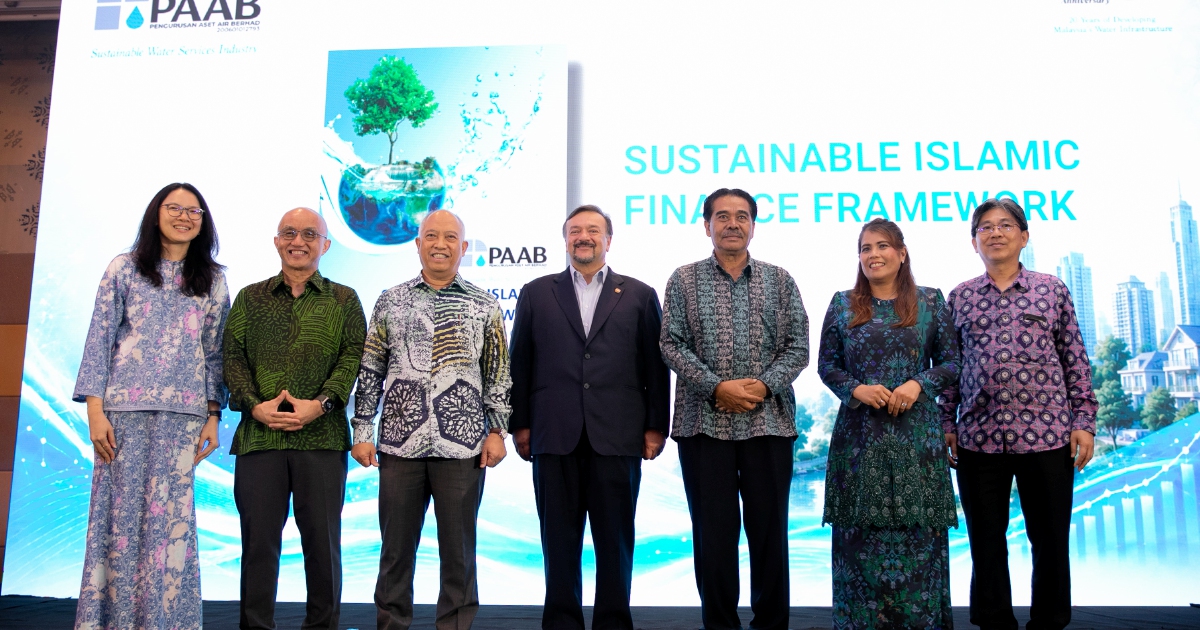
Pengurusan Aset Air Bhd (PAAB), Malaysia's leading water asset management entity, has entered the booming blue sukuk market with a RM720 million issuance, signalling a strategic shift towards sustainable financing for the nation's critical water infrastructure. The offering, channelled through special purpose vehicle Pengurusan Air SPV Bhd (PASB), draws from the company's existing RM2 billion Islamic Commercial Papers Programme, a framework that permits multiple tranches of sharia-compliant instruments to be rolled out over time.
Blue sukuk represent a growing category within Islamic finance, specifically designed to fund projects with positive environmental outcomes—in this case, water management, treatment, and distribution infrastructure. By structuring this issuance as blue sukuk rather than conventional financing, PAAB positions itself to attract a widening pool of socially conscious investors, both domestic and international, who seek returns aligned with environmental and sustainability objectives. This approach reflects a broader global trend in which institutional investors increasingly evaluate asset allocation through environmental, social, and governance (ESG) criteria.
The issuance underscores Malaysia's deepening integration into global sustainable finance architecture. The country has emerged as a regional hub for Islamic finance innovation, with Kuala Lumpur hosting the Islamic Financial Services Board and numerous regional sukuk issuers. Blue sukuk in particular resonate with Malaysia's commitment to the United Nations Sustainable Development Goals and its own national sustainability agenda, which prioritises climate resilience and resource efficiency. PAAB's move therefore carries symbolic weight beyond mere capital-raising, establishing a domestic precedent for how Malaysia's essential service providers can harness green and blue instruments.
From an operational perspective, PAAB's decision to issue through the existing RM2 billion Islamic Commercial Papers Programme demonstrates financial efficiency. Rather than undertaking a fresh regulatory process for each new instrument, the company leverages an already-approved framework, reducing time to market and transaction costs. This modular approach allows PAAB flexibility to issue further tranches as capital needs arise, enabling the company to maintain a diversified funding profile while managing refinancing risk across different maturity dates and investor bases.
The timing of this issuance is strategically significant for Malaysia's water sector. Domestic water utilities face mounting pressure to upgrade aging infrastructure, comply with stricter environmental standards, and invest in treatment technologies that reduce non-revenue water loss—a persistent challenge affecting efficiency across the peninsula. Competitive pressures to maintain service quality while controlling tariffs have constrained the capital available through traditional utility revenue streams. Blue sukuk thus offer a critical supplementary financing avenue, allowing entities like PAAB to undertake necessary infrastructure programmes without imposing excessive rate burdens on consumers.
For regional investors, PAAB's issuance presents an interesting diversification opportunity within the Asian infrastructure space. Water security has become an increasingly material asset class concern across Southeast Asia, where rapid urbanisation, industrial demand, and climate variability create competing pressures on freshwater systems. Malaysia, possessing relatively abundant water resources compared to some neighbours, nonetheless faces distribution challenges and the need for advanced treatment capacity in high-demand zones. Investors backing PAAB's sukuk thus gain exposure to essential infrastructure in a region where water scarcity represents both a current operational reality and an emerging structural risk factor.
The Islamic finance dimension merits particular attention in the Malaysian context. Sharia-compliant financial instruments now account for a substantial and growing share of capital formation in Malaysia, with sukuk playing a dominant role. Blue sukuk sit at the intersection of two powerful trends: the globalisation of ESG investing and the maturation of Islamic finance markets. By marrying these two dynamics, PAAB taps not only Islamic investors but also conventional ESG-focused funds increasingly willing to participate in sharia-compliant structures that meet their environmental criteria.
Successful execution of this issuance will likely encourage other Malaysian utilities and infrastructure entities to consider similar pathways. Water, electricity, waste management, and transportation authorities could follow PAAB's lead, potentially transforming Malaysia into a regional centre for blue and green sukuk issuance. This development would strengthen the country's capital markets ecosystem, deepen investor confidence in sharia-compliant sustainability instruments, and channel institutional capital towards infrastructure projects aligned with both Islamic principles and global sustainability standards.
Looking forward, PAAB's RM720 million offering represents more than a single financing transaction. It exemplifies how Malaysia's essential service providers can simultaneously address capital requirements, align with ESG investor expectations, satisfy sharia compliance, and advance national sustainability objectives. As climate risks intensify and water infrastructure demands escalate across the region, blue sukuk frameworks established today may well become a cornerstone of how Southeast Asian nations fund the transition towards more resilient and efficient water systems.

