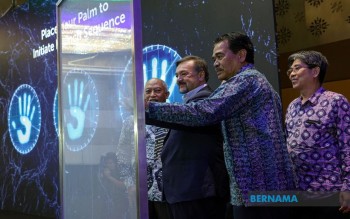
Pengurusan Aset Air Bhd (PAAB), the government-owned water assets management company, has introduced a transformative financial architecture designed to mobilise investment capital towards Malaysia's critical water infrastructure needs. Unveiled on June 30 in Kuala Lumpur, the Sustainable Islamic Finance Framework represents three significant national firsts: Malaysia's inaugural blue finance integration within Islamic banking structures, the country's first Platinum Rated Framework certification in this domain, and the nation's comprehensive sustainable Islamic finance framework linking religious investment principles with environmental imperatives.
The framework's development reflects careful collaboration between financial and sustainability specialists. Maybank Investment Bank Bhd served as the principal sustainability structuring adviser, while RAM Sustainability Sdn Bhd provided independent second-party verification of framework compliance. This partnership model demonstrates how Malaysia's financial sector is institutionalising sustainability assessment, moving beyond voluntary corporate commitments toward structured, third-party validated approaches. The framework itself functions as a standardised template enabling PAAB to channel financing into water infrastructure while adhering to both international environmental standards and Islamic financing principles—a dual requirement that addresses Malaysia's diverse investor base and regulatory landscape.
The scale of PAAB's existing water asset portfolio underscores the urgency behind this financial innovation. As of December 31, 2026, the entity had accumulated RM46.88 billion in total migrated and committed investments across Malaysia's water services sector. These figures extend far beyond accounting abstractions; they translate into tangible infrastructure assets now serving the nation's population. The group has completed construction and operation of 21 water treatment facilities collectively capable of producing 2.085 billion litres daily—a capacity essential for serving urban and rural consumers across Peninsular Malaysia, Sabah, and Sarawak. Equally significant, 42 reservoirs with combined storage reaching 783 million litres have been constructed, providing buffer capacity against seasonal variability and drought conditions. The replacement of 3,263 kilometres of ageing pipeline infrastructure addresses a chronic efficiency challenge; ageing distribution networks throughout Malaysia lose substantial water volumes to leakage before reaching end consumers, a phenomenon termed non-revenue water loss that drains resources and increases operational costs for water utilities.
PAAB Chairman Datuk Seri Jaseni Maidinsa framed these infrastructure achievements within a broader national security paradigm during the framework launch ceremony. Water security, he emphasised, constitutes a foundational element of economic stability and public welfare. The modernisation of treatment capacity, storage facilities, and distribution networks directly strengthens Malaysia's resilience against supply disruptions and climate variability. This perspective aligns with regional concerns about water scarcity intensifying across Southeast Asia due to population growth, industrial demand, and climate pattern shifts. Malaysia's considerable water resources relative to some neighbours represent both an asset and a responsibility requiring sustained investment.
The framework's most innovative feature—the planned blue sukuk issuance—addresses a specific financing gap. Finance Minister II Datuk Seri Amir Hamzah Azizan confirmed that PAAB intends to launch its inaugural blue sukuk offering by the third quarter of this year, positioning it as the first blue finance instrument globally incorporating a jointly developed taxonomy. This taxonomy, created collaboratively by Maybank, RAM Sustainability, and guided by the Securities Commission Malaysia, establishes consistent criteria for categorising water-related assets as eligible collateral. Standardised classification systems reduce information asymmetries that typically deter cautious institutional investors—pension funds, insurance portfolios, and wealth managers scrutinise frameworks to understand precisely which assets underpin their returns.
Blue finance itself represents an emerging asset class recognising that water infrastructure, watershed protection, and marine resource management generate economic value requiring dedicated capital mobilisation. Traditional financing mechanisms often struggle to adequately value these systems because their benefits—water availability, flood mitigation, ecosystem services—extend broadly across populations and timeframes, defying straightforward cost-recovery logic. Islamic finance structures add particular value here because Sharia principles emphasise stewardship, social welfare, and environmental responsibility, creating philosophical alignment with water resource management objectives.
The securitisation approach outlined by Amir Hamzah introduces fresh possibilities for capital deployment. By transforming water assets into sukuk-backed securities, PAAB can tap institutional investors historically reluctant to participate in public utility financing, particularly in markets where regulatory frameworks remain evolving. The Minister noted that this collateralisation strategy opens pathways for expanding water sector investment beyond traditional utility revenue models. Rather than relying solely on tariff collection from consumers, water authorities can mobilise capital markets directly, accessing global funds seeking inflation-protected, essential-service-backed instruments.
This financing innovation carries particular relevance for Malaysian policymakers confronting rising water demand. Urban population concentration, industrial expansion, and agricultural water requirements collectively strain supply systems that achieved stability during lower-demand eras. Several Malaysian states have experienced severe water rationing in recent years, demonstrating that existing infrastructure capacity remains inadequate relative to projected demand. Capital expenditure requirements exceed what government budgets traditionally accommodate, necessitating innovative financing mechanisms attracting private and institutional investment. The blue sukuk framework, by combining Islamic finance credibility with sustainability certification and explicit water-asset backing, creates instruments marketable to Malaysian and international investors simultaneously seeking returns and environmental impact alignment.
The Platinum certification received by the framework validates its comprehensiveness across governance dimensions. Rating agencies and sustainability certifiers assess frameworks across multiple criteria: clarity of asset eligibility definitions, transparency regarding fund allocation, independence of monitoring and verification processes, and stakeholder consultation quality. Platinum designation indicates PAAB's framework satisfied rigorous scrutiny across these dimensions, enhancing investor confidence and potentially commanding more favourable pricing compared to unrated competitors. This certification cascades to individual sukuk issuances, streamlining investor due diligence and potentially reducing borrowing costs—savings that ultimately reduce tariff burdens on Malaysian consumers.
The launch positioning water infrastructure as a sustainability priority reflects growing recognition that environmental investments and financial returns need not conflict. Islamic finance, with its long tradition of integrating ethical considerations into commercial transactions, provides a natural vehicle for this integration. Malaysian financial institutions increasingly recognise that sustainability criteria identify lower-risk investments, since projects addressing fundamental needs like water supply demonstrate resilience and essential demand characteristics. The framework therefore appeals simultaneously to conscience-driven investors seeking positive externalities and pragmatic capital allocators prioritising stability.
Government commitment, as expressed by senior Finance Ministry officials and PAAB leadership, signals that water infrastructure financing will remain a policy priority. The framework's establishment suggests systematic, rather than episodic, capital mobilisation will characterise future water investment. This predictability matters enormously for private sector participation and project planning. Contractors, equipment suppliers, and operational service providers can invest in capability development when they can reasonably project sustained demand from major asset owners like PAAB.
Sector observers note that Malaysia's pioneering role in blue sukuk development positions it advantageously within regional financial competition. Other Southeast Asian nations confronting similar water challenges may adopt or adapt the Malaysian framework, potentially creating export opportunities for Malaysian financial expertise and technology. The combination of Islamic finance sophistication, sustainability certification mechanisms, and governance rigour represents competitive advantage in emerging markets increasingly demanding ethically structured capital solutions.
Moving forward, successful blue sukuk execution will require maintaining discipline regarding asset quality, ensuring ringfenced funds reach intended infrastructure purposes, and delivering transparent performance reporting to investors. Any slippage would undermine investor confidence and complicate future capital mobilisation. The stakes thus extend beyond PAAB's immediate financing needs to Malaysia's credibility within international sustainable finance markets and the viability of Islamic finance mechanisms addressing environmental imperatives across Muslim-majority economies.

