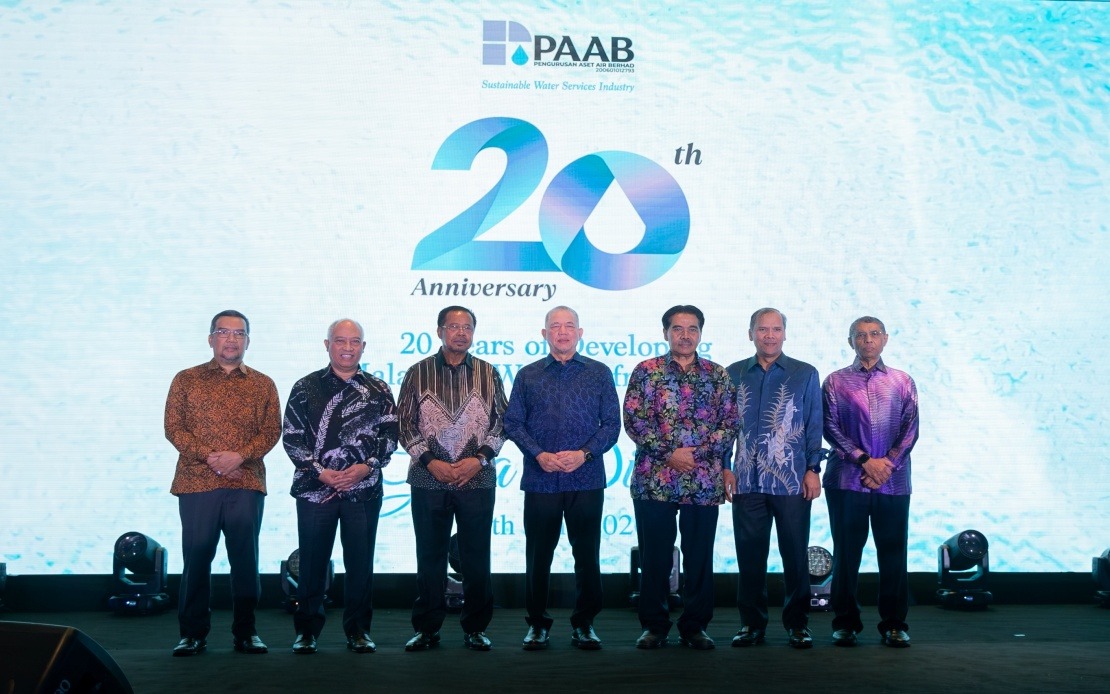
Pengurusan Aset Air Berhad (PAAB) has reached a significant milestone this month, marking two decades since its establishment on May 5, 2006. The milestone comes as Malaysia's water sector continues its long-term restructuring journey, with PAAB playing a central role in channelling substantial capital into infrastructure modernisation and loan management. The organisation, fully owned by the Minister of Finance Incorporated, celebrated the occasion with a formal dinner attended by senior government officials and water industry leaders, underscoring the strategic importance of the sector to the nation's development.
Over its 20-year tenure, PAAB has fundamentally altered how Malaysia finances and manages its water infrastructure. The organisation has assumed responsibility for water industry loans totalling RM23.04 billion whilst simultaneously deploying RM23.84 billion into capital infrastructure projects. This combined injection of RM46.88 billion represents one of the largest sustained investments in the nation's public utilities sector, positioning water services alongside energy as a critical pillar of economic resilience. The scale of this commitment reflects policymakers' recognition that reliable water supply underpins not only household security but also industrial competitiveness.
The tangible progress from these investments is now visible across the country's water landscape. As of December 2025, ten states have formally endorsed the National Water Services Industry Restructuring Plan, triggering a cascade of completed infrastructure projects. The network now encompasses 21 newly constructed or rehabilitated water treatment plants with combined daily capacity reaching 2,085 million litres, complemented by 42 storage facilities holding 783 million litres in reserve. Additionally, authorities have extended and upgraded 3,263 kilometres of pipeline infrastructure. These figures translate into improved supply reliability, reduced wastage during distribution, and enhanced geographical reach for communities previously underserved.
Yet despite these substantial accomplishments, Malaysia faces a persistent challenge that threatens to undermine the sector's progress. Deputy Prime Minister Datuk Seri Fadillah Yusof, who holds the Energy Transition and Water Transformation portfolio, highlighted the critical issue of non-revenue water (NRW) during the anniversary celebration. The national NRW rate stands at approximately 40 per cent, meaning that four out of every ten litres treated and distributed is lost before reaching paying consumers. This leakage—caused by aging pipelines, illegal connections, metering failures, and maintenance gaps—represents both a financial burden and an environmental concern.
Fadillah's intervention signals growing impatience with the pace of NRW reduction across different service areas. He stressed that whilst long-term planning frameworks extend to 2050, waiting a quarter-century to address losses of this magnitude is neither economically rational nor operationally acceptable. The water sector, he argued, requires immediate, coordinated intervention involving federal agencies and state governments rather than incremental improvements tied to sequential project completion. This message reflects a broader frustration within government that despite decades of restructuring and billions in investment, fundamental inefficiencies persist.
The NRW challenge carries particular urgency given Malaysia's positioning as a destination for large-scale foreign investment in emerging technology sectors. Data centres, semiconductor facilities, and advanced manufacturing plants all demand substantial and uninterrupted water supplies. A 40 per cent loss rate undermines the nation's capacity to guarantee supply stability to such industrial users, potentially dimming Malaysia's competitive advantage in attracting capital-intensive operations. Fadillah specifically referenced this nexus, noting that Malaysia cannot afford to disappoint foreign investors through supply disruptions whilst simultaneously losing four billion litres daily to waste.
PAB's own leadership confirmed the organisation's structured approach to the sector's transformation. Chairman Datuk Seri Jaseni Maidinsa outlined the phased roadmap guiding the industry toward full cost recovery by 2050. The framework divides efforts into four distinct periods: the Migration phase (2008–2020), during which initial restructuring occurred; the Stabilisation phase (2021–2030), currently underway, focused on standardising operations and tariffs; the Consolidation phase (2031–2040), preparing for full cost recovery; and the final Full Cost Recovery phase (2041–2050), when tariffs are expected to fully reflect operational and maintenance expenses without subsidies.
Within this timeline, PAAB's capital expenditure of RM23.84 billion has been strategically allocated across three categories. Completed projects, now transferred to state-level operators, account for RM8.33 billion of investment. Another RM1.84 billion funds projects currently under construction, whilst the remaining RM13.67 billion supports initiatives still in design and planning stages. This distribution indicates that the transformation agenda remains frontloaded, with substantial future commitments extending well beyond 2030. The scale of uncommitted funds highlights both the ambition of the restructuring programme and the decade-long construction cycle typical of water infrastructure.
The philosophical shift embedded within PAAB's operations extends beyond accounting metrics to embrace qualitative improvements in service delivery. The organisation measures success not merely by capital deployed or assets transferred but by improvements in the reliability, cleanliness, and quality of water reaching households and businesses. This emphasis on outcomes rather than throughputs represents a maturation of infrastructure policy, reflecting evidence that public investment only justifies itself when it translates into tangible benefits for end-users. Communities in restructured service areas have increasingly experienced fewer supply interruptions, improved water quality testing, and better customer responsiveness from operators managing modernised systems.
Yet the NRW conversation reveals tensions inherent in the restructuring programme. Substantial capital deployed into treatment capacity expansion does little to benefit consumers if the resulting water never reaches taps intact. The 21 new treatment plants represent impressive engineering achievements, but their contribution to security remains compromised when four out of ten litres of their output disappears into leaking pipes. This phenomenon reflects the physical reality that water infrastructure is not monolithic—treatment, transmission, storage, and distribution are separate networks often managed by different entities with varying maintenance standards and investment priorities.
The path forward requires cooperation mechanisms that transcend PAAB's formal mandate. Whilst PAAB finances infrastructure and SPAN, the National Water Services Commission, regulates the sector, actual operational responsibility rests with state-level water authorities and concessionaires. Compelling these entities to prioritise NRW reduction alongside capacity expansion demands either regulatory pressure, tariff incentives, or both. Fadillah's public call for coordinated action signals an expectation that the government may increasingly resort to mandates and targets rather than relying on market mechanisms alone.
Looking ahead, Malaysia's water sector stands at a crossroads. Two decades of restructuring have created the institutional architecture and injected the capital necessary for transformation. Yet the persistence of 40 per cent NRW suggests that financial investment alone cannot overcome organisational and maintenance challenges embedded within the system. As PAAB embarks on its third decade, the true test of its strategy will be whether the capital discipline and long-term planning it represents can catalyse the operational excellence and coordinated action necessary to finally crack the NRW problem and deliver the water security Malaysia's growing economy increasingly demands.

