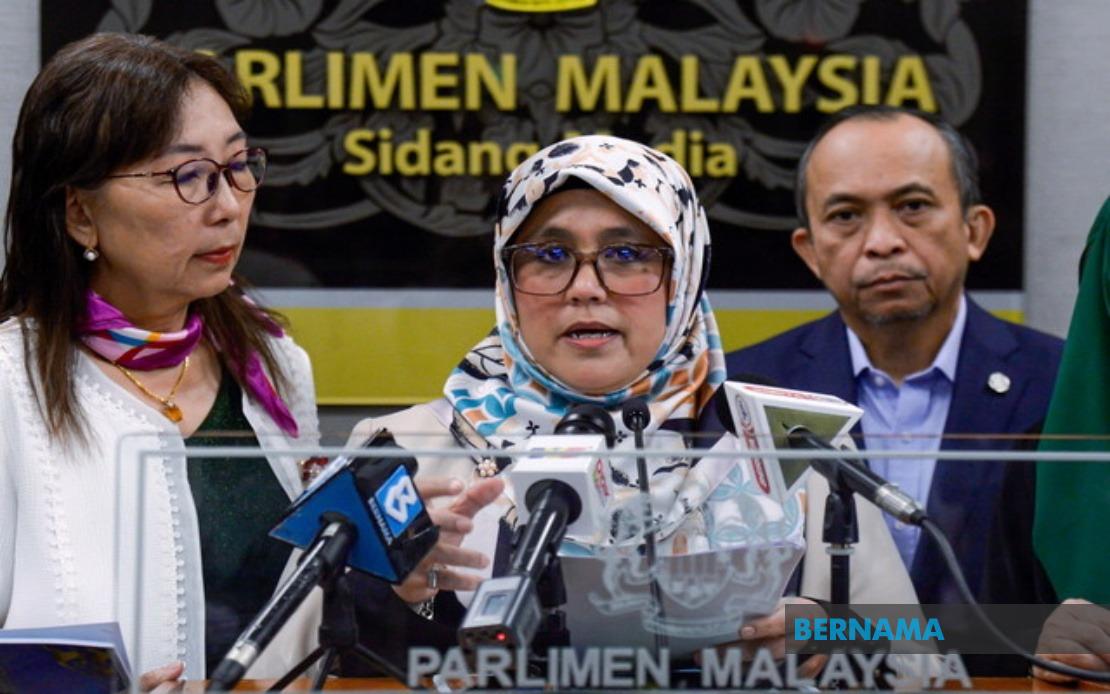
The Public Accounts Committee has moved to strengthen parliamentary oversight of Malaysia's troubled Littoral Combat Ship programme, one of the defence establishment's most expensive and chronically delayed acquisitions. In a statement tabled in Parliament, the PAC has ordered that the Defence Ministry and Finance Ministry submit written progress updates every three months, with the first reporting cycle beginning in May, to catch emerging problems before they snowball into project-threatening crises.
Chairman Datuk Mas Ermieyati Samsudin emphasised that the RM11.22 billion contract ceiling must remain inviolable, with both ministries required to maintain rigorous financial controls. This signals Parliamentary frustration with how the project has historically consumed resources, and reflects broader concerns about whether government agencies can be trusted to police their own spending on mega-contracts. The PAC's insistence on quarterly reports represents a departure from the hands-off approach that allowed the LCS programme to accumulate delays and cost pressures with minimal real-time Parliamentary scrutiny.
The Defence Ministry has tasked Lumut Naval Shipyard with delivering all five vessels to the Royal Malaysian Navy on schedule and within the fixed price ceiling. Yet LUNAS faces mounting pressure to eliminate recurrent technical bottlenecks, particularly around critical components such as radar systems supplied by international vendors. The shipyard must now maintain robust warranty stock buffers to prevent the cascade failures that have plagued earlier deliveries. This requirement essentially shifts risk from overseas suppliers back to the Malaysian contractor, who must absorb any gaps in parts availability without billing the government for the consequences.
A major complication emerged when Norway's government revoked the export licence for the Naval Strike Missile system destined for the LCS fleet. This cancellation, which the PAC examined in detail during a June 23 session with defence officials, has left Malaysia without a critical weapon system and exposed the perils of relying on foreign military technology subject to unilateral government decisions. The committee has now instructed the government to pursue all available channels—whether diplomatic negotiation or formal legal action—to secure compensation from Norwegian authorities in accordance with the contract terms.
The PAC has also implemented a structural reform to the payment mechanism that fundamentally changes how the government funds the shipyard's work. The new Earned Value Management system replaces the previous milestone-based approach, under which LUNAS could invoice for completion of pre-defined project phases regardless of whether underlying physical work had truly progressed. Under EVM, payments now flow only when independent verification confirms that tangible work has been delivered and meets quality standards. This shift addresses a systemic vulnerability that exposed the government to overpayment and cost padding.
Under the revised timeline, the first vessel—LCS 1—is now scheduled for delivery in December 2024, representing a four-month slip from earlier projections. The second ship, LCS 2, has been rescheduled for August 2027. Critically, the delivery windows for vessels three through five remain pegged to the original contract schedule, with the final unit due in April 2029. This compressed timeline for the later deliveries will require sustained effort and flawless execution from LUNAS, leaving little margin for the technical surprises that have repeatedly derailed earlier milestones.
For Malaysian defence planners and taxpayers, the LCS programme embodies the structural challenges facing large capital acquisition projects in Southeast Asia. The combination of domestic shipbuilding capacity constraints, dependence on foreign subsystems, complex international supply chains, and variable government oversight has created a perfect storm of delays and cost pressures. The PAC's intervention, while overdue, reflects Parliament's determination to prevent further deterioration and to establish clearer lines of accountability between spending ministries and legislative oversight bodies.
The quarterly reporting requirement also signals that the committee intends to maintain vigilance well beyond the initial delivery phase. Given that the project extends to 2029 and that earlier vessels will enter operational service during this period, the PAC recognises that oversight cannot end once hulls are launched. Integration of foreign systems, crew training, and performance validation under real-world conditions may reveal additional technical or logistical issues that could trigger further schedule adjustments or unforeseen costs.
The decision to lock the contract value at RM11.22 billion and to place the full financial burden of obsolete component replacement on LUNAS reflects a calculated shift in risk allocation. The government is signalling that it will not bankroll scope creep or absorb the consequences of supply chain failures. Yet this approach assumes that LUNAS possesses sufficient technical depth and financial reserves to absorb shocks without simply walking away from the programme—a calculation that may be tested as the shipyard encounters the complex realities of integrating advanced military systems into newly constructed hulls.
The LCS project's trajectory—from ambitious modernisation programme to cautionary tale about the perils of oversizing defence procurement ambitions—carries lessons for other Southeast Asian militaries contemplating similar ventures. Malaysia's experience demonstrates that even when domestic shipbuilding capacity exists, the gravitational pull of foreign technology dependencies and the sheer engineering complexity of naval platforms can overwhelm institutional planning and budgetary discipline. The PAC's enforcement of quarterly reporting and tighter financial controls represents an attempt to salvage the programme through enhanced visibility and accountability, but the underlying technical and logistical challenges remain formidable.

