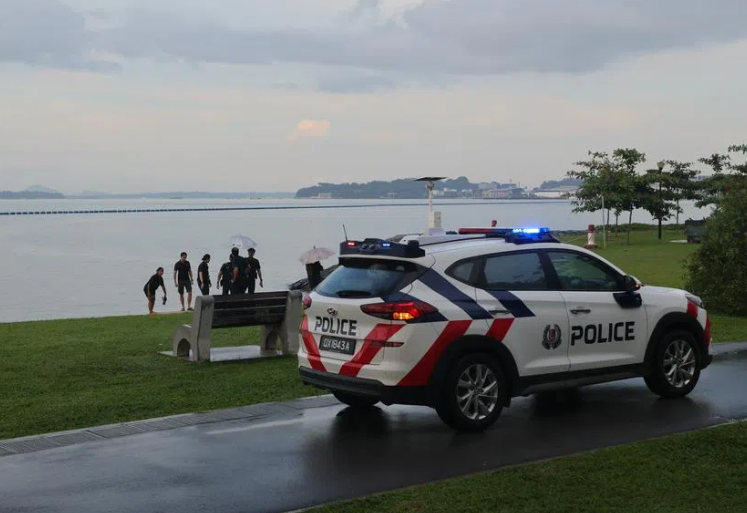
A 24-year-old man has died following a lightning strike while paddleboarding off Pasir Ris Beach in Singapore on Sunday, July 5, in an incident that left six other people injured and hospitalised. The tragedy unfolded around 4.50pm when emergency services responded to reports of the strike in the water approximately 100 metres from shore. Authorities have concluded their preliminary investigation without suspicion of criminal activity, though police inquiries remain open.
The scale of the incident became apparent as emergency responders attended to multiple casualties. The Singapore Civil Defence Force transported five people to Sengkang General Hospital, while two children were conveyed to KK Women's and Children's Hospital. All six survivors remained conscious during transport, according to police statements issued the following morning. The 24-year-old victim was found unconscious and unresponsive following the strike, and despite receiving medical intervention at the hospital, he could not be revived.
Accounts from those present paint a vivid picture of the sudden danger posed by the electrical storm. Muhammad Fairuz, a 40-year-old delivery rider who was fishing nearby, witnessed the moment lightning connected with the water. He observed that despite clear skies moments before, the discharge was sudden and powerful enough to travel along his fishing rod, a sensation he distinctly felt at that moment. Fairuz saw the unconscious paddleboarder lying across his board while the remainder of the group frantically paddled their kayaks back to shore.
Responding swiftly to calls for help, Fairuz coordinated an improvised rescue effort alongside another bystander. The two men deployed their own kayaks to reach the stricken paddleboarder and bring him back to land, where resuscitation efforts were already underway. Footage recorded by a witness around 5.10pm showed Civil Defence Force personnel performing chest compressions on the victim as a Light Fire Attack Vehicle and ambulance stood positioned nearby on the beach access road.
The incident highlights the considerable electrical hazard that lightning presents across the island nation. Singapore experiences an average of 176 lightning days annually, based on meteorological data collected at the Changi climate station, where a lightning day is counted whenever at least one electrical discharge is detected. This frequency places water-based recreational activities at measurable risk, particularly during periods when weather patterns remain unpredictable despite seemingly favourable conditions.
This tragedy is not an isolated event in Singapore's recent weather history. In May of this year, a worker employed at a fish farming operation perished after sustaining a lightning strike while at work. The previous year, on December 28, 2023, three workers were hospitalised when lightning struck in proximity to their worksite, demonstrating the recurring threat that electrical storms pose to those working or recreating outdoors. Each incident underscores the dangers inherent in outdoor activities, even when weather appears relatively calm.
The group involved in Sunday's incident had been engaged in recreational paddleboarding and kayaking, activities that have grown increasingly popular across Southeast Asia as beach tourism and water sports continue to expand. The visibility of such incidents raises important questions about safety protocols for beach operators and the awareness levels among participants regarding weather risks. While lightning strikes remain statistically rare compared to total beach visitors, their consequences when they do occur are invariably severe and often fatal.
For Malaysian readers, the incident carries particular resonance given the prevalence of similar water-based recreational activities along the Malaysian coastline. Both the east and west coasts of Peninsular Malaysia, along with Sabah and Sarawak, experience significant lightning activity during monsoon periods and afternoon thunderstorms. Beach operators, tour organisers, and individuals engaged in kayaking, paddleboarding, and other water sports would benefit from examining their own safety protocols and evacuation procedures in response to developing weather conditions.
Meteorological experts have long emphasised that lightning can strike even when skies appear relatively clear, as electrical charges can build within storm systems moving toward an area without visible warning. The phenomenon exemplified in the Pasir Ris incident, where clear conditions preceded the strike, suggests that relying on visual assessment of weather alone provides insufficient protection. Authorities across the region continue to recommend that water activities be suspended immediately when thunderstorm warnings are issued, regardless of current atmospheric conditions at a specific location.

