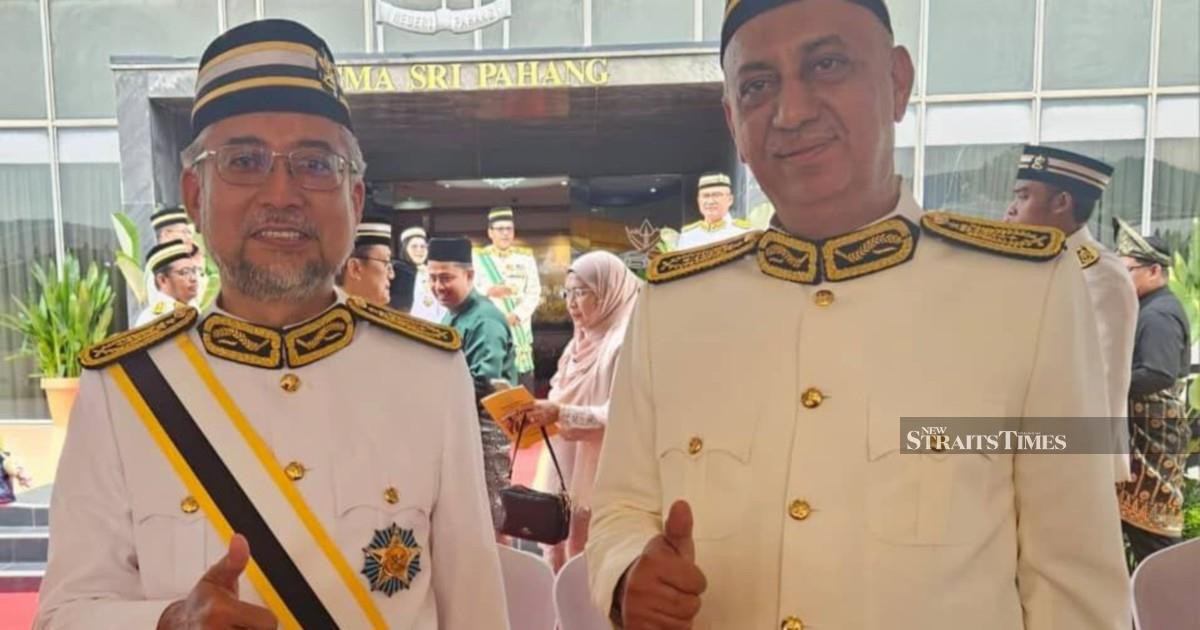
Two Pahang Bersatu assemblymen have publicly reaffirmed their commitment to supporting Menteri Besar Datuk Seri Wan Rosdy Wan Ismail, vowing to maintain their backing for his administration as the state approaches its 16th general election. The show of solidarity from the state lawmakers underscores efforts within the Pahang Bersatu faction to project unity and political stability ahead of what is expected to be a closely contested electoral contest.
The pledge represents a calculated political statement at a time when party cohesion and organizational discipline have become focal points for leadership in several Malaysian states. By publicly cementing their positions, these assemblymen are signalling to both party grassroots and potential rivals that the incumbent leadership enjoys substantive legislative support. This form of public endorsement has become customary in Malaysian state politics, where assemblymen frequently use such declarations to reinforce factional strength and discourage internal dissent.
Wan Rosdy, as the sitting Menteri Besar, carries the institutional advantages of incumbency, including control over state resources and patronage networks. The backing from within his own party coalition provides crucial buffer against any latent challenges to his leadership legitimacy. In Pahang's political context, where factional alignments have historically shifted, securing explicit support from party assemblymen helps consolidate his position and sends a message to the electorate that his government commands stable parliamentary numbers.
The timing of such declarations often carries strategic weight in Malaysian politics. By securing these endorsements before election season formally intensifies, the administration can project a narrative of internal harmony and forward momentum. This becomes particularly important in a state like Pahang, where multiple parties operate within a coalition framework, and where maintaining unity among coalition partners remains essential for sustaining government stability.
For the Bersatu party specifically, demonstrating coherent backing for state leadership serves broader organizational interests. The party has experienced internal turbulence in various states, making visible signs of unity and support valuable for reinforcing its national brand as a stable governing entity. These kinds of public endorsements therefore serve dual purposes: they strengthen the Menteri Besar's position locally while simultaneously advancing Bersatu's image as a disciplined and cohesive political force.
The commitment stated by these assemblymen extends beyond personal political calculations to encompass their respective constituencies and the projects they champion. State assemblymen typically leverage their support for the Menteri Besar into tangible benefits for their constituent areas, including infrastructure funding, development allocations, and access to state-level patronage. By pledging continued backing, they are essentially banking on maintaining channels through which they can deliver results to their voters.
From a regional perspective, developments in Pahang politics carry relevance for understanding broader coalition dynamics across Malaysia's peninsular states. The Bersatu party's performance and internal cohesion in Pahang often serve as indicators for how the organization is managing factional tensions elsewhere. States like Pahang, which operate under coalition frameworks, provide barometers for assessing whether Malaysia's multi-party governing arrangements are generating stability or sowing seeds of future instability.
The path toward the 16th state general election will likely see intensified political maneuvering, with various factions positioning themselves for electoral advantage. These preliminary declarations of support function as opening moves in what is expected to be a protracted campaign. By establishing clear lines of allegiance now, political actors are attempting to lock in support bases and minimize the risk of late-stage defections or realignments that could prove damaging to their electoral prospects.
Pahang's electoral dynamics also intersect with broader national political considerations, particularly regarding the composition of coalitions and the balance of power between federal-level political parties. How Bersatu performs in the state election will inevitably factor into calculations about the party's national standing and its bargaining power within multi-party governments at both state and federal levels.
The assurances from these two assemblymen, while focused on state-level governance, reflect the complexities inherent in managing political coalitions across Malaysia's federal system. Their public statements represent not merely personal backing but calculated investments in political relationships that may yield returns far beyond the immediate state election cycle. In the Malaysian political context, where coalition stability remains paramount and electoral fortunes can shift swiftly, such declarations of support represent essential mechanisms for maintaining the organizational coherence that governments require to function effectively.

