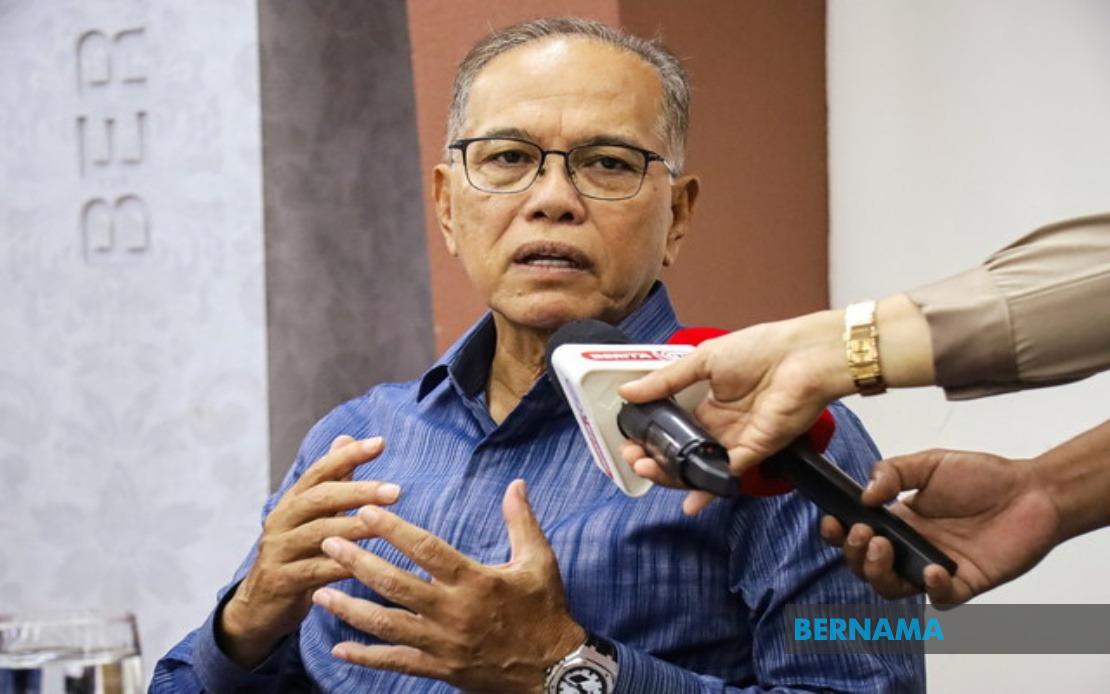
Pahang's Barisan Nasional leadership has pledged to preserve the state's Unity Government arrangement with Pakatan Harapan through the next general election, offering a measure of political certainty in a state that has become a flashpoint for coalition dynamics at the national level. Speaking in Kuantan on Wednesday, Menteri Besar Datuk Seri Wan Rosdy Wan Ismail underscored his administration's determination to maintain the power-sharing partnership that has governed the state since late 2022, suggesting that both parties remain focused on governance rather than pursuing aggressive electoral repositioning ahead of GE16.
The statement carries particular significance given Pahang's history of political volatility and its strategic importance within Malaysia's broader political landscape. The state serves as a crucial testing ground for coalition stability, and any fracturing of the Unity Government at the state level could send troubling signals about the viability of similar arrangements elsewhere. By articulating a clear commitment to the status quo, Wan Rosdy appears to be positioning Pahang as a beacon of collaborative governance, even as political manoeuvring intensifies in other states and at the federal level.
Wan Rosdy further indicated that Pahang's BN component remains pragmatic and flexible, indicating openness to discussions about potential alignments with other parties as it prepares for the upcoming national election. This calculated ambiguity—maintaining the current partnership while keeping diplomatic channels open—reflects the delicate balancing act required of state leaders operating within the broader context of Malaysia's fluid political environment. Such flexibility, while sometimes criticized as opportunism, may actually serve Pahang's interests by allowing the state government to negotiate from positions of relative strength when election scenarios crystallize.
The backdrop to these remarks lies in the mathematical reality of Pahang's political composition. The state legislative assembly comprises 42 seats, with BN and Perikatan Nasional each commanding 17 seats following the 2022 general election, and PH holding eight. The Unity Government's formation in November 2022, blessed by Regent Tengku Hassanal Ibrahim Alam Shah, created an administrative bloc holding 25 seats—a comfortable majority that has provided stability, albeit within a three-sided competitive dynamic. Understanding this arithmetic is essential for comprehending why both BN and PH have incentive to preserve their partnership: neither side possesses overwhelming numerical dominance, and disunity could invite PN to exploit divisions.
Beyond the narrower realm of power-sharing mathematics, Wan Rosdy's comments underscore the commitment his administration is making to social and economic development. During the same engagement where he made his coalition remarks, the Menteri Besar announced that the state government had allocated RM118,000 to support 118 tertiary students pursuing further education in Egypt and New Zealand. This educational investment initiative exemplifies the tangible policy dividends that flow from stable governance, permitting administrations to focus on long-term human capital development rather than engaging in perpetual coalition crisis management.
The Makmur Pahang Initiative, under which these scholarships are distributed, reflects a conscious strategic choice by state planners. By directing students toward countries and institutions offering Islamic-inflected curricula and programmes aligned with emerging economic demands, the Pahang government is attempting to create a cadre of professionals whose skills address both traditional values and future labour market requirements. Additionally, the state has channelled USD1,000 through Yayasan Pahang to support students studying in Jordan and Morocco, expanding the geographical footprint of its scholarship reach and signalling an engagement with the broader Islamic and Arab world.
This commitment to overseas educational pathways deserves scrutiny beyond the surface gesture. State governments in Malaysia have increasingly recognized that human capital investment generates long-term political dividends, creating networks of accomplished diaspora professionals who maintain affective ties to their home state. When these individuals achieve prominence in their chosen fields, they become informal ambassadors and potential future leaders, strengthening the state's intellectual and professional ecosystem. For Pahang, a state that has historically struggled to compete with more economically dynamic regions, such investments carry strategic weight.
Wan Rosdy's emphasis on the rigorous curation of study programmes and curricula reflects a maturation in how Malaysian state governments approach scholarship allocation. Rather than distributing funds according to purely patronage-based criteria or generic educational aspirations, the Pahang administration is actively shaping the intellectual formation of its student cohort. The explicit consideration of programmes with Islamic components signals an attempt to harmonize Malaysia's plural society's religious and cultural values with global educational standards, avoiding false dichotomies between modernization and tradition.
The timing of these announcements, occurring as they do against the backdrop of political positioning ahead of GE16, should not be discounted. Demonstrating competent governance and forward-looking policy implementation serves multiple purposes: it legitimizes the current administration's claim to represent continuity and capability, it provides cover for BN's continued participation in a coalition with PH despite ideological differences that have historically made such partnerships fraught, and it offers PH an opportunity to showcase its commitment to shared governance beyond the peninsula's more politically visible regions.
For Malaysian voters, particularly those in Pahang, the stability signalled by this commitment to coalition continuity presents both opportunities and constraints. On the positive side, uninterrupted governance permits longer-term policy horizons and reduces the uncertainty that typically accompanies frequent political transitions. On the other hand, coalition stability can sometimes produce calcified power structures resistant to renewal or accountability. The electorate's challenge lies in holding the government accountable for promised initiatives while evaluating whether the current arrangement genuinely serves their interests or merely entrenches established interests.
The broader implications for Southeast Asian political observers merit consideration as well. Malaysia's experiment with consensus-based coalition governance at both federal and state levels offers lessons to neighbouring democracies grappling with fragmented party systems and polarized electorates. If Pahang can sustain its BN-PH partnership through GE16 while delivering tangible policy benefits, it would validate the proposition that ideological diversity need not preclude effective governance. Conversely, if the coalition fractures amid unfulfilled promises or renewed polarization, it would reinforce scepticism about Malaysia's capacity to transcend its historical pattern of volatile political transitions.
As GE16 approaches, Pahang's political trajectory will merit careful monitoring. The state's leadership has articulated clear intentions regarding coalition stability and policy delivery, but rhetoric and reality frequently diverge in Malaysia's fluid political terrain. Whether Wan Rosdy and his colleagues can deliver on both fronts—maintaining coalition cohesion while executing their development agenda—will significantly influence how other states and stakeholders perceive the viability of consensus-based governance models as a durable framework for managing Malaysia's political future.

