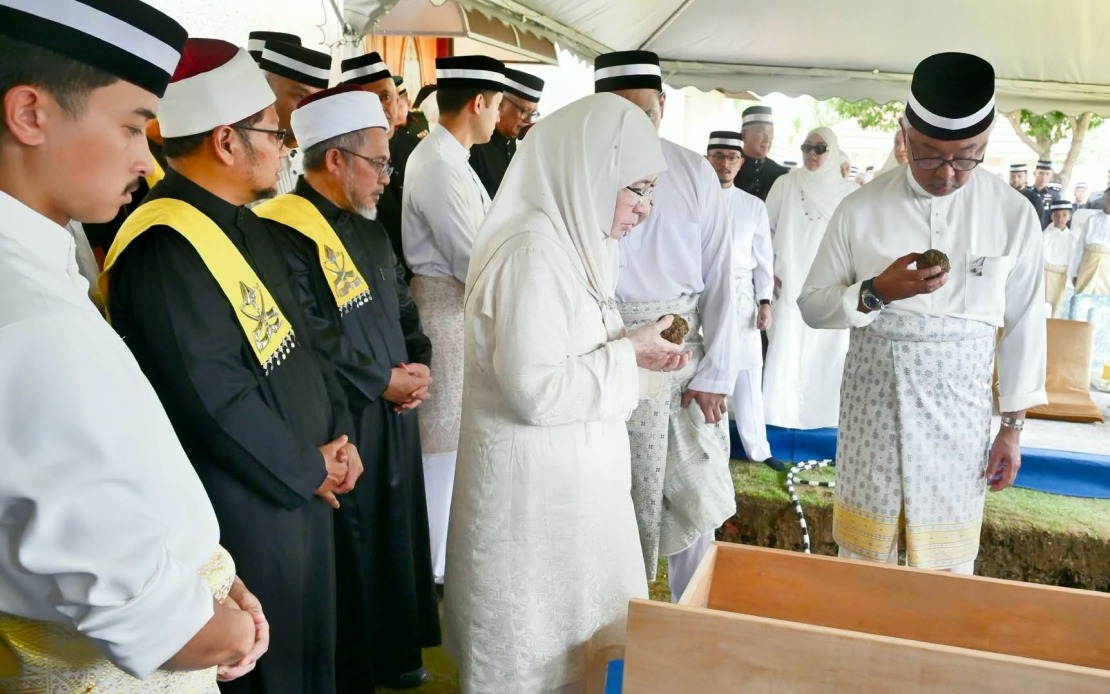
The Sultan of Pahang, Al-Sultan Abdullah Ri'ayatuddin Al-Mustafa Billah Shah, has directed the entire Pahang royal household to observe three days of formal mourning in the wake of his elder sister's passing. Tengku Puteri Seri Kemala Tengku Datuk Seri Aishah, a prominent member of the state's royal lineage, died at a hospital in Kuala Lumpur at 9.15 pm on Wednesday and was subsequently laid to rest at the Royal Mausoleum in Pekan on Thursday afternoon.
The official mourning period commenced immediately and will extend through Saturday, according to Comptroller of the Royal Household of the Sultan of Pahang Maj Gen Datuk Mohamed Zahari Yahya. The announcement, made through a formal statement, outlined the observance protocols that would govern the royal family's conduct during this period of grief, reflecting the solemnity with which the Pahang palace observes the loss of senior family members.
Specific dress codes have been prescribed for the duration of the mourning observance. All members of the Pahang royal family are required to wear white throughout the three-day period, a colour traditionally associated with Islamic mourning practices in Malaysia. Male members of the household face additional requirements, though the comptroller's statement was truncated in its description of these specific protocols. The adherence to such ceremonial practices demonstrates the formal nature of royal mourning customs in the Malaysian constitutional monarchy system.
The Comptroller's statement conveyed the profound nature of the loss, describing Tengku Puteri's passing as a significant blow to both the royal household and the broader Pahang community. The statement particularly highlighted the emotional impact on the Sultan himself and on Tengku Ampuan of Pahang Tunku Azizah Aminah Maimunah Iskandariah, emphasizing the close familial bonds within the state's royal structure. Such public acknowledgements of grief serve an important function in Malaysian court protocol, allowing the wider populace to express their sympathies and participate in the collective mourning process.
The royal household has also issued a spiritual call to the people of Pahang, encouraging them to recite Al-Fatihah and offer prayers for the departed princess's soul. This invitation for public participation in religious observances reflects the intersection of royal protocol and Islamic tradition in Malaysia, where the rulers' personal devotion often serves as a model for their subjects. The request specifically asks the public to pray for Tengku Puteri's forgiveness and mercy from the Almighty and for her soul to be granted entry into paradise.
Tengku Puteri Seri Kemala Tengku Datuk Seri Aishah held a position of considerable standing within the Pahang royal family hierarchy. As the Sultan's elder sister, she would have maintained regular involvement in state functions and represented the continuity of the royal line. Her long life and tenure within the palace would have made her a familiar figure to many residents of Pahang, particularly those engaged with the state's formal ceremonies and charitable initiatives.
The death represents the loss of a generational link within Malaysia's constitutional monarchy. The Pahang sultanate, one of the oldest and most historically significant in the Malaysian federation, places considerable importance on the prominence and role of senior female members of the royal household. The passing of Tengku Puteri marks the conclusion of a significant chapter in contemporary Pahang royal history.
The Royal Mausoleum in Pekan, where Tengku Puteri has been interred, serves as the final resting place for members of the Pahang royal family of particular rank and significance. The decision to lay her to rest in this location underscores her standing within the dynasty and ensures her burial in a place reserved for the state's most distinguished royalty. Pekan, as the royal town and historic capital of Pahang, remains the spiritual and ceremonial heart of the sultanate.
The formal procedures surrounding the princess's death and burial reflect the structured protocols governing royal matters in Malaysia. From the official announcement through the Comptroller's office to the prescribed mourning period and burial arrangements, each element follows established customs that have evolved over centuries of Pahang's history as an Islamic sultanate. These rituals serve not merely as expressions of grief but as important affirmations of institutional continuity and royal prerogative in Malaysian governance.

