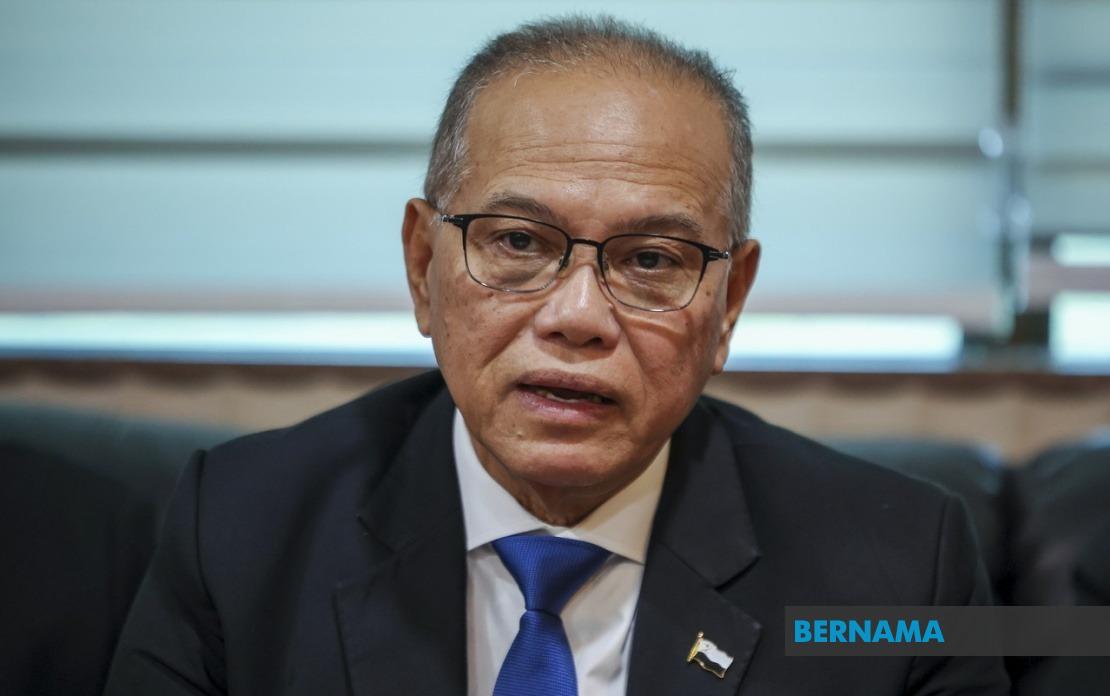
Pahang's fiscal position strengthens as the state government crosses the three-quarter mark in revenue collection for 2026. As of August 26, the East Coast state had garnered RM921.72 million towards its annual target of RM1.279 billion, placing it well ahead of schedule to meet its revenue goals by year-end. Menteri Besar Datuk Seri Wan Rosdy Wan Ismail disclosed the milestone during the Pahang State Legislative Assembly sitting at Wisma Sri Pahang in Kuantan, presenting the figures as evidence of sustained financial discipline and economic momentum across the state.
The 72 per cent collection rate underscores the underlying strength of Pahang's economic fundamentals and the effectiveness of the state government's revenue mobilisation strategies. This performance trajectory suggests that barring unforeseen economic disruptions, the state will comfortably exceed its revenue targets in the coming months. For a resource-dependent state like Pahang, which traditionally relies on sectors including agriculture, manufacturing, and palm oil production, maintaining robust revenue streams is critical to funding development programmes and public services. The healthy collection rate also demonstrates investor and business confidence in the state's economic direction, a positive signal for attracting further capital inflows.
Underscoring the revenue performance is Pahang's impressive economic expansion. The state's Gross Domestic Product surged to RM71 billion in 2025 from RM68.8 billion the previous year, reflecting accelerating economic activity across key sectors. This GDP growth trajectory outpaces many regional competitors and positions Pahang as a significant economic contributor to Malaysia's overall development. The expansion mirrors broader Malaysian economic trends whilst highlighting Pahang's particular competitive advantages in manufacturing clusters, agricultural value-added industries, and emerging sectors such as renewable energy and digital commerce.
Investment activity has equally demonstrated resilience and growth potential. The state government reported RM11.47 billion in committed investments as of August 2026, a figure that encompasses both pipeline projects and formal undertakings from domestic and foreign investors. Within the same timeframe, realised investments—those that have reached implementation stages and begun generating economic activity—amounted to RM1.044 billion. This gap between committed and realised investment suggests a robust pipeline of future projects that will deepen economic integration and create employment opportunities across multiple sectors and regions within Pahang.
The strong financial position has enabled the state administration to sustain its commitment to direct people-centric initiatives. Wan Rosdy highlighted the Makmur Pahang Initiative (IM Pahang) as a flagship programme reflecting the state's development philosophy. Between 2024 and 2026, the state allocated RM173.93 million to this initiative, with allocations expanding progressively—from RM38.8 million in 2024 to RM50.54 million in 2025 and RM84.59 million in 2026. The acceleration in annual allocations indicates growing state commitment to welfare and economic empowerment programmes, responding to evolving community needs and enhanced revenue-raising capacity.
The Makmur Pahang Initiative exemplifies how resource generation translates into tangible benefits for residents. The programme encompasses various pillars addressing economic inclusion, infrastructure development, skills upgrading, and social protection. By channelling increasing resources into such initiatives, the Pahang government demonstrates that improved financial performance translates into expanded public goods delivery rather than merely enhancing government reserves. This approach builds public trust and legitimacy, particularly in economically marginalised communities that have historically depended on state support mechanisms.
Looking ahead, the state government intends to further augment allocations for the Makmur Pahang Initiative through the upcoming Pahang State Budget. This forward commitment signals confidence in sustained revenue growth and reflects a deliberate policy of reinvesting fiscal surpluses into development initiatives rather than allowing resources to accumulate idle. For Malaysian states seeking to balance fiscal prudence with developmental ambition, Pahang's approach offers a credible model of proportionate investment in public welfare whilst maintaining financial sustainability.
The revenue performance assumes particular significance within Malaysia's broader federal-state fiscal architecture. States depend substantially on federal transfers and their own revenue-raising capacity to fund operations and development. Pahang's demonstrated ability to mobilise significant internal revenue reduces dependency on central government allocations and provides greater autonomy in budgetary prioritisation. This fiscal independence, whilst modest relative to total state expenditure, grants the state greater flexibility in responding to local development priorities and emergency needs without awaiting federal approval or coordination.
For Southeast Asian and international observers monitoring Malaysian economic performance, Pahang's data contributes to a mixed but generally resilient picture of Malaysian state-level economic management. Whilst some Malaysian states face persistent fiscal pressures, Pahang's trajectory suggests that states with diversified economic bases, efficient revenue administration, and strategic investment policies can achieve sustainable fiscal health. This differential performance across states underscores the importance of sub-national governance quality and economic diversification in determining long-term prosperity.
The confluence of strong revenue collection, accelerating GDP growth, and expanding investment commitments positions Pahang advantageously for the remainder of 2026 and beyond. However, maintaining this momentum requires sustained attention to economic diversification, infrastructure development, and human capital enhancement. The state's traditional reliance on natural resource-dependent sectors necessitates proactive efforts to nurture higher-value activities and technology-intensive industries. Successfully executing this transition whilst protecting vulnerable communities from adjustment pressures will determine whether Pahang's current fiscal strength translates into durable prosperity.

