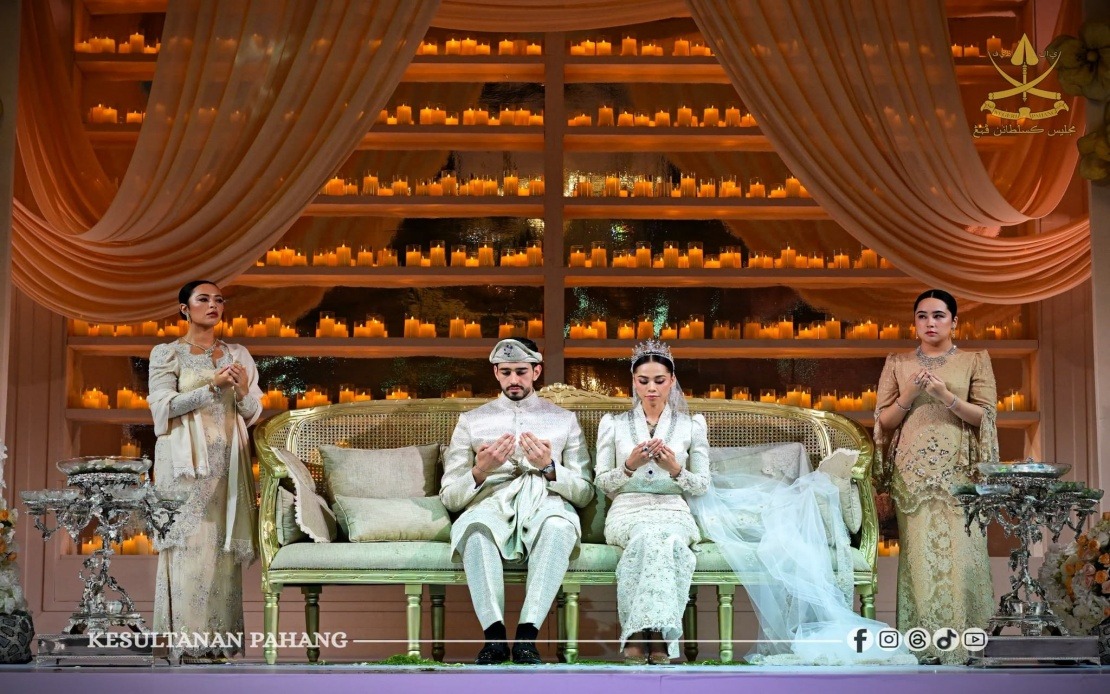
The Sultan of Pahang, Al-Sultan Abdullah Ri'ayatuddin Al-Mustafa Billah Shah, graced the wedding reception of his eldest daughter, Tengku Puteri Raja Tengku Puteri Ilyana Alia, and her husband Christopher Lionel Froggatt at a Kuala Lumpur hotel, affirming the prominent role of the Pahang royal family in the nation's constitutional monarchy.
The August 8 ceremony drew members of the immediate royal household, including Pahang's Regent Tengku Hassanal Ibrahim Alam Shah and other siblings of the Sultan, creating a strong showing of dynastic support for the union. The presence of multiple generations of the Pahang royal family underscored the cultural and ceremonial significance placed upon such occasions within Malaysian aristocratic circles, where weddings serve not merely as private family events but as public demonstrations of continuity and stability within the sultanate.
Beyond immediate royal circles, the reception welcomed notable state and international dignitaries who reflected the broader networks surrounding the Pahang court. Pahang Menteri Besar Datuk Seri Wan Rosdy Wan Ismail attended in his executive capacity, while Shaikh Mohammed Hamad Tahnoon Al Nahyan represented the President of the United Arab Emirates, signalling diplomatic dimensions to the matrimonial celebration. The presence of an Emirati envoy hints at potential business or trade connections between Pahang and the Gulf state, though formal statements on such matters remain absent.
The ceremony itself followed traditional Malay-Muslim royal protocols, with the newlyweds taking their elevated position on the dais as focal points for ritualistic observances. Tengku Puteri Seri Lela Wangsa Tengku Tan Sri Meriam Sultan Ahmad Shah initiated proceedings by conducting the 'Istiadat Menyuap Nasi Semangat', a customary feeding ceremony that symbolises the couple's readiness to nurture one another within married life. Such rituals, deeply embedded in Malay cultural heritage, remain integral to royal weddings regardless of whether the groom is of Malaysian or international background.
The Sultan himself took an active ceremonial role by leading the 'Istiadat Bersanding dan Merenjis', a dignified sitting ceremony during which family members approach the bride and groom, showering blessings and sometimes scattering petals or coins as gestures of goodwill and prosperity. This participation by the reigning Sultan elevates the occasion's ceremonial rank, distinguishing it as a state-level rather than purely private affair. The continuation of this ritual with subsequent family members reinforced collective endorsement of the marriage.
Al-Sultan Abdullah further performed the 'Istiadat Meletakkan Panca Bicara', a formal blessing ritual that carries particular weight when executed by a reigning sultan. The five pillars of this ceremony symbolise foundation, propriety, wisdom, justice and compassion—values the Sultan implicitly projects onto the newly married couple as they embark on their joint household. By executing this gesture personally, the Sultan not only honoured the newlyweds but also demonstrated his continued engagement with royal ceremonial traditions, a significant aspect of constitutional monarchy practice in Malaysia.
The involvement of Pahang Mufti Datuk Dr Asmadi Mohamed Naim in offering prayers further grounded the ceremony within Islamic religious frameworks, ensuring that the matrimonial union received spiritual endorsement from the state's religious establishment. This integration of secular royal ceremony with religious observance reflects Malaysia's constitutional positioning, where sultans hold dual roles as temporal rulers and protectors of Islam within their respective states. For Pahang specifically, such religious affirmation carries particular resonance given the state's historical prominence in Islamic administration and jurisprudence.
The choice of a Kuala Lumpur venue rather than a Pahang location suggests several possibilities: the accessibility of Malaysia's capital for international guests, the availability of large-scale hotel facilities suitable for grand royal occasions, and potentially the bride's residence or the groom's base of operations in the federal territory. This practical decision also reflects how modern royal families in Malaysia balance ceremonial traditions with contemporary logistical realities, often hosting significant events in urban centres rather than exclusively within state capitals.
The international dimension of this marriage—marked by Christopher Lionel Froggatt's surname suggesting Western heritage—represents an increasingly common phenomenon within Malaysian royal circles, where cross-cultural unions occur without apparent controversy or significant deviation from traditional ceremonial protocols. The seamless integration of the foreign groom into Pahang's royal wedding ceremonies demonstrates the adaptability of these institutional traditions while maintaining their essential character and symbolic meaning.
From a broader Malaysian perspective, such high-profile royal weddings reinforce the continued relevance and cultural vitality of the constitutional monarchy system, particularly as experienced at the state level. While federal-level royal events often dominate national media discourse, state sultan ceremonies maintain deep resonance within their constituent regions, providing tangible manifestations of continuity, legitimacy and social cohesion. The presence of state officials and foreign dignitaries at the Pahang Sultan's daughter's wedding further cements the sultanate's position within both regional and international diplomatic networks.
The detailed documentation of the ceremony through official royal social media channels—specifically Kesultanan Pahang's Facebook page—also reflects contemporary royal communications strategies, where traditional protocols are preserved while dissemination occurs through modern digital platforms. This approach allows broader public engagement with ceremonial traditions whilst maintaining the exclusivity and decorum expected of royal occasions. For Malaysian readers, such transparency in royal affairs, conducted through official channels, sustains public interest and connection with their constitutional monarchs.

