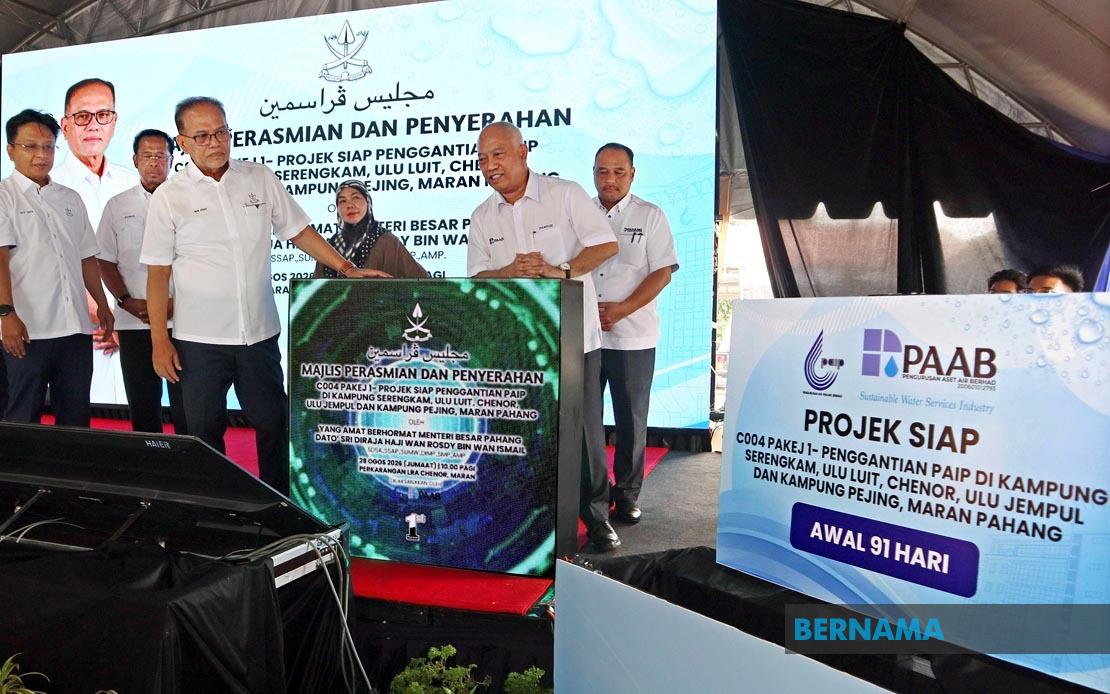
Pahang's state government is moving to formulate long-term remedies for the persistent shallowing of Sungai Pahang, which has disrupted life in several riverside settlements including Kampung Pesagi in the Maran district. Menteri Besar Datuk Seri Wan Rosdy Wan Ismail disclosed that officials are gathering comprehensive data on the river's current condition from relevant departments before determining the most appropriate course of action, signalling a methodical approach to a problem that has increasingly constrained economic and social activities in affected communities.
The river's shallowing represents a multifaceted challenge affecting transportation, fishing, and other water-dependent livelihoods that have sustained residents for generations. Rather than implementing quick fixes that might prove ineffective or counterproductive, the Pahang administration recognises the need for evidence-based planning that accounts for the complex hydrological and geographical factors contributing to the issue. Wan Rosdy indicated that the collected data will be presented to the state executive council, where officials will analyse and refine proposals for immediate, medium-range, and sustained interventions tailored to address the underlying causes.
This incremental governance structure reflects the growing sophistication of state-level policy-making in Malaysia's East Coast region, where infrastructure challenges frequently demand coordination across multiple technical agencies and jurisdictional boundaries. The emphasis on comprehensive study before implementation protects against costly mistakes that could waste public resources or inadvertently worsen conditions. The Menteri Besar's framing underscores that any solution must rest on solid technical foundations, particularly given the economic ramifications for residents whose daily lives depend on reliable river access.
Beyond the river initiative, Pahang continues advancing its water infrastructure modernisation programme, a parallel effort addressing supply reliability across the state. Four districts have achieved resolution rates exceeding 90 percent in addressing water provision gaps, with Maran positioned to join this cohort shortly. This achievement emerged from the ongoing pipe replacement scheme, which Wan Rosdy highlighted during his attendance at the inauguration of Maran's Chenor Water Treatment Plant upgrade. The convergence of these initiatives—tackling both river navigability and piped water supply—suggests the state recognises that water management encompasses diverse technical domains requiring sustained investment.
Pahang's infrastructure modernisation strategy extends significantly into energy systems, with the Tenaga Nasional Berhad constructing a 500kV Transmission Main Intake Substation in Kampung Awah at an anticipated cost of RM350 million. This project, scheduled for completion by 2030, aims to establish a more resilient electricity backbone connecting strategic East Coast locations. The rationale extends beyond supplying current demand; state officials view robust energy infrastructure as crucial for attracting industrial investment and positioning Pahang competitively within Southeast Asia's manufacturing and processing sectors. A dependable power network signals investor confidence and operational reliability to potential partners evaluating regional expansion.
The strategic coherence connecting water management, energy infrastructure, and economic development reflects broader patterns in Malaysian regional governance, where state governments increasingly frame infrastructure spending as foundational to competitiveness and social welfare. Pahang's approach acknowledges that sustainable development requires simultaneous attention to multiple systems that interact and reinforce one another. Inadequate water supply deters investment; poor energy infrastructure limits industrial capacity; shallow rivers constrain agricultural and commercial transport. Addressing these challenges in parallel creates synergies that isolated interventions cannot achieve.
For Malaysian readers, particularly those in East Coast states, Pahang's methodical approach to the Sungai Pahang challenge offers instructive lessons about governance under resource constraints. State governments must balance urgency—communities experiencing economic disruption demand timely relief—against the imperative for sound planning. Premature or poorly conceived projects risk compounding problems rather than solving them. The Menteri Besar's insistence on detailed reports and executive council deliberation, while potentially frustrating to affected residents, reflects recognition that major infrastructure decisions generate long-lasting consequences.
The financial scale of parallel projects, with the TNB substation alone representing RM350 million in investment, indicates substantial capital availability for infrastructure modernisation in Pahang. Whether this reflects federal allocation, state revenue enhancement, or public-private partnerships remains unclear from available information. Understanding funding sources matters for assessing sustainability and potential fiscal pressures that might constrain future initiatives. The 2030 completion timeline for the electricity project suggests these are medium-term commitments rather than speculative announcements, indicating genuine governmental intent.
The environmental and social dimensions of persistent river shallowing deserve consideration alongside technical remediation approaches. Natural factors—changes in upstream precipitation patterns, sedimentation dynamics, groundwater extraction—may be compounded by land-use modifications or inadequate maintenance of drainage systems. Effective long-term solutions must address root causes rather than symptoms. Similarly, any intervention affecting Sungai Pahang carries potential implications for downstream communities and ecosystems, requiring careful environmental impact assessment before implementation proceeds.
As Malaysian states increasingly compete for investment and development status, infrastructure quality becomes a competitive differentiator. Pahang's concurrent emphasis on water supply reliability, energy network resilience, and transportation corridor functionality demonstrates recognition that modern economic activity demands multiple overlapping systems functioning efficiently. The state's willingness to invest substantially and plan comprehensively suggests confidence in long-term regional growth prospects. For residents and potential investors, these investments signal governmental commitment to creating enabling conditions for prosperity, though the actual delivery of promised benefits will ultimately determine whether these aspirations translate into tangible improvements.

