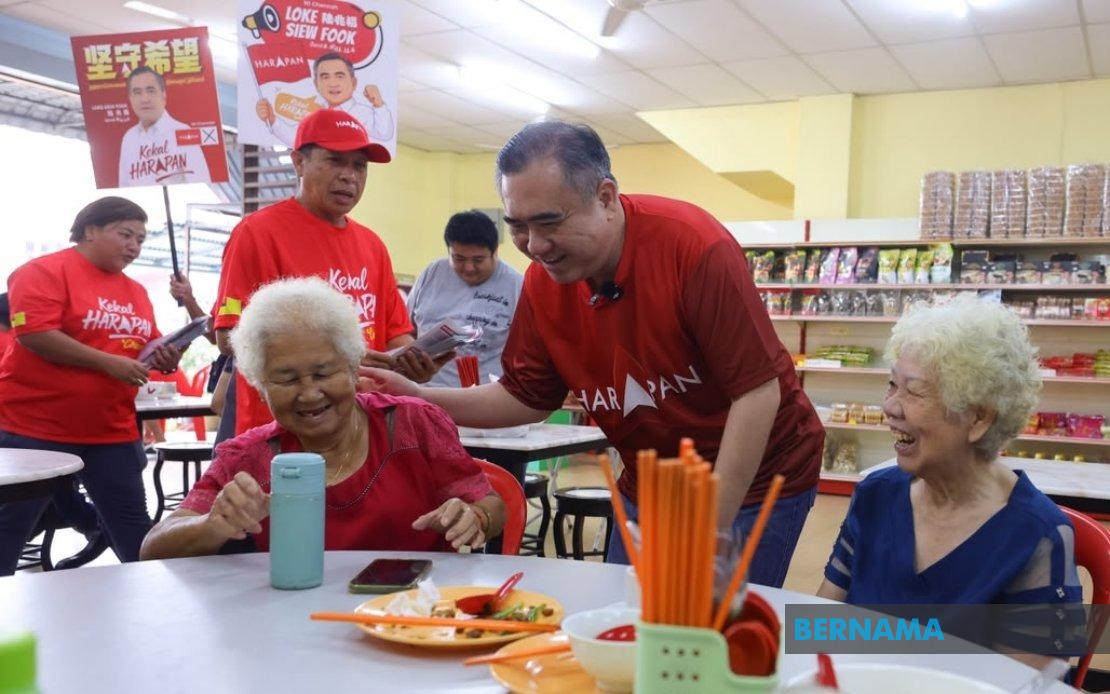
Pakatan Harapan is taking a granular approach to its campaign for the 16th Negeri Sembilan State Election, calibrating its political messaging and policy emphasis according to the specific demographics and local priorities of each constituency rather than deploying a uniform strategy across the state. The coalition's leadership has signalled that this tailored methodology, which involves detailed consultation with residents and careful listening to community concerns, represents a deliberate effort to ensure voter engagement remains substantive and responsive to genuine local grievances.
Anthony Loke, the DAP secretary-general and Transport Minister, articulated this strategic shift while campaigning in the Jelebu district on July 20. Defending his Chennah state seat, which he has represented since 2013, Loke emphasised that Pakatan Harapan's campaign machinery recognises the fundamental diversity of voter priorities across different villages and townships. This recognition reflects broader acknowledgment within the coalition that a one-size-fits-all messaging strategy risks alienating voters who perceive their particular circumstances as either misunderstood or subordinated to broader partisan objectives.
The Chennah constituency exemplifies this micro-targeted approach. Within what appears to be a relatively compact electoral district, Pakatan Harapan has established distinct campaign arrangements for different areas, acknowledging that residents in different villages harbour divergent concerns ranging from economic opportunity to infrastructure development to community services. Loke's observation that "each village requires a distinct approach" suggests the coalition has moved beyond traditional campaign frameworks that emphasise top-down messaging in favour of more adaptive, community-responsive strategies.
All Pakatan Harapan candidates contesting the Negeri Sembilan state election have already initiated ground-level campaign activities, with emphasis placed on direct voter interaction rather than mediated communication. During the opening three days of the formal campaign period, candidates have prioritised meeting constituents face-to-face, listening to their perspectives, and establishing authentic dialogue channels. This grassroots engagement model reflects recognition that voters increasingly expect politicians to demonstrate understanding of local context before advocating policy positions.
Loke's comments regarding the imminent manifesto launch indicate that Pakatan Harapan intends to unveil a comprehensive policy platform that reflects this locality-sensitive approach. The manifesto underwent extensive consultation and deliberation before finalisation, suggesting the coalition engaged multiple stakeholder groups and considered input from various community representatives. The decision to formally launch the manifesto on the evening of July 20 represented an effort to generate momentum heading into the final stretch of the campaign period before polling day on August 1.
The content of the forthcoming manifesto remains undisclosed at this stage, though Loke indicated it will encompass a range of initiatives designed to benefit voters across Negeri Sembilan. The deliberative process through which the manifesto was developed—involving consultation with a dedicated committee and multiple rounds of discussion—reflects a commitment to developing coherent, evidence-informed policy proposals rather than reactive electoral positioning. This methodology contrasts with campaign approaches that prioritise rapid response to emerging political issues.
Loke faces a straight contest against Barisan Nasional candidate Siow Kong Choon in Chennah, a two-candidate race that sharpens the electoral stakes for both sides. As Transport Minister and long-serving incumbent, Loke brings substantial parliamentary experience and ministerial portfolio responsibilities to his campaign. The direct nature of the contest means that voter preference between Loke and Siow will determine the outcome without complications from three-way races or fragmented opposition dynamics.
The electoral timeline established by the Election Commission structures the campaign period into compressed phases. Early voting has been scheduled for July 28, providing voters with opportunity to cast ballots prior to polling day, which falls on August 1. This scheduling creates practical implications for campaign intensity and messaging frequency, as candidates must achieve maximum voter contact and persuasion before early voting commences. The relatively brief campaign window intensifies pressure on campaign managers to execute organisational strategies efficiently.
Negeri Sembilan represents a significant political battleground within Malaysian electoral competition. The state election constitutes a meaningful test of voter sentiment regarding both Pakatan Harapan's governance record and broader political dynamics at the national level. Results from the Negeri Sembilan contest will carry implications for momentum heading into future electoral contests and for internal confidence within both the ruling coalition and opposition formations.
For Pakatan Harapan, the emphasis on localism and community responsiveness reflects acknowledgment that voter dissatisfaction with traditional top-down political communication remains widespread. By demonstrating attentiveness to particular community needs and tailoring campaign messaging to reflect local priorities, the coalition seeks to rebuild trust among voters who perceive politicians as disconnected from grassroots realities. The strategy represents a conscious recalibration of campaign philosophy toward greater democratic responsiveness and genuine constituent engagement rather than purely symbolic campaign activities.

