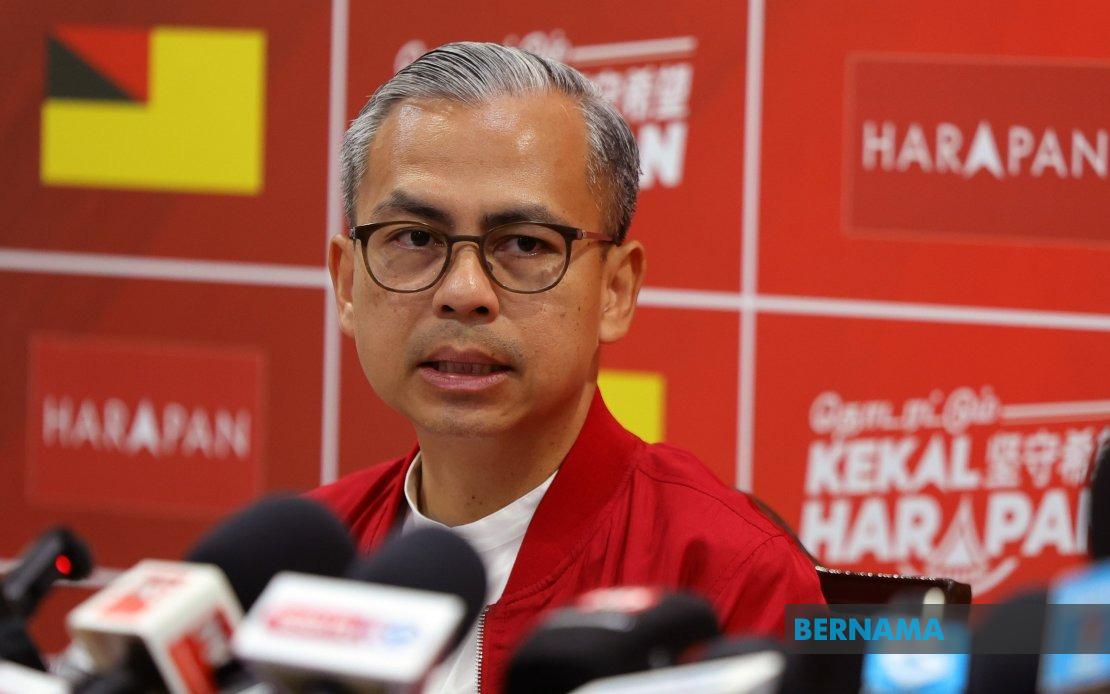
During a campaign stop in Seremban on July 23, Pakatan Harapan leadership firmly rejected the notion that Malaysia's Malay-Muslim voters can only be represented by one political grouping, characterizing such claims as fundamentally at odds with the nation's diversity. The coalition's stance comes as Negeri Sembilan prepares for state elections, with early voting scheduled for July 28 and polling day set for August 1, a contest where questions of community representation have become increasingly prominent.
Datuk Seri Fahmi Fadzil, who holds multiple portfolios including Communications Minister, PKR information chief, and PH communications director, delivered pointed remarks questioning the premise that Malay-Muslim identity necessarily aligns with any single political entity. His rhetorical flourish—invoking the credentials of fellow coalition leaders like Khalid Abdul Samad—underscored a fundamental argument that PH intends to make throughout the campaign: the coalition contains numerous leaders who are themselves Muslim Malays and therefore directly engaged with the community's concerns and aspirations.
The broader implication of PH's position suggests a direct challenge to opposition efforts to consolidate Malay-Muslim support behind alternative blocs. By arguing that such consolidation attempts rely on exclusionary rhetoric, Fahmi framed the debate not simply as a matter of political competition but as a question about whether Malaysia's political system should operate on inclusive or divisive principles. This framing reflects a strategic calculation that positioning oneself as the defender of pluralism holds electoral appeal across Malaysia's diverse demographics.
Fahmi emphasized that attempts to monopolize representation of any community contradicted the coalition's foundational commitment to unity across ethnic and religious lines. He articulated a vision of Malaysian politics organised around shared values rather than ethnic competition, suggesting that voters could unite as Malays, as Chinese, as Indians, or in other configurations without necessarily subordinating such identities to broader political agendas rooted in communal exclusivity. The statement represented an attempt to reframe electoral competition away from zero-sum competition for ethnic bloc votes and toward a model of coalition-building based on programmatic governance.
Khalid Abdul Samad, who serves as communications director for Amanah—one of PH's component parties and a predominantly Muslim organisation—provided a visible symbol of the coalition's claim to Muslim representation. His presence at the Seremban press conference functioned both as refutation of the single-bloc narrative and as concrete evidence of PH's internal diversity. Negeri Sembilan DAP secretary Cha Kee Chin's attendance further reinforced the multicommunal character of the coalition's campaign effort in the state.
The coalition pointed to governance achievements in Negeri Sembilan as empirical support for its claims regarding Muslim community engagement under PH administration. The state government under Menteri Besar Datuk Seri Aminuddin Harun has overseen a substantial expansion of mosque construction and zakat collection revenues, with the latter increasing by nearly two-and-a-half times relative to the previous administration. These metrics carry specific significance within Muslim communities, as expansion of religious infrastructure and enhanced zakat systems directly indicate government responsiveness to Islamic institutional needs.
For Malaysian political observers, the debate reflects ongoing tensions surrounding the architecture of Malaysia's electoral coalitions. The question of whether voters organise politically around shared communal identity or around programmatic platforms remains contested terrain, with different coalitions offering competing answers. PH's invocation of shared values and governance performance implicitly argues that Muslim voters, like other Malaysians, make electoral decisions based on multiple factors beyond communal affiliation. This approach risks alienating voters who prioritise identity-based politics while potentially attracting those seeking coalitional models that transcend ethnic divisions.
The timing of these remarks, approximately one week before Negeri Sembilan voters went to polls, suggests heightened concern within PH regarding the effectiveness of opposition messaging around communal representation. Campaigns that succeed in convincing voters that their interests are being neglected can significantly shift electoral outcomes, particularly where close contests are anticipated. PH's early intervention in this debate indicated confidence that the framing of politics around inclusion versus exclusion provided advantageous rhetorical territory.
Fahmi's explicit commitment to greater engagement with voters around questions of Muslim representation suggested PH recognised the need to actively contest narratives rather than assume that governance achievements automatically translated into political support. The coalition's willingness to field its own Muslim leaders in campaign forums and to articulate positive statements regarding expanded religious infrastructure represented a deliberate strategy to occupy political space traditionally associated with parties claiming special custodianship of Muslim interests.
From a regional perspective, PH's emphasis on multicultural coalition politics offers a model distinct from approaches in other Southeast Asian democracies. While some neighbouring countries have witnessed increasing majoritarian political mobilisation around religious or ethnic identity, the Malaysian coalition's investment in inclusive rhetoric reflects particular political economy and demographic realities. The coalition's success in translating such rhetoric into sustained electoral support remains an ongoing question, particularly in constituencies where identity-based mobilisation maintains considerable salience.
The Negeri Sembilan contest provided a testing ground for these competing visions of Malaysian political organisation. Whether voters would respond to PH's emphasis on inclusive governance and communal representation within a diverse coalition, or whether opposition arguments regarding Muslim community interests under alternative leadership would prove more persuasive, would offer important signals regarding the trajectory of Malaysian politics beyond the immediate election cycle.

