Pakatan Harapan has made clear that selecting the next Menteri Besar of Johor, should the opposition coalition triumph in the state election, will be a matter left exclusively to the discretion of the Sultan of Johor. The coalition's stated position represents an acknowledgement of the constitutional architecture that governs Johor's governance, where the Ruler retains significant executive authority over key appointments. This development comes as the coalition prepares for polling day on July 11, with early voting scheduled for July 7.
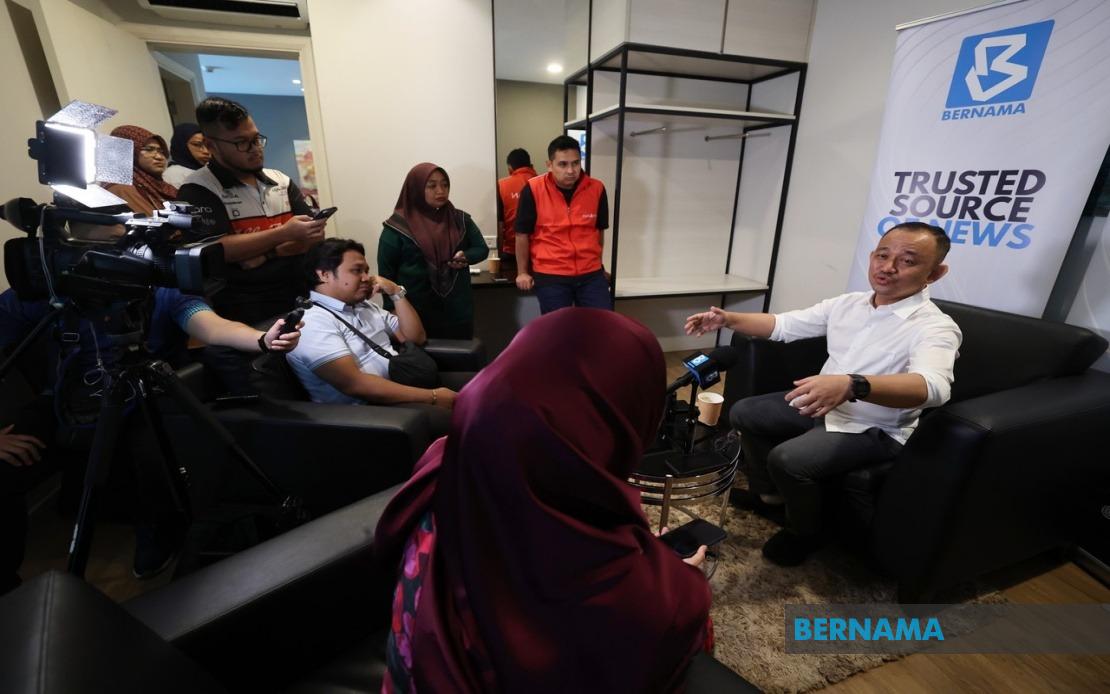
Dr Maszlee Malik, PH's candidate contesting the Puteri Wangsa state assembly seat, articulated the coalition's stance during remarks to the national news agency, noting that the partnership has deliberately refrained from discussing the Menteri Besar position internally. The decision to sidestep internal deliberation on this sensitive topic reflects a broader strategic approach aimed at maintaining unity within the coalition while respecting the constitutional boundaries that define the Ruler's powers. This restraint appears deliberate, positioning PH as an entity conscious of constitutional propriety during a period when the coalition is actively campaigning for support across the state.
The timing of PH's clarification is significant, emerging as speculation has circulated across social media platforms regarding potential candidates for the Menteri Besar role from within PH's ranks should the coalition secure enough seats to form government. Several names have been linked to the position, generating discussion among political observers and ordinary citizens alike. By issuing this statement, PH leadership appears intent on dampening speculation while simultaneously projecting an image of respect for established constitutional conventions.
Maszlee emphasised that PH's electoral strategy pivots on presenting voters with a cohesive team of candidates rather than pinning electoral prospects on any individual personality or figure. This messaging reflects lessons learned from previous electoral cycles, where personality-driven politics has sometimes overshadowed policy platforms. The candidate indicated that the coalition's 56 candidates standing across all available seats represent the collective strength upon which PH intends to campaign, employing what he termed an "Avengers" metaphor to convey the notion of unified, complementary talent.
The constitutional framework governing Johor's executive appointments grants the Sultan considerable influence over state administration, a reality that PH's public acknowledgement respects explicitly. The State Constitution vests authority for appointing the Menteri Besar with the Palace, meaning that irrespective of which coalition secures the most seats, the formal selection process involves the Sultan's decision-making. This constitutional arrangement distinguishes Johor from several other Malaysian states and remains a defining feature of the state's political structure.
PH's approach signals a broader recalibration in how the opposition coalition intends to engage with Malaysia's institutional framework, particularly regarding the role of the monarchy in state governance. By declining to pre-empt or influence the Sultan's eventual decision, the coalition positions itself as a partner respectful of constitutional limits on executive power. This stance may prove strategically advantageous, particularly if voters perceive PH as demonstrating institutional maturity and awareness of proper democratic and constitutional procedures.
For Malaysian and Southeast Asian observers, this development illustrates how opposition coalitions in monarchical democracies navigate the intersection of electoral competition and respect for institutional authority. The question of whether and how newly elected parties engage with appointed figures and constitutional authorities remains a persistent challenge across the region. PH's explicit deference to the Sultan's prerogative, communicated publicly at this juncture, represents one approach to managing this tension.
Maszlee's comments also underscore PH's effort to build campaign momentum around policy proposals and governance capacity rather than around individual leadership figures. The coalition has historically faced criticism regarding leadership clarity and succession planning, particularly following the 2022 general election. By repositioning its narrative around teamwork and collective capability, PH appears intent on addressing perceptions that the coalition relies excessively on individual personalities.
The upcoming Johor state election occurs against a backdrop of shifting electoral dynamics within Malaysia's peninsular states. The outcome will provide valuable indicators regarding voter sentiment toward the opposition coalition at the subnational level and whether PH can translate broader political narratives into concrete electoral success. State-level contests frequently serve as testing grounds for political messaging and organisational capability ahead of general elections.
Looking ahead, the focus for PH remains on voter mobilisation and demonstrating that the coalition possesses the administrative competence to govern effectively should voters endorse it. The decision to foreground team capacity rather than individual candidates represents a deliberate strategic choice intended to resonate with voters concerned about governance quality and institutional stability. Whether this messaging proves persuasive will become evident following the July 11 polling.

