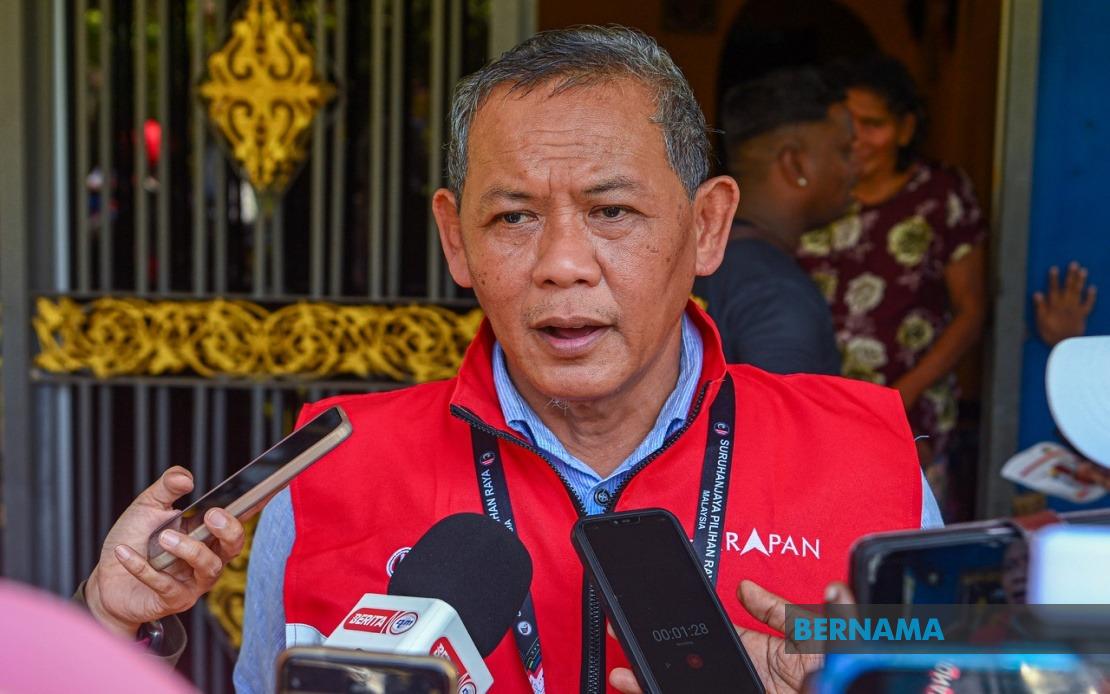
Pakatan Harapan has unveiled a substantially broadened manifesto for the forthcoming Negeri Sembilan state election, signalling a strategic pivot to encompass the state's middle-income earners. The coalition's approach marks a departure from its previous focus on low-income households, reflecting what appears to be a deliberate effort to build a wider political coalition ahead of the August 1 polling day. State PH chairman Datuk Seri Aminuddin Harun announced the manifesto theme as 'Negeri Sembilan Kekal Harapan', anchored around ten principal policy commitments designed to improve living standards across multiple income segments of the population.
The decision to extend benefits to the M40 group—classified as households earning between RM4,850 and RM10,959 monthly—represents a conscious recalibration of the coalition's messaging and policy priorities. Aminuddin explained that by broadening the scope of initiatives and educational access programmes, PH aims to demonstrate a more comprehensive approach to governance that addresses the needs of a larger cross-section of Negeri Sembilan's electorate. This expansion acknowledges the political reality that securing electoral victory requires building support beyond the lower-income segments, particularly in a competitive three-cornered contest where every vote carries significance.
Educational access forms a cornerstone of this expanded approach. Previously, PH's education-related commitments primarily targeted disadvantaged families from the B40 bracket. The revised manifesto now explicitly includes children from M40 families, suggesting that scholarship programmes, skills training initiatives, and educational subsidies will be accessible to a broader demographic. This shift could appeal to working-class and lower-middle-class families who have historically felt overlooked by policies perceived as exclusively benefiting the poorest households, while simultaneously strengthening the coalition's appeal among aspirational voters concerned about economic mobility.
Aminuddin, who simultaneously holds the positions of Menteri Besar, PKR vice-president, and Negeri Sembilan PKR chairman, is himself contesting the Linggi state seat in what has developed into a three-way battle. He faces Barisan Nasional incumbent Datuk Mohd Faizal Ramli and Parti Pribumi Bersatu Malaysia's Zamri Md Said in a contest that encapsulates the broader electoral dynamics at play. His personal stake in the Linggi outcome lends particular significance to his campaign messaging around manifesto delivery and expanded welfare coverage, positioning himself as a leader committed to inclusive governance.
The coalition's argument rests substantially on its track record since assuming control of Negeri Sembilan in 2018. Aminuddin contended that PH has demonstrated capacity and commitment in translating electoral promises into tangible government action, a claim the coalition considers crucial in differentiating itself from competitors. He acknowledged that executing welfare and development programmes entails considerably more effort and complexity than merely articulating policy positions during campaigns, yet maintained that PH's tenure has validated its ability to deliver on substantive commitments rather than offering hollow electoral rhetoric.
For Malaysian and Southeast Asian observers, this manifesto repositioning reflects broader electoral trends across the region. As economic pressures mount on middle-income households—particularly following pandemic-related disruptions and cost-of-living increases—political coalitions increasingly find that exclusive focus on the poorest segments proves electorally insufficient. The M40 group, which often lacks the political visibility of either the ultra-poor B40 or wealthy T20 segments, represents a potentially decisive swing constituency. By extending benefits upward along the income distribution, PH signals recognition that electoral competitiveness increasingly demands addressing the anxieties and aspirations of working families who remain economically precarious but not formally categorized as disadvantaged.
The manifesto's ten principal commitments, though not individually detailed in Aminuddin's statement, suggest a comprehensive governance agenda touching multiple policy domains. Whether these encompass healthcare accessibility, housing affordability, transportation infrastructure, employment support, or other welfare mechanisms remains to be fully articulated, but the emphasis on breadth and inclusivity indicates a coalition conscious of needing to address diverse household concerns simultaneously. This approach contrasts with narrower, single-issue campaigns that have characterized some recent electoral contests in Malaysia.
Aminuddin's appeal for mature campaign conduct and restraint from socially divisive messaging reflects awareness that Negeri Sembilan, like Malaysia generally, remains susceptible to communal tensions. His emphasis on avoiding inflammatory rhetoric while promoting inclusive policy delivery attempts to position PH as the responsible, forward-thinking force in the contest. Such appeals carry particular weight in a state where diverse communities coexist, and where election campaigns occasionally venture into territory that threatens social cohesion. By framing his manifesto explicitly around shared prosperity rather than zero-sum community competition, Aminuddin seeks the political high ground.
The timing of this manifesto launch, occurring after the state assembly's dissolution on June 5 and with early voting scheduled for July 28, reflects standard electoral calendars but also the urgency of agenda-setting in a compressed campaign period. Media coverage and public engagement during these weeks become disproportionately influential in shaping voter perceptions, particularly regarding which coalition has the more credible and comprehensive vision for the state's future. PH's decision to frontload discussion of expanded welfare scope suggests strategic confidence in the appeal of its expanded manifesto, or conversely, recognition that early positive messaging becomes critical given the brevity of the formal campaign window.
For Negeri Sembilan's electorate, the manifesto expansion invites scrutiny regarding implementation mechanisms and funding sustainability. How precisely will the state government finance extension of educational, health, and welfare programmes to the M40 segment while maintaining existing B40 commitments? What specific budget allocations accompany the ten principal commitments? These practical questions will likely dominate detailed policy discussion as the campaign progresses, particularly if opposition parties challenge the financial feasibility of the coalition's promises. Voters increasingly demand not merely attractive-sounding commitments but credible, detailed pathways to their realization.
The broader significance of this manifesto for Malaysian politics extends beyond Negeri Sembilan's immediate electoral contest. If PH's expanded, income-inclusive approach proves electorally successful, other state and federal political actors will likely recalibrate their own platforms similarly. Conversely, if voters respond sceptically to what some might characterize as policy overstretch or unfulfilled commitments, the coalition's credibility on delivery claims could suffer damage extending well beyond the state. The August 1 election therefore represents not merely a local contest but a test case for how inclusive, multi-income-bracket political platforms resonate with Malaysian electorates increasingly preoccupied with economic security across income segments.

