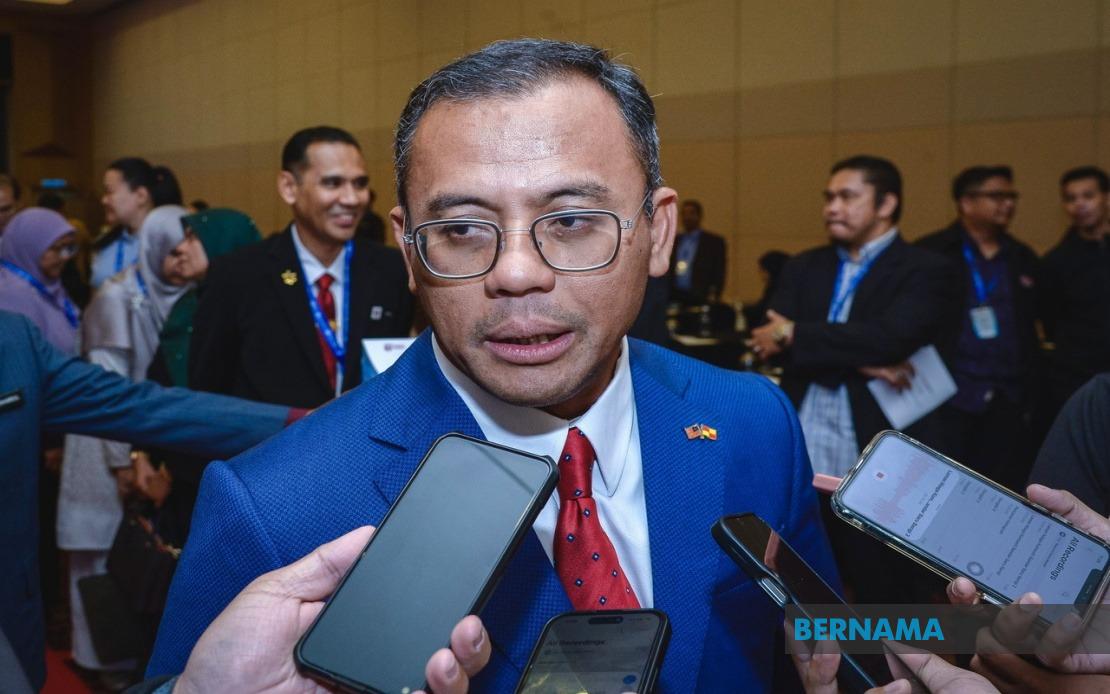
Pakatan Harapan has indicated it would consider political cooperation with other parties or coalitions, though only if they align with the bloc's core priorities of maintaining political stability and serving the public interest. Datuk Seri Amirudin Shari, a member of PH's Presidential Council and vice-president of PKR, articulated this position while speaking to journalists in Bangi after launching the Ecology International Conference II (HEIC-II) 2026. His remarks suggest the coalition is adopting a pragmatic approach to potential partnerships as Malaysia's political landscape continues to shift.
Amirudin made clear that PH's willingness to engage extends beyond any single party or bloc. The coalition would evaluate proposals from any political entity, whether Bersatu, Perikatan Nasional, or others outside these groupings, provided the fundamental criteria of political stability and people's welfare were met. This framing indicates that PH leadership is thinking beyond immediate adversarial positioning and considering how partnerships might strengthen its hand in upcoming electoral contests. The emphasis on rational evaluation at the central level also signals that such decisions would not be made unilaterally at state level, but would involve consultation with the coalition's broader leadership structure.
Denying recent reports that Selangor PH had begun talks with Bersatu, Amirudin stressed no formal discussions or decisions had occurred involving his state party apparatus. However, he acknowledged that various ideas and suggestions circulate within political circles, often reflecting broader realignments at the national level or calculations related to state elections. This distinction between informal speculation and formal negotiation is significant, as it allows PH to remain open to possibilities without committing prematurely to any particular alliance. The Selangor Menteri Besar's comments suggest that while no active discussions are underway, the door remains unlocked should circumstances warrant.
Median reports last week had suggested that Selangor PH might be receptive to collaboration with Bersatu at the state level. Such an arrangement, according to those reports, would be motivated by the desire to ensure both parties maintain relevance and strength in the run-up to major electoral contests, including the general election and the Melaka state election. For PH, which faces considerable pressure from multiple political fronts, such calculations reflect the complex mathematics of modern Malaysian politics, where coalition-building often determines electoral outcomes.
Amirudin's insistence that any cooperation must be evaluated at the central level underscores the reality that such decisions cannot be made in isolation. The timing of elections, prevailing political circumstances, and broader strategic considerations all factor into such deliberations. By centralising decision-making authority, PH signals that it is thinking comprehensively about its positioning rather than allowing individual states to pursue ad hoc arrangements that might undermine national strategy.
The Malaysian political context has become increasingly fluid since the 2022 general election, with various coalitions and parties regularly reconsidering their alignments. Pakatan Harapan has emerged as the largest opposition bloc, but its path to regaining federal power depends not only on its own performance but also on how it manages relationships with other political actors. The principle that cooperation should be based on shared commitment to stability and public welfare provides PH with a framework for evaluating potential partners while maintaining strategic flexibility.
For Southeast Asian observers, PH's approach reflects broader trends in regional politics where traditional left-right ideological divisions have become less determinative than questions of governance quality, anti-corruption credentials, and effective public service delivery. By anchoring its openness to cooperation in these pragmatic criteria rather than narrow partisan advantage, PH is attempting to position itself as a responsible political force concerned with substantive governance outcomes rather than mere electoral calculation.
The timing of Amirudin's comments is also noteworthy given the approaching electoral calendar. Malaysia faces potential state elections in several jurisdictions over the coming months, and the composition of coalitions at state and federal levels will significantly influence outcomes. PH's willingness to remain flexible on potential partnerships suggests the coalition recognises that rigid positioning might limit its options as the political situation evolves.
However, this openness also carries risks. If PH appears too willing to cooperate with various partners, it risks being perceived as unprincipled or lacking clear identity and direction. The emphasis on stability and public interest is therefore crucial—it provides a principled foundation for any partnerships while theoretically preventing the coalition from being seen as purely transactional in its political dealings. Whether this distinction proves meaningful to Malaysian voters remains to be seen.
The broader implication of PH's stance is that Malaysian politics will likely continue to feature fluid, negotiated coalitions rather than fixed ideological blocs. This reflects both the maturation of electoral competition and the increasing sophistication with which political parties calculate their strategic interests. For ordinary Malaysians, this dynamism offers both promise and peril—promise that parties might be forced to compete on policy substance to secure allies and votes, but peril that coalition instability could undermine effective governance if partnerships prove fragile or based on narrow transactional interests rather than shared commitments to public welfare.

