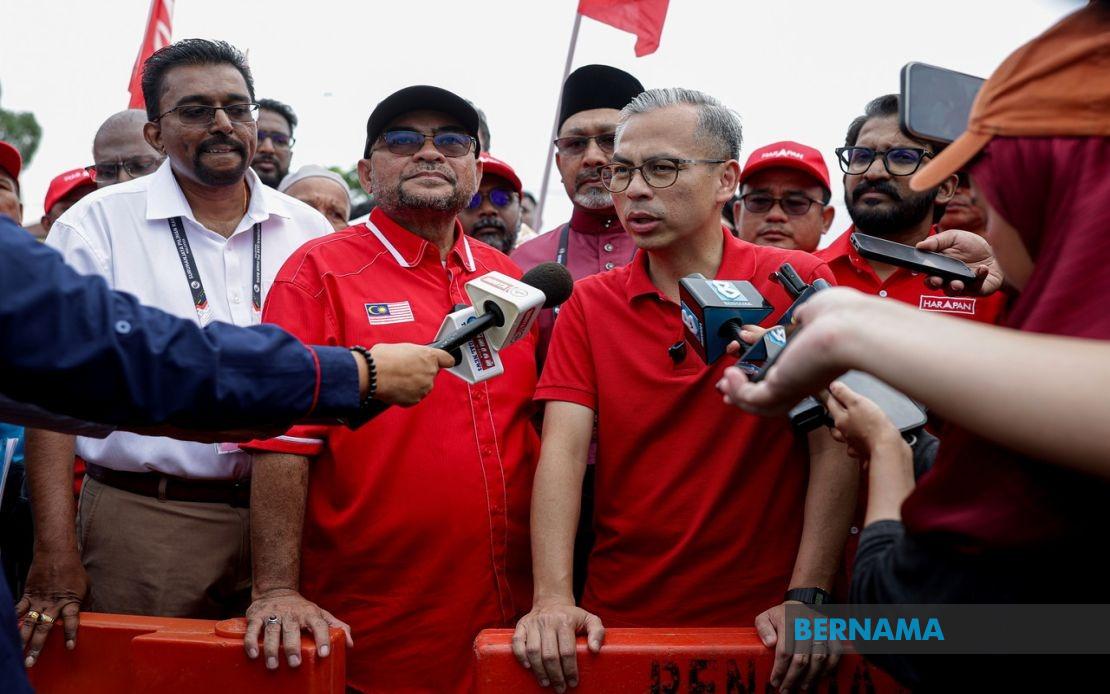
Pakatan Harapan's campaign machinery in the upcoming Negeri Sembilan state election will anchor itself squarely on the administrative record and proven competence of Menteri Besar Datuk Seri Aminuddin Harun, according to party communications director Datuk Seri Fahmi Fadzil. Speaking after candidate nominations concluded for four state seats under the Jempol parliamentary constituency on July 18, Fahmi outlined a strategy centred on continuity rather than transformational promises, betting that voters will reward proven governance over untested alternatives.
The coalition's messaging will emphasise the tangible economic benefits that have accrued to Negeri Sembilan under Aminuddin's tenure since 2018. Fahmi pointed to several measurable achievements: expansion of zakat collections, strengthened state revenue streams, sustained inflows of foreign direct investment, and infrastructure projects including a new port development. These concrete outcomes form the empirical foundation of PH's appeal to the electorate, framing the election as a referendum on economic stewardship rather than ideological positioning.
This campaign approach reflects a broader calculation within Pakatan Harapan that defending an incumbent administration requires emphasis on tangible delivery rather than aspirational narratives. For Malaysian voters, particularly those in states like Negeri Sembilan where economic considerations weigh heavily, demonstrable improvements in fiscal management and investment attraction hold substantial persuasive power. The party's strategy acknowledges that in a multi-cornered contest, the incumbent enjoys natural advantages in pointing to its record of implementation.
The economic argument carries particular resonance for Negeri Sembilan, a state with a diversified economy spanning manufacturing, agriculture, and services. Foreign investment flows indicate international business confidence in the state's governance environment, a signal that development-minded voters regard seriously. Fahmi's emphasis on zakat collection increases also appeals to the Muslim-majority electorate, suggesting effective state administration extends to religious and social domains.
One notable campaign focus will concentrate on younger voters and employment opportunities, particularly in the Jeram Padang state seat contested by G. Manivannan, a lawyer serving as political secretary to Prime Minister Datuk Seri Anwar Ibrahim. This constituency-specific messaging demonstrates PH's granular approach, tailoring national narratives to localised concerns. Youth unemployment and career prospects remain persistent anxieties in Malaysian politics, and PH aims to connect the dots between state economic policies and improved job creation pathways.
The Jeram Padang contest exemplifies the multi-party fragmentation characterising Malaysian elections. Manivannan faces incumbent Datuk Mohd Zaidy Abdul Kadir of Barisan Nasional, R. Sri Sanjeevan representing Perikatan Nasional's Bersatu component, and Dayana Dal, the sole Orang Asli candidate fielded under the Asli banner. This four-cornered configuration demands that PH articulate why continuity of state administration outweighs opposition appeals or alternative governance models.
Across the four contested seats, contest configurations vary substantially. Bahau presents a straight fight between PH's incumbent Teo Kok Seong of DAP and Barisan Nasional's Chong Fui Ming of MCA, offering voters a binary choice. Serting features a three-cornered contest between PH's Yaacob Mahmood, Perikatan Nasional incumbent Mohd Fairuz Mohd Isa, and Bersatu's Muhammad Noraffendy Mohd Salleh. Palong similarly hosts a three-way race involving BN incumbent Datuk Mustapha Nagoor, PH's Muhammad Zahin Zinal Abidin, and Bersatu's Rebin Birham. These varying configurations require tailored strategies for each seat.
Fahmi, serving concurrently as Communications Minister, emphasised his expectation that all campaign participants maintain responsible conduct throughout the two-week campaign period. He explicitly urged candidates, party machinery, and online commentators to avoid contentious issues touching on religion, race, and the institution of the monarchy—the so-called 3Rs—while refraining from disseminating false information or defamatory claims. This cautionary messaging reflects heightened concern about campaign toxicity and misinformation in Malaysian elections, particularly regarding social media dynamics.
The Communications Minister signalled that his ministry would actively monitor treatment of media practitioners throughout the campaign, an undertaking that sits somewhat uncomfortably with traditional expectations of press freedom but responds to documented incidents of journalist harassment during previous state elections. This commitment indicates governmental awareness that campaign environments can deteriorate without active oversight, a reality Southeast Asian democracies increasingly grapple with.
The nomination process for Serting, Palong, Jeram Padang, and Bahau proceeded without reported disturbances, suggesting organisational competence by the Election Commission and participating parties. Smooth administrative execution of nomination procedures sets a baseline for election integrity and reflects institutional capacity, though campaign-phase conduct often presents greater challenges than procedural administration.
The Election Commission has scheduled early voting for July 28 and the general polling day for August 1. This compressed timeline concentrates campaigning into a two-week window, limiting time for messaging penetration but potentially reducing opportunity for campaign deterioration. For PH, the acceleration works strategically if the incumbent's record resonates quickly; for opposition parties, condensed timelines make mobilisation more challenging.
Negeri Sembilan's state election carries implications extending beyond state boundaries. As a relatively compact, economically significant state with manageable demographic diversity, electoral outcomes here offer a bellwether for broader voter sentiment regarding incumbent performance and opposition viability. The contest between administration-focused continuity messaging and opposition challengers will illuminate whether Malaysian voters reward concrete economic delivery or remain susceptible to calls for political change.

