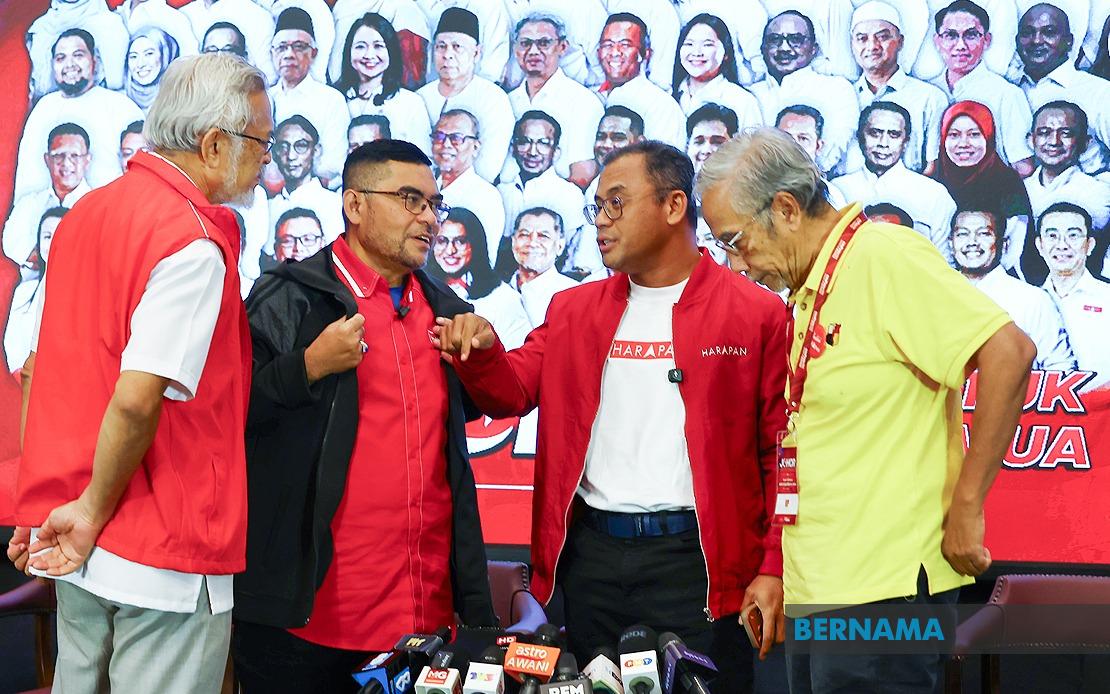
Pakatan Harapan has committed to a thorough examination of the factors behind its performance in the recently concluded Johor state election, using the findings to refine its approach ahead of the Negeri Sembilan state polls. Speaking at the coalition's operations centre in Johor Bahru on the night of the election, Selangor Menteri Besar Datuk Seri Amirudin Shari indicated that the review would encompass multiple dimensions of voter behaviour, including shifts in voting patterns and the level of engagement among younger voters across different constituencies.
Amirudin, who doubles as PKR's Election Co-director and serves on the PH Presidential Council, stressed the importance of allowing sufficient time for a comprehensive assessment before drawing firm conclusions. With several seats still pending confirmation as counting continued on election night, he advised against hasty judgements, though he acknowledged the need for the coalition to prepare immediately for its next electoral challenge. The one-week timeframe he mentioned would allow party strategists to compile accurate data from polling stations and identify specific areas of strength and weakness across the state.
The Johor election results delivered a setback for the opposition coalition, with Barisan Nasional securing 29 of the 56 state seats contested—enough to claim a simple majority representing more than half of the available positions. This outcome marked a significant departure from the previous electoral landscape and underscored the shifting political dynamics within Malaysia's most economically developed state. The scale of the swing suggested broader patterns in voter sentiment that would require careful analysis rather than dismissal as mere statistical variation.
Amirudin's comments reflect a more measured and strategic response from PH leadership than might have been anticipated immediately following electoral defeat. Rather than seeking to minimise the loss or attribute it solely to external factors, the coalition appears intent on conducting an honest assessment of its electoral machinery and messaging effectiveness. This approach suggests confidence in the party's capacity to identify correctable weaknesses and implement improvements before voters return to the polls in Negeri Sembilan.
In contrast to the Johor outcome, PH enters the Negeri Sembilan election from a position of governmental control. The coalition currently administers the state under Menteri Besar Datuk Seri Aminuddin Harun, whose tenure has been marked by developmental projects and administrative continuity. Amirudin expressed conviction that the incumbent administration's track record provides a solid foundation for retaining voter support, emphasizing the need to build on existing achievements rather than seek wholesale changes in approach. This framing positions the Negeri Sembilan campaign around consolidation and progress rather than fundamental shifts in policy direction.
Candidate selection emerged as the next critical juncture in PH's preparations, with coalition leaders scheduled to meet the day following the Johor election to discuss nominations for the Negeri Sembilan contest. These discussions would determine not only who would represent PH in each constituency but also signal the coalition's strategic priorities in the state. The subsequent official announcement of the full candidate slate on July 14 would provide local observers and potential voters with clarity on the coalition's intentions and resource allocation.
The coalition's confidence in retaining Negeri Sembilan control stands in marked contrast to the Johor outcome, suggesting that PH's strategists view the two states as distinct electoral environments with different dynamics. Negeri Sembilan's smaller population, different demographic composition, and existing infrastructure of PH support in local government present conditions that party leaders believe favour the incumbent coalition. However, the Johor results also demonstrate that assumptions about voter behaviour can prove unreliable, potentially making PH strategists more cautious about taking the Negeri Sembilan contest for granted.
Beyond state-level considerations, Amirudin moved to address concerns about the implications of electoral fluctuations for federal political stability. He reiterated that all component parties within the PH coalition, as well as Barisan Nasional at the federal level, remained committed to maintaining the stability of the Federal Government under Prime Minister Datuk Seri Anwar Ibrahim. This assurance proved important given Malaysia's history of political volatility and coalition fragmentation, which have periodically disrupted governmental continuity. By explicitly linking state electoral outcomes to federal commitments, Amirudin sought to prevent the Johor result from triggering speculation about potential defections or coalition realignments at the national level.
The presence of senior Amanah figures at the press conference—including deputy president Datuk Seri Dr Mujahid Yusof Rawa, vice-president Datuk Dr Mohd Hatta Ramli, and communications director Khalid Abdul Samad—underscored the multi-party nature of the coalition's review and planning process. This inclusive approach reflected the reality that PH comprises distinct political entities with separate organisational structures, member bases, and electoral interests. The participation of Amanah representatives in the immediate post-election assessment signalled that the coalition's response would incorporate perspectives from its constituent parties rather than being driven solely by the larger PKR and DAP components.
The strategic interlude between the Johor and Negeri Sembilan elections provided PH with an opportunity to experiment with different messaging approaches and organisational tactics on a relatively constrained stage before facing potential general elections. The lessons learned in Negeri Sembilan could then be applied more broadly should federal elections occur within the following years. This sequencing of state contests thus functions as a practical testing ground for coalition coherence, campaign effectiveness, and voter mobilisation strategies.
Looking beyond the immediate electoral calendar, the comprehensive nature of PH's proposed Johor review suggested the coalition recognised deeper structural questions about its long-term viability as Malaysia's principal alternative to Barisan Nasional. The examination of youth voter support patterns carried particular significance, as Malaysia's younger demographics would determine electoral outcomes across multiple election cycles in coming decades. Understanding why young voters might have shifted their preferences or opted for non-participation represented crucial intelligence for the coalition's future direction.
Amirudin's emphasis on preparing for Negeri Sembilan while still processing the Johor results demonstrated the relentless pace of Malaysia's electoral calendar and the compressed timeframes available to political organisations between contests. The coalition effectively had only days to analyse, regroup, and strategise before launching its campaign in the next state, leaving little room for extended periods of reflection or major structural reorganisation. This operational reality meant that any meaningful changes emerging from the Johor review would necessarily be focused and targeted rather than comprehensive.
The broader Malaysian political context added weight to PH's stated commitment to maintaining federal stability. With the government holding a working majority in Parliament that depended on continued support from coalition partners and often required cooperation from independent lawmakers, any significant breakdown in coalition discipline could have national consequences. Amirudin's reassurance on this point thus addressed not only PH's internal cohesion but also the broader question of whether Malaysia's political system could maintain predictable governance following electoral disappointments at the state level.

