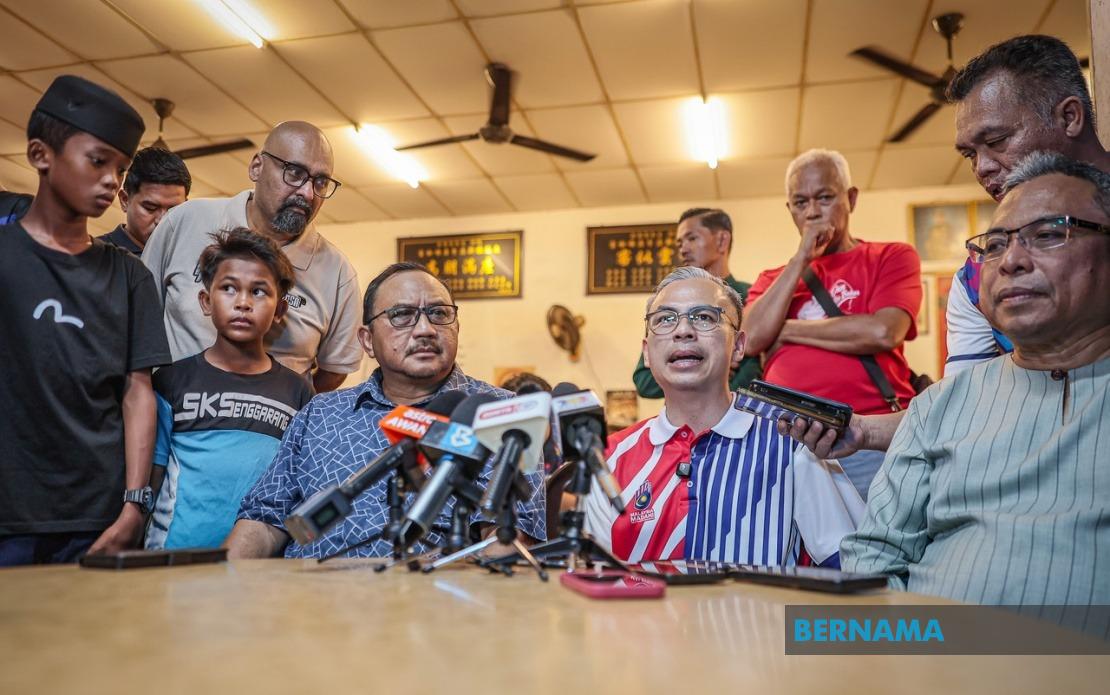
Pakatan Harapan has outlined a comprehensive electoral approach for the 16th Johor State Election that marries traditional ground-level mobilization with modern digital communication channels. The coalition's two-pronged strategy aims to penetrate all demographics within the state by leveraging the strengths of both in-person engagement and online platforms. Communications Director Datuk Fahmi Fadzil, who is also the Minister of Communications, articulated this philosophy at a campaign event in Batu Pahat on June 26, emphasizing that the combination was essential to ensure policy messages and proposals reached voters across different segments of society with clarity and effectiveness.
With PKR, the largest component party within the coalition contesting 20 seats, campaign activities commenced immediately following the conclusion of the nomination process. Fahmi himself traveled to Semerah to open the campaigning efforts, whilst PKR Deputy President Nurul Izzah Anwar simultaneously launched support for Senggarang candidate Onn Abu Bakar at the Senggarang nomination centre. This synchronized approach reflected the coalition's intention to build momentum swiftly across multiple constituencies. The establishment of an official media group dedicated to rapid dissemination of information about PH candidates represented a structural commitment to digital engagement, ensuring that campaign messaging could reach supporters and undecided voters through social platforms in real time.
A critical component of Pakatan Harapan's messaging framework centres on fact-based communication designed to combat electoral misinformation. Fahmi underscored that throughout the election period, the coalition would prioritize accuracy and substantive information to protect voters from false narratives. This commitment reflects broader regional concerns about election-time disinformation, a challenge that has affected democratic processes across Southeast Asia. The emphasis on factual communication also positions PH as a counterweight to potential spread of unverified claims, addressing voter anxieties about information reliability during politically sensitive periods.
To operationalize this anti-misinformation stance, the Malaysian Communications and Multimedia Commission has convened a specialized task force working alongside the Election Commission, Royal Malaysia Police, and the Malaysian Media Council. This multi-institutional arrangement creates surveillance and rapid-response mechanisms to identify and curtail false information circulating during the campaign. The establishment of such coordinated frameworks demonstrates recognition at federal level that election integrity depends partly on managing the information ecosystem. For Malaysian voters, particularly those relying on social media for political information, such safeguards offer some assurance that deliberately misleading content will face institutional scrutiny.
Packtan Harapan's campaign narrative emphasizes the tangible benefits of cooperation between federal and state governments in delivering high-impact infrastructure projects. Fahmi highlighted two flagship initiatives positioned to transform Johor's economic landscape: the Rapid Transit System Link and the Johor-Singapore Special Economic Zone. Both projects exemplify how federal-state collaboration can stimulate economic growth and address regional development disparities. These initiatives hold particular significance for Malaysian audiences concerned about equitable development distribution, as the coalition frames infrastructure delivery as evidence of competent governance rather than merely political rhetoric.
The coalition's governance record in other states forms a central pillar of its electoral positioning. Pakatan Harapan points to its performance in managing Selangor, Negeri Sembilan, and Penang as demonstrated proof of administrative capability and delivery on electoral promises. This track record provides potential Johor voters with comparative reference points and historical context for evaluating coalition credibility. The invocation of results from these states attempts to shift election discourse away from abstract policy promises toward concrete evidence of governing competence. For skeptical voters or first-time evaluators of PH's performance, such evidence-based appeals carry weight in an election environment where voter trust remains uncertain across segments of the electorate.
Candidacy announcements reveal coalition confidence in fielding experienced figures capable of delivering change in strategic constituencies. Dr Maszlee Malik's candidacy in Puteri Wangsa and Onn Abu Bakar's nomination in Senggarang represent efforts to position respected personalities in constituencies where their profiles might convert undecided voters. The selection strategy reflects calculated decisions about where organizational resources and high-profile endorsement could maximize electoral returns. These individual candidacies interweave with the broader coalition narrative about capable leadership and proven track records.
The coalition's promise to unveil a dedicated manifesto tailored specifically to Johor's electoral context signals intention to address state-specific concerns rather than imposing generic national platform positions. This localization of messaging acknowledges that Johor presents distinct demographic, economic, and political dynamics requiring customized policy responses. A state-specific manifesto allows the coalition to address regional priorities—ranging from agricultural concerns in inland districts to maritime economy issues in coastal areas—with targeted policy proposals. This approach demonstrates electoral sophistication in recognizing that one-size-fits-all campaigning proves insufficient in diverse geographic and socioeconomic contexts.
Engagement activities extending beyond conventional political speeches underscored Pakatan Harapan's strategy to embed campaign work within community social fabric. Fahmi's participation in a "wayang pacak" outdoor film screening in Senggarang, featuring the film Blood Brothers, exemplified this approach of merging entertainment, community gathering, and subtle political messaging. Such integration of political messaging within popular culture and community leisure activities represents an attempt to normalize coalition presence within everyday social spaces. The informality and social character of such events contrast with more formal political rallies, potentially reaching voters who might resist traditional campaign appeals.
Johor's electoral significance extends beyond state-level politics given the state's economic weight, population size, and historical importance within Malaysian political geography. Election outcomes in Johor carry implications for national political alignment, as the state's voting patterns often signal broader electoral trends. Pakatan Harapan's investment in comprehensive campaign infrastructure across grassroots and digital domains reflects recognition of Johor's strategic centrality. The coalition's performance here will shape narratives about coalition viability and competence in managing complex multi-ethnic and economically diverse constituencies, with consequences reverberating into national political calculations.
The campaign methodology being deployed—combining neighborhood-level organization with data-driven digital outreach, emphasizing factual communication, and anchoring appeals in governance performance—reflects evolution in electoral campaigning across Southeast Asia. As voter behavior increasingly incorporates digital information consumption, coalitions must navigate a more fragmented information landscape requiring simultaneous excellence in traditional community organization and contemporary digital strategy. Pakatan Harapan's explicit commitment to this dual approach represents recognition that winning elections in contemporary Malaysia demands mastery of both worlds rather than dominance in either channel alone.

