Pakatan Harapan is positioning its manifesto for the 16th Negeri Sembilan state election as a credible blueprint rooted in tangible accomplishments rather than mere political rhetoric. Speaking in Seremban on July 21, Penang DAP chairman Steven Sim underscored that the coalition's campaign platform reflects the achievements and administrative experience already demonstrated by the state government under Menteri Besar Datuk Seri Aminuddin Harun, distinguishing PH's offering from competitors who may offer untested promises.
The manifesto, which encompasses ten key policy commitments to voters, does not represent a wholesale shift in direction but rather builds upon programmes and initiatives that have demonstrated measurable impact during the current administration. This approach carries strategic significance for Malaysian politics, where voter scepticism towards grand campaign pledges without implementation proof has intensified in recent years. By tying electoral commitments to existing policy success, PH attempts to address a persistent credibility challenge that afflicts political parties across the spectrum.
Sim articulated a crucial distinction between the ease of drafting a manifesto and the difficulty of executing one. He emphasised that the strength of Pakatan Harapan's electoral offer lies precisely in its foundation upon experience and demonstrated achievement rather than aspirational thinking. This messaging reflects a deliberate strategy to shift the campaign conversation away from rhetorical flourish and towards concrete evidence of governance competence. For voters fatigued by unfulfilled promises, such an approach may resonate, particularly in Negeri Sembilan where the state government has maintained relative political stability.
The minister articulated a vision of tangible benefits that would extend beyond statistical improvement to genuine improvement in residents' daily lives. He characterised the manifesto not merely as a political document but as evidence of Pakatan Harapan's institutional strength and commitment to sustained public service. This framing attempts to elevate the campaign narrative beyond transactional politics, positioning PH as a party invested in long-term governance rather than short-term electoral gains. The emphasis on continuity in service delivery also implicitly appeals to voters who value administrative predictability and proven institutional competence.
Economic performance emerges as a central pillar of the state government's case for re-election. Sim highlighted the importance of sustaining Negeri Sembilan's economic trajectory should Pakatan Harapan retain control of the state apparatus. This focus on macroeconomic management reflects broader concerns about Malaysia's economic performance amid regional competition. States that demonstrate consistent economic growth and fiscal prudence become magnets for investment and talent, creating virtuous cycles of development. Negeri Sembilan's economic record thus becomes an electoral asset that transcends traditional partisan divides.
Federal support for state-level development constitutes another dimension of PH's campaign strategy. As Entrepreneur Development and Cooperatives Minister, Sim articulated his ministry's commitment to working collaboratively with the Negeri Sembilan government to foster entrepreneurship throughout the state. This intergovernmental cooperation framework demonstrates how PH seeks to leverage federal resources and programmes to strengthen its state-level position. The message implicitly suggests that voters who support PH at the state level will benefit from enhanced federal support, creating integrated incentives for voting along partisan lines.
Among the specific initiatives highlighted in the manifesto is the Youth Entrepreneurs Fund (TUB), designed to catalyse entrepreneurship among the younger demographic. This commitment falls within Sim's ministerial portfolio, lending credibility to the pledge through explicit linkage to existing institutional capacity. Youth unemployment and underemployment constitute significant challenges across Malaysia, and targeted interventions that address these concerns hold considerable electoral appeal. By anchoring this initiative within existing ministerial frameworks, PH signals that the programme enjoys both political backing and administrative infrastructure for implementation.
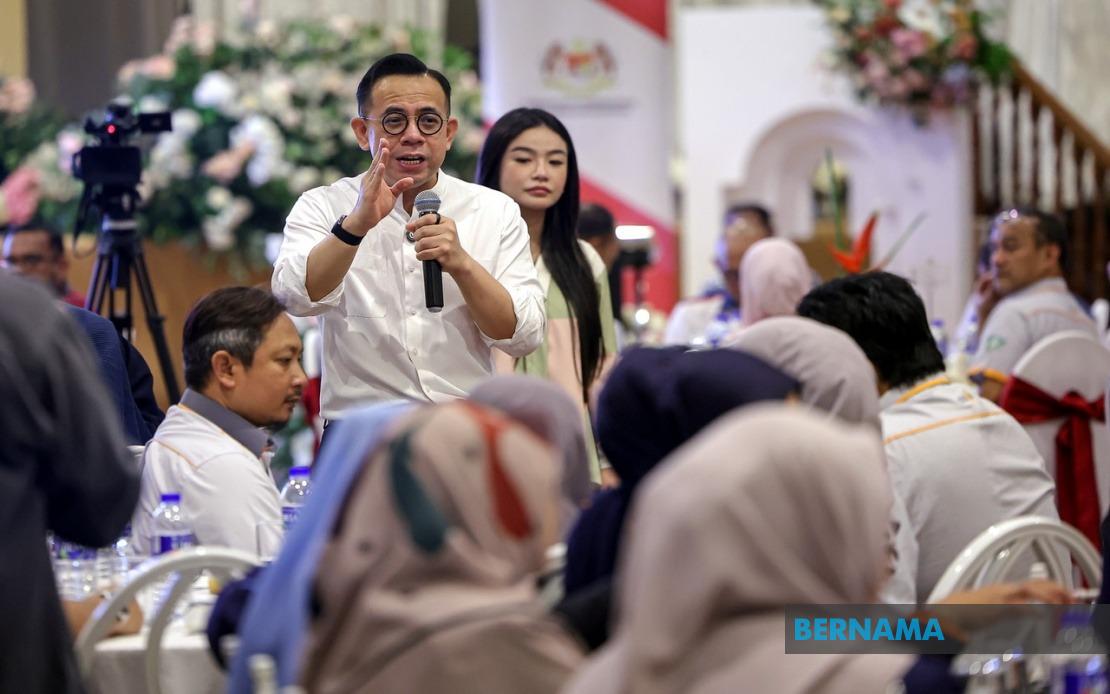
The electoral timeline shapes the context for this messaging campaign. The Election Commission has scheduled early voting for July 28, with the actual polling day set for August 1. This compressed campaign period necessitates efficient message delivery and rapid voter engagement. Sim's comments, delivered during a ministry gathering in Seremban, exemplify how incumbent administrations leverage official platforms and events to advance campaign narratives while maintaining formal neutrality of government institutions. The strategy of using existing ministerial work to validate manifesto commitments allows PH to build electoral momentum without appearing to instrumentalise state apparatus.
For Malaysian observers and Southeast Asian political analysts, this campaign represents an instructive moment in how incumbent parties attempt to renew electoral mandates in an era of heightened voter discernment. The emphasis on proven track record rather than visionary aspiration reflects maturation within Malaysia's political ecosystem, where voters have accumulated sufficient experience with both fulfilled and broken promises to demand accountability. Negeri Sembilan's voters will ultimately determine whether Pakatan Harapan's emphasis on administrative continuity and demonstrated competence outweighs alternative propositions offered by competing coalitions or independent candidates.
The state election also carries implications extending beyond Negeri Sembilan's boundaries. As a state government operating within Malaysia's federal system, Negeri Sembilan's electoral outcome will influence the broader balance of power within the Federation, affecting coalition dynamics at federal level and potentially influencing resource allocation patterns. States governed by Pakatan Harapan may enjoy preferential treatment in federal development initiatives, while opposition-controlled states may face marginalisation in resource distribution—a dynamic that has long characterised Malaysian federalism and shapes incentives for voters and elected representatives alike.

