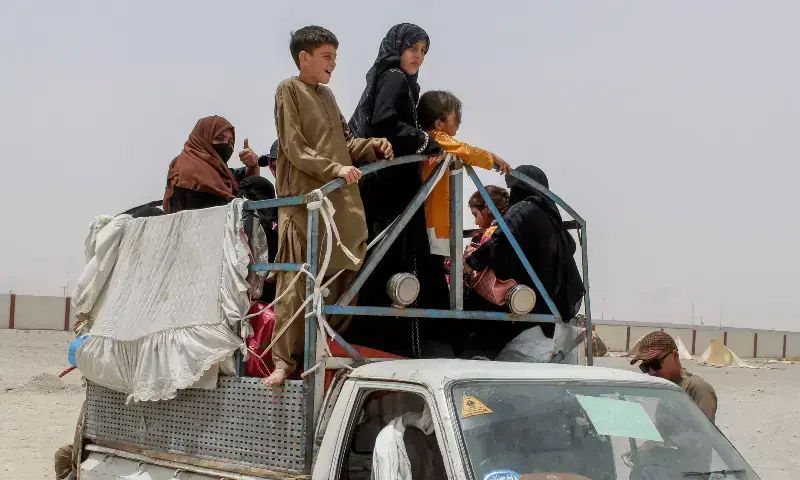
Pakistan's immigration authorities have completed the removal of approximately 2.59 million Afghan nationals who were residing in the country without proper legal documentation since 2023, marking one of the largest deportation operations in the region's recent history. The sweeping initiative reflects Islamabad's hardened stance on irregular migration and has emerged as a defining feature of the federal government's approach to border security and domestic population management in an era of mounting economic pressures and resource constraints.
Punjab province, which hosts the majority of Afghanistan's displaced population in Pakistan, has borne the heaviest responsibility for executing this policy. According to provincial home department figures, the province's immigration authorities have individually processed, detained, and arranged the deportation of 138,342 undocumented Afghans through a network of 36 holding centres distributed across major urban and rural areas. The scale of these operations underscores the enormous logistical challenge facing Pakistani authorities in managing what constitutes one of the world's largest refugee populations within its borders.
The immigration enforcement machinery remains actively engaged in identifying and processing remaining irregular migrants. Currently, approximately 53 Afghan nationals are held across Punjab's holding centres pending final documentation and transport to the border. The foreign national security cell within the Punjab home department continues conducting operations in both residential neighbourhoods and commercial marketplaces where undocumented workers traditionally congregate, suggesting authorities view this crackdown as a long-term structural intervention rather than a temporary measure.
Official government statements have framed the deportation operations within a strict legal framework. Spokespeople from the home department have consistently emphasized that Pakistan's immigration regulations explicitly prohibit the residence of any foreign national lacking a valid visa, regardless of their circumstances or duration of stay. This unambiguous position represents a marked departure from Pakistan's historical tolerance of Afghan asylum seekers, who have comprised a significant portion of the country's migrant workforce for four decades following successive conflicts in Afghanistan.
The operational execution of these deportations has proceeded through a standardized bureaucratic process designed to handle mass removals. Authorities conduct surveys and documentation reviews in identified areas harbouring concentrations of undocumented residents. Once apprehended, migrants are transported to provincial holding facilities where they receive basic accommodation, undergo formal registration procedures, and are processed for transportation to Afghanistan via the Torkham border crossing—the primary transit point between the two nations.
Conditions within holding centres have emerged as a secondary concern for Pakistani administrators focused primarily on processing capacity and logistics. Detained Afghans receive subsistence-level provisions during their detention period, which typically extends from several days to several weeks depending on administrative workload and border transport schedules. The facilities themselves vary considerably in quality and capacity, with some centres in major cities handling significantly larger populations than their infrastructure was designed to accommodate.
The federal government's intensified approach reflects broader policy calculations regarding resource allocation and social stability. Pakistan faces severe fiscal constraints, limited public services, and unemployment challenges that have increasingly animated political discourse around immigration. The narrative framing undocumented foreign residents as contributors to these problems has gained traction among policymakers and resonated with segments of the Pakistani public experiencing economic hardship, even as economists debate the actual fiscal impact of Afghan migration on the national economy.
The deportation drive has also incorporated a public participation mechanism designed to expand surveillance capacity. Authorities have actively solicited information from ordinary citizens, establishing an emergency telephone line (15) through which residents can report suspected undocumented immigrants. The government has simultaneously promised anonymity to informants, attempting to allay concerns about social friction or retaliatory actions from affected communities. This crowdsourced intelligence gathering represents an expansion of the state's monitoring apparatus into residential and commercial spaces.
For Malaysia and other Southeast Asian nations, Pakistan's experience offers instructive lessons regarding the political economy of migration management. The Pakistani case demonstrates how rapid economic deterioration can shift public and governmental attitudes toward migrant populations previously tolerated or even welcomed. It also illustrates the operational complexities of executing large-scale deportations, including the diplomatic coordination required with transit countries, the infrastructure demands of detention systems, and the medium-term reintegration challenges faced by receiving countries like Afghanistan already burdened by conflict and instability.
The long-term implications of Pakistan's deportation campaign extend beyond immediate bilateral relations between Islamabad and Kabul. The operation has effectively dismantled established migrant communities that had developed deep economic and social roots across Pakistani cities and rural areas. Afghan workers have historically filled labour shortages in construction, transportation, small commerce, and domestic service sectors—roles that may prove difficult to immediately replace through domestic hiring. This structural disruption could influence Pakistan's economic performance in coming quarters, potentially offsetting any fiscal gains from reduced public service utilization by migrants.
Afghanistan faces mounting pressure to absorb returning populations into an economy already devastated by decades of conflict and facing acute humanitarian challenges. The sudden influx of 2.59 million deportees represents a massive population surge that Afghan authorities lack capacity to effectively process, house, or employ. Many returnees lack resources, documentation, or economic prospects in their country of origin, creating conditions for renewed humanitarian crisis and potentially destabilizing migration flows toward Iran and Central Asia.
Pakistani officials have presented the deportation campaign as an exercise of national sovereignty and border control discipline. However, the operation reflects deeper anxieties about resource scarcity, identity, and state capacity in a transforming region. As Afghan instability persists and climate pressures mount across South Asia, Pakistan's stringent immigration stance may represent not an endpoint but rather the opening phase of more sustained conflicts over migration, citizenship, and belonging that will reshape the region's political landscape for years ahead.

