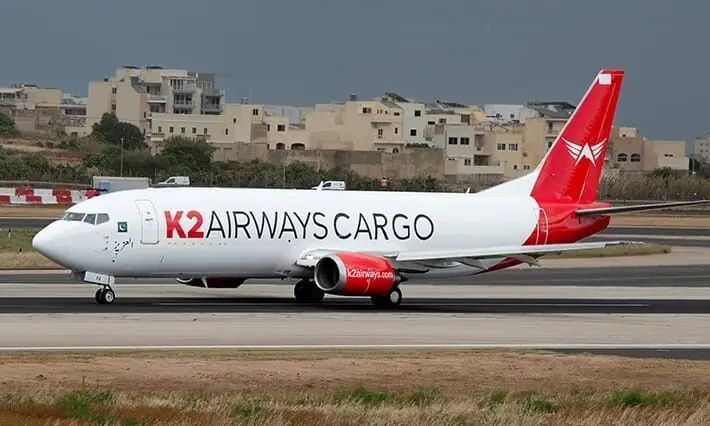
Pakistan's civil aviation and military authorities launched an intensive search operation on Wednesday for a K2 Airways Boeing 737-400 cargo aircraft that disappeared over the Arabian Sea near Karachi, with Prime Minister Shehbaz Sharif confirming the plane had crashed into the sea. The aircraft, operating a routine cargo service from Sharjah in the United Arab Emirates to Karachi, encountered critical difficulties during its descent on Tuesday evening before losing all contact with air traffic control.
According to the Pakistan Airports Authority, the Boeing 737 was approaching Karachi when radar operators detected the aircraft in a state of "rapid descent" after the flight crew reported experiencing a "navigational system issue." The last recorded radar contact occurred at 21:21 Pakistan Standard Time, approximately 155 nautical miles west of Karachi, at which point communication with the aircraft ceased entirely. The sudden loss of radar contact, combined with the crew's earlier distress communication, prompted immediate activation of emergency protocols across Pakistan's aviation and military establishments.
Data retrieved from global flight-tracking services provided a chilling picture of the aircraft's final moments. Preliminary information showed the plane initially lost altitude, then climbed briefly before experiencing what Flightradar24.com described as a "second, sudden and dramatic loss of altitude." This erratic flight pattern suggests the crew may have attempted corrective measures following the initial navigational failure, but ultimately lost the ability to control the aircraft's descent. The sequence of events raises critical questions about what mechanical or systems failures may have cascaded during those final minutes.
K2 Airways, the operator, is a private cargo airline based in Pakistan that manages both scheduled international routes and charter operations. The company operates cargo services connecting Pakistan with regional hubs and international destinations, serving the growing demand for air freight connectivity in South Asia. The loss of this aircraft represents a significant operational blow to the airline and underscores vulnerabilities within Pakistan's private aviation sector.
The Boeing 737 involved in the incident carried considerable history within the global aviation industry. First manufactured in 1999, the aircraft initially operated as a passenger plane for Russian carrier Aeroflot before being transferred to Indonesian national airline Garuda Indonesia. The plane underwent conversion to dedicated cargo configuration in 2012, extending its commercial life by nearly a dozen years beyond its original passenger service design. Such conversions are standard practice globally, but the aircraft's age and conversion timeline may feature in subsequent investigation into potential contributing factors.
With five crew members confirmed aboard the aircraft, Pakistan's military and civil authorities mobilized extensive resources within hours of the disappearance. The Prime Minister personally directed the Pakistan Navy, Pakistan Air Force, and civil aviation authorities to deploy all available assets for search and rescue operations. A combination of naval vessels, merchant ships, and military aircraft combed the designated search area in the Arabian Sea, racing against deteriorating weather conditions and the passage of time.
The incident arrives against a backdrop of persistent safety concerns within Pakistan's aviation infrastructure. The country experienced several catastrophic aircraft accidents during the preceding decade, including multiple fatal crashes in and around Karachi, which serves as Pakistan's principal aviation hub. These incidents prompted international scrutiny of Pakistan's regulatory frameworks and operational standards. The European Union suspended Pakistan International Airlines from European airspace for four years due to documented safety and licensing deficiencies, a measure that damaged the national carrier's reputation and operational capacity until the ban's lifting in 2024.
The disappearance of the K2 Airways cargo plane immediately triggered broader discussion about safety oversight across Pakistan's aviation sector, extending beyond state-owned carriers to private operators. While the EU's previous restrictions focused on Pakistan International Airlines specifically, the underlying systemic concerns regarding pilot training standards, aircraft maintenance protocols, and air traffic control procedures remain applicable across the entire aviation ecosystem. Private cargo operators, which often operate with less public visibility than passenger airlines, face scrutiny regarding compliance with international safety standards and regulatory oversight.
Investigators will examine multiple potential contributory factors as the search operation continues. The crew's reported navigational system failure represents the most immediate technical concern, though aviation experts recognize that modern aircraft possess redundant systems specifically designed to prevent catastrophic consequences from single-point failures. The investigation will necessarily explore whether multiple systems failed simultaneously, whether the navigational failure prevented proper execution of emergency procedures, or whether additional environmental or mechanical factors compounded the initial technical problem.
The location of the crash—in the Arabian Sea relatively close to Pakistan's coast—may facilitate recovery operations compared to incidents in open ocean. Pakistani naval capabilities, supplemented by merchant vessel assistance, provide a reasonable prospect for locating wreckage that might yield critical evidence regarding the aircraft's final systems performance. Modern aircraft carry flight data recorders and cockpit voice recorders designed to withstand impact and immersion, potentially providing investigators with definitive information about crew actions and aircraft performance in the minutes preceding impact.
For Malaysia and other Southeast Asian nations sharing Pakistan's maritime region and aviation infrastructure concerns, the incident highlights the continuing importance of rigorous safety standards and consistent oversight across regional aviation operators. Many regional carriers operate aging aircraft similar to the K2 Airways Boeing 737, and conversion of passenger aircraft to cargo configuration remains standard practice throughout the region. The incident reinforces the imperative for strict adherence to maintenance schedules, crew training protocols, and regulatory compliance across all aviation sectors, regardless of operator size or specialization.

