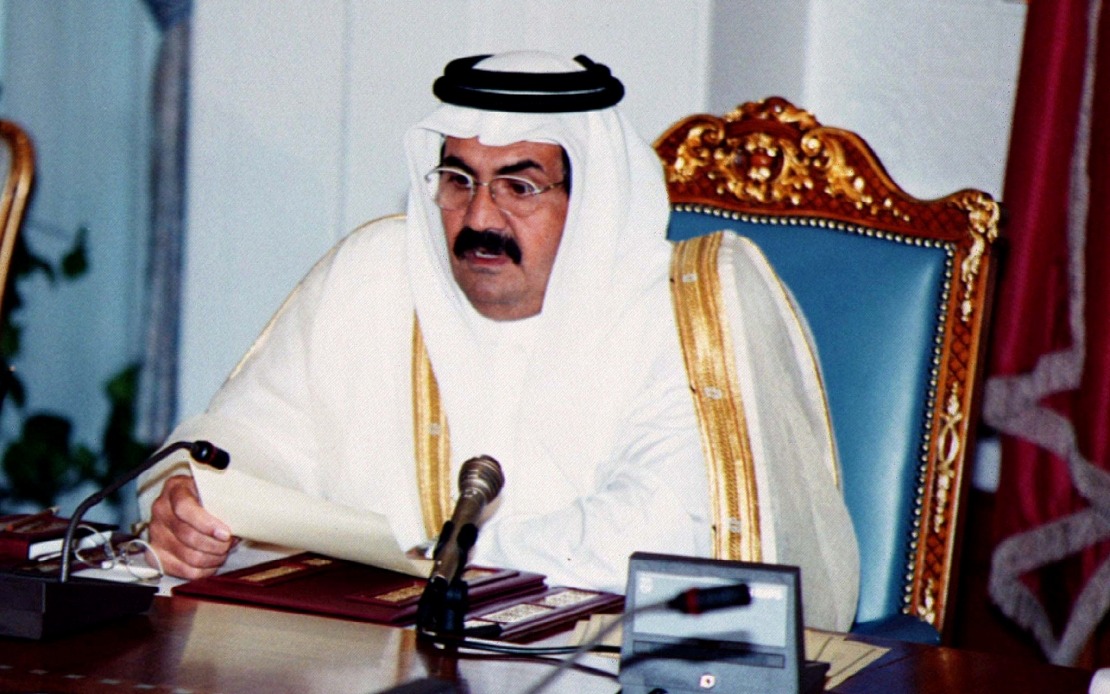
Pakistan's Prime Minister Shehbaz Sharif and Maldives President Mohamed Muizzu travelled to Qatar on Monday to convey condolences to the ruling family following the passing of former Emir Sheikh Hamad Bin Khalifa Al Thani. The high-level delegations underscore the diplomatic significance of the late emir's role in shaping Gulf politics and his influence across the broader Muslim world over nearly two decades of governance.
Sharif's delegation reflected the importance Islamabad places on its relationship with Doha. Accompanying the Prime Minister were his brother and former Prime Minister Nawaz Sharif, Deputy Prime Minister and Foreign Minister Senator Ishaq Dar, and Information Minister Attaullah Tarar. This composition—combining current and former senior figures—demonstrated Pakistan's commitment to honouring a leader whose tenure witnessed substantial regional developments that affected South Asian interests.
Sheikh Hamad Bin Khalifa Al Thani, who guided Qatar's transformation from a modest Gulf state into a major international player, died at the age of 74. His reign from 1995 until his abdication in 2013 spanned a transformative period characterised by ambitious economic diversification, massive infrastructure investment, and an increasingly assertive foreign policy that often challenged regional consensus. His successor, current Emir Sheikh Tamim Bin Hamad Al Thani, now leads a nation fundamentally reshaped by his father's vision.
The diplomatic pilgrimage was not limited to South Asian leaders. Tributes from across the globe acknowledged the former emir's pivotal contributions to Qatar's modernisation. Multiple world leaders recognised how his decisions elevated the small peninsula nation to prominence in international affairs, particularly through its emergence as a major liquefied natural gas exporter and its hosting of the 2022 FIFA World Cup. These achievements required decades of strategic planning and substantial capital investment that Sheikh Hamad initiated.
Bangladesh's Prime Minister Sheikh Hasina Wazed, through formal condolence messages, emphasised the late emir's broader impact beyond Qatar's borders. She highlighted his legacy in advancing regional peace initiatives, fostering economic cooperation among Muslim-majority nations, and championing educational advancement across the Islamic world. These dimensions of his leadership resonated across South and Southeast Asia, where nations recognised the importance of constructive engagement in multilateral forums that Sheikh Hamad championed.
The Maldivian president's remarks focused on how Sheikh Hamad's stewardship would endure in collective memory. Mohamed Muizzu acknowledged that the former emir's accomplishments extended beyond national boundaries, establishing frameworks for cooperation that benefited smaller island nations seeking partnerships with wealthier Gulf states. For the Maldives, Qatar's economic influence and diplomatic reach represented important counterbalances in regional geopolitics.
Pakistan and India both declared Monday as a day of national mourning, a gesture that underscores the esteem in which Sheikh Hamad was held across South Asia. This official recognition—uncommon for foreign dignitaries—reflected appreciation for his role in various regional initiatives and his consistent engagement with Pakistani and Indian leadership throughout his tenure. His willingness to mediate disputes and facilitate dialogue had earned respect that transcended typical diplomatic courtesy.
The succession of Sheikh Tamim Bin Hamad Al Thani, who assumed power following his father's abdication, has generally maintained continuity with the strategic vision established during the previous reign. However, observers note subtle shifts in tone and approach, with the current emir emphasising regional reconciliation more explicitly. The condolence visits from major regional players serve to acknowledge both the achievements of Sheikh Hamad's era and the continuity of state-to-state relationships under new leadership.
For Malaysia and Southeast Asia, Sheikh Hamad's passing marks the end of an era shaped by one of the Gulf's most influential figures during a period of rapid geopolitical realignment. Qatar's evolution under his leadership affected regional dynamics affecting ASEAN members, particularly regarding trade relationships, investment flows, and the broader balance of power in global geopolitics. His initiatives in energy markets and international finance created pathways that smaller nations could navigate to secure economic partnerships.
The visit by Pakistan's Prime Minister and the Maldivian President demonstrates how obituary diplomacy functions as a mechanism for affirming bilateral relationships and signalling continuity in foreign policy. These high-level delegations carry implicit messages about the importance both nations place on maintaining strong ties with Qatar under its new leadership. They also provide opportunities for informal discussions about regional cooperation beyond formal state funeral proceedings.
Sheikh Hamad's legacy encompasses both his domestic achievements in transforming Qatar into a modern state with world-class infrastructure and his international activism that sometimes generated controversy. Yet across the Muslim world and among leaders of developing nations, appreciation for his role in elevating Qatar's standing remained consistent. His passing therefore signifies not merely the loss of a particular leader but the conclusion of a distinctive chapter in Gulf and global politics that will shape diplomatic relationships for years to come.

