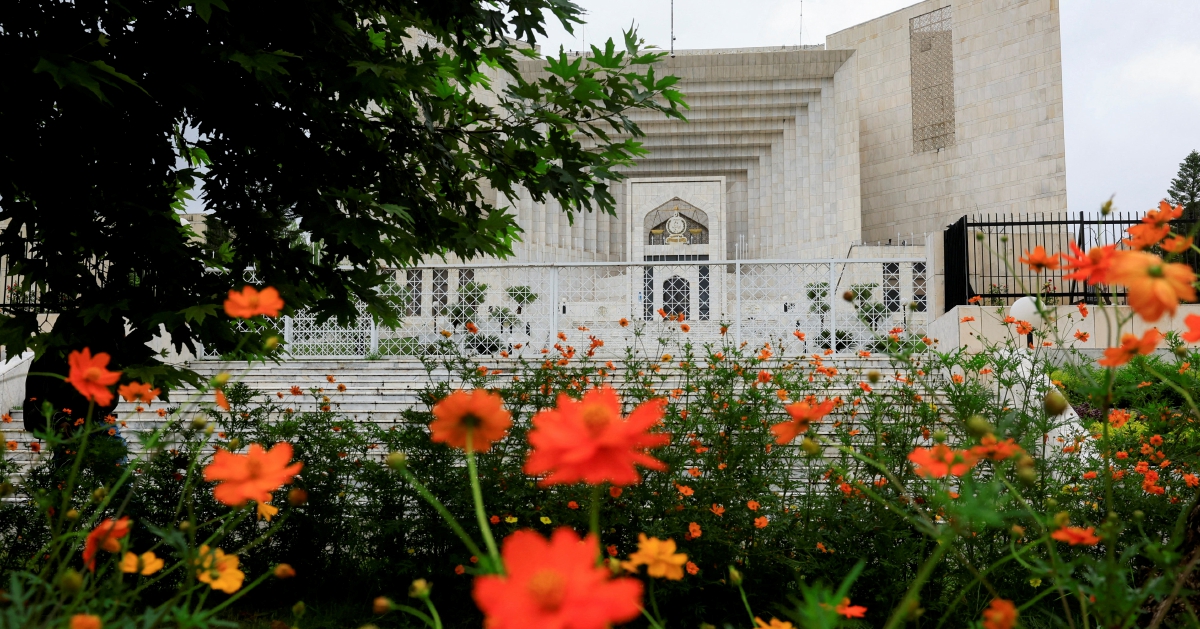
Pakistan's imprisoned former Prime Minister Imran Khan was relocated to a medical facility for diagnostic procedures following an intervention by the nation's Supreme Court, his party announced in the early hours of Friday. The transfer marks a significant development in the case of the country's most influential political figure, who has remained in custody while facing multiple legal charges since his arrest over a year ago.
The decision to move Khan to hospital came via explicit Supreme Court orders, reflecting ongoing judicial scrutiny of his detention conditions and health status. His political party—the Pakistan Tehrik-e-Insaf (PTI)—publicised the transfer, indicating that the court had determined medical evaluation necessary despite his incarcerated status. The intervention underscores the high-profile nature of Khan's case and the institutional tensions surrounding his imprisonment within Pakistan's political system.
Imran Khan's arrest in March 2023 sent shockwaves through Pakistani politics, triggering massive street protests and exposing deep fractures within the military-dominated establishment. Once a celebrated international cricket player and national hero, Khan had built PTI into a powerful political movement, winning the 2018 election on an anti-corruption platform. His detention has polarised the nation, with supporters viewing it as politically motivated persecution while government officials maintain he faces legitimate criminal charges related to alleged corruption and other offences.
The former premier's health concerns have been a recurring issue during his imprisonment. Multiple reports from his legal team and family members have highlighted deteriorating conditions, including stress-related ailments and inadequate medical care. The Supreme Court's decision to mandate hospital assessment suggests that judicial attention to Khan's welfare has intensified, possibly in response to documented health complaints or advocacy from human rights organisations monitoring his case.
This latest development arrives as Pakistan grapples with significant political instability and economic crisis. The country faces mounting international pressure regarding democratic freedoms and the treatment of high-profile political detainees. Khan's case has drawn criticism from international human rights bodies and democratic governments worldwide, who have questioned whether his prosecution represents legitimate law enforcement or political vendetta by rival factions within Pakistan's power structure.
The PTI's announcement of the hospital transfer carries strategic importance for the party's messaging. By publicising the Supreme Court order, the party frames Khan's medical evaluation as evidence of external accountability rather than a routine procedural matter. This narrative supports PTI's broader argument that Khan has been subjected to extraordinary judicial treatment compared to other political figures accused of corruption—a sentiment that resonates deeply among his substantial voter base across urban and rural constituencies.
Pakistan's Supreme Court has faced increasing pressure to demonstrate institutional independence amid accusations that the judiciary has become compromised by military influence. The court's intervention in Khan's detention conditions could reflect efforts to distance itself from perceptions of complicity in what many international observers characterise as authoritarian governance. Hospital assessments and medical oversight of detained political prisoners represent one avenue through which courts attempt to demonstrate protective judicial oversight.
The economic and political ramifications of Khan's imprisonment extend beyond his personal circumstances. His party remains a major electoral force, and his continuing detention fuels ongoing protest movements that periodically disrupt urban centres. The uncertainty surrounding his legal status and timeline for trial creates political paralysis at a moment when Pakistan desperately needs stable governance to address severe macroeconomic challenges, including currency devaluation and inflation affecting ordinary Pakistanis.
For Malaysian readers and Southeast Asian observers, Khan's situation illustrates persistent challenges within South Asian democracies regarding judicial independence, separation of powers, and peaceful political contestation. Pakistan's experience offers cautionary lessons about how institutional checks and balances can erode when executive branches acquire undue influence over courts, resulting in selective prosecution of political opponents. The contrast between Khan's high-profile incarceration and lenient treatment of other corruption suspects within Pakistan's political elite highlights how rule of law can become instrumentalised for factional advantage rather than equitable justice.
The hospital transfer ordered by Pakistan's Supreme Court may represent a tactical concession that ultimately changes little regarding Khan's fundamental legal jeopardy. Whether this intervention presages broader judicial reassertion of independence or constitutes a procedural accommodation within a predetermined trajectory remains uncertain. What appears evident is that Khan's case continues generating intense institutional contention reflecting Pakistan's broader struggle between democratic aspirations and entrenched power structures resistant to genuine accountability and political pluralism.

