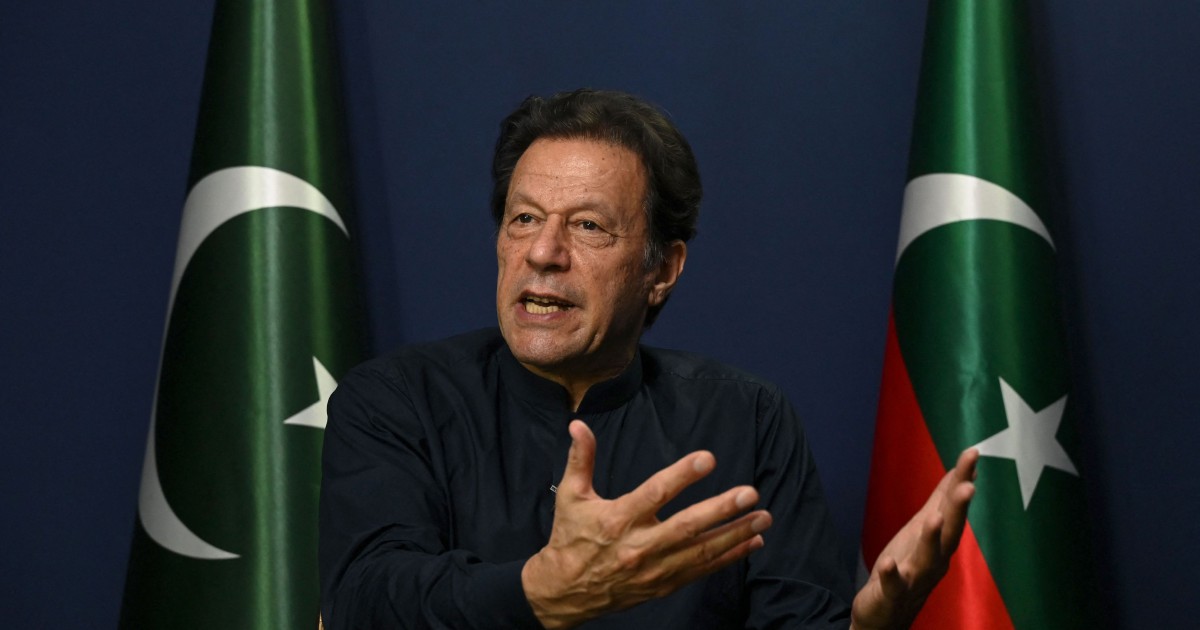
Pakistan's Supreme Court has intervened in the detention of former Prime Minister Imran Khan, ordering his immediate transfer from jail to hospital in a significant development that addresses months of complaints from his political party and relatives regarding his deteriorating health. The judicial directive, announced on Tuesday, represents a notable shift in the handling of Khan's case and signals the apex court's willingness to examine conditions surrounding his incarceration.
The Pakistan Tehreek-e-Insaf party, which Khan founded and led to a 2018 election victory before his controversial ouster in 2022, has consistently maintained that the former premier requires proper medical attention unavailable within the prison system. Party officials had publicly highlighted concerns about Khan's wellbeing, arguing that his detention conditions were exacerbating existing health complications. The Supreme Court's decision appears to have validated these concerns to a sufficient degree to warrant judicial intervention.
Khan's detention has remained a contentious issue within Pakistan's political landscape, with his supporters viewing it as politically motivated persecution orchestrated by rival factions. The PTI has used Khan's incarceration as a rallying point, claiming that the judiciary and state institutions have been weaponised against the party through multiple cases and charges. The hospital transfer order demonstrates that even within Pakistan's often-contested judicial system, questions about custodial treatment can compel official response.
Family members of the 71-year-old politician had escalated their public statements about his health status, with relatives discussing specific medical conditions that they claimed required specialist treatment beyond prison facilities. These appeals resonated sufficiently with the Supreme Court's bench to prompt the intervention, suggesting that documented health deterioration formed the basis for the judicial order. The family's medical arguments appear to have carried weight in judicial deliberations.
The timing of the court order occurs amid ongoing political turbulence in Pakistan, where institutional competition between civilian, military, and judicial actors continues to shape governance. Khan's political movement has expanded its street mobilisation since his detention, and the Supreme Court's intervention may reflect awareness of social tensions surrounding his case. The transfer to hospital could be interpreted as an attempt to depoliticise the detention issue by moving Khan from a purely custodial setting to a medical environment.
Prison conditions in Pakistan have long drawn international criticism, with human rights organisations documenting inadequate medical facilities and overcrowding across the system. Khan's case has brought these institutional deficiencies into sharper focus, particularly regarding the ability of prisons to provide appropriate care for ageing detainees or those with chronic health conditions. The Supreme Court's order implicitly acknowledges these systemic limitations.
For Malaysian readers familiar with detention controversies in Southeast Asia, Khan's situation illustrates how political detention cases can intersect with legitimate health and humanitarian concerns, complicating straightforward assessments of judicial independence and political neutrality. The handling of such cases often reveals deeper tensions within state institutions regarding the separation of political and judicial processes.
The hospital transfer does not constitute Khan's release or a resolution of the numerous legal cases against him. Rather, it represents a modification of his custodial arrangement while cases proceed through the courts. Multiple charges against the former prime minister remain pending, and the Supreme Court's order addresses only the immediate welfare dimension of his detention rather than the underlying charges.
Khan's supporters view the hospital transfer as a vindication of their complaints and a stepping stone toward eventual release, though legal proceedings could continue for months or years. The PTI has framed the Supreme Court order as recognition of unjust detention, regardless of the court's formal reasoning about medical necessity. This divergence between judicial rationale and political interpretation reflects the polarised nature of Pakistani politics around Khan's figure.
The decision carries implications for how Pakistan's judicial system manages high-profile detention cases involving political figures, particularly when health concerns become prominent. Future cases involving detained politicians may reference this precedent when families raise medical arguments, potentially creating expectations for similar interventions. The order suggests that documented health deterioration can overcome institutional resistance to modifying detention arrangements.
Regionally, the case demonstrates how political detentions in South Asian democracies often generate sustained institutional friction, with courts, executives, and political parties offering competing interpretations of legality and legitimacy. Khan's specific situation reflects broader patterns observable across the region, where detained political opponents frequently raise health concerns that sometimes trigger judicial responses and sometimes face dismissal as strategic maneuvering.
The hospital transfer arrangement will require coordination between medical and security authorities, raising practical questions about how detention will be maintained within a medical setting. Such logistics have precedent in other jurisdictions but remain administratively complex, particularly in contexts where institutional trust between security and medical sectors is limited. The Supreme Court order thus creates implementation challenges alongside its immediate humanitarian effect.

