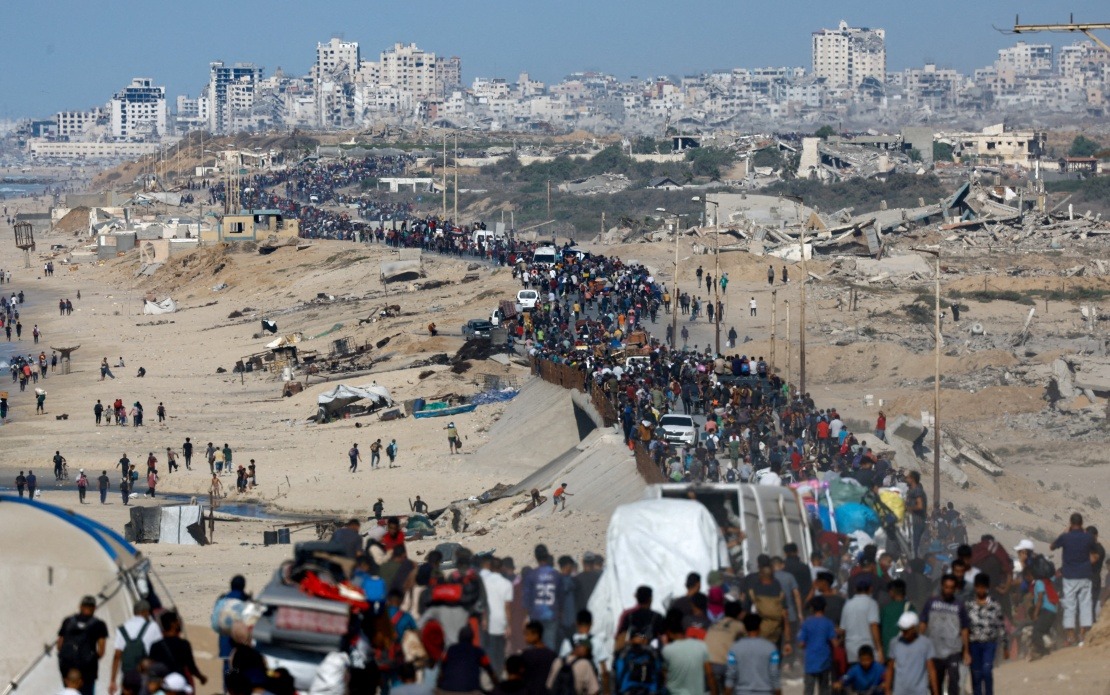
The Palestinian government has mounted a strong diplomatic defence of the United Nations Relief and Works Agency for Palestine Refugees in the Near East, rejecting what it characterises as deliberate efforts to erode the agency's authority and operational scope. Speaking through its Foreign Ministry, the Palestinian Authority stressed that UNRWA remains a vital humanitarian institution that cannot be replaced or sidelined without addressing the fundamental causes that created the Palestinian refugee situation in the first place.
UNRWA's role extends far beyond emergency relief operations. The agency delivers comprehensive services spanning education, healthcare provision, and social protection programmes across all Palestinian territories, including the occupied West Bank, East Jerusalem, and the Gaza Strip, as well as in refugee camps located throughout Jordan, Lebanon, and Syria. For millions of Palestinians dependent on these services, UNRWA represents not merely a humanitarian organisation but an institutional guarantee of basic dignified existence. The Foreign Ministry's characterisation of the agency as an "indispensable lifeline" reflects the depth of integration UNRWA has achieved within Palestinian society over nearly seven decades of operation.
Palestine's position rests on established international legal frameworks. The ministry emphasised that UNRWA operates under explicit United Nations mandate and functions within the boundaries of international law, implying that any attempt to dissolve or substantially diminish the agency would constitute a violation of legally binding international instruments. This framing places the Palestinian government's defence of UNRWA within a broader argument about respect for international institutional legitimacy and the rule of law governing relations between nations and international bodies.
The timing of Palestine's statement reflects growing anxiety about concrete threats to UNRWA's continued existence. The Trump administration's Board of Peace, established in January as a mechanism for pursuing what Washington frames as a "new approach" to Gaza's future, explicitly declared on Wednesday that UNRWA has "no place in the new Gaza." This statement, posted on the X platform, signals a fundamental shift in American policy orientation away from supporting the established international humanitarian infrastructure in Palestinian territories. The board further suggested that UNRWA perpetuates what it terms a "complex of perpetual aid dependency," a characterisation that frames international humanitarian assistance as enabling rather than alleviating Palestinian suffering.
This American position contains troubling implications for the entire international humanitarian system in the Middle East. The Board of Peace frames its rejection of UNRWA not as a policy disagreement but as part of a sweeping reimagining of Gaza's political and social architecture. The board's assertion that "the people of Gaza deserve better" implies that existing humanitarian frameworks are inadequate or counterproductive, yet offers no concrete alternative mechanisms for delivering the education, healthcare, and social services that millions of Gazans currently depend upon for survival. For Malaysian and broader Southeast Asian policymakers, this represents a concerning precedent: the notion that powerful states can simply declare international humanitarian institutions obsolete without establishing functional replacements raises questions about the stability and reliability of the entire UN system.
The Board of Peace itself represents a novel institutional creation designed to operationalise the Trump administration's vision for resolving the Gaza conflict. Established in January through presidential initiative, the board held its inaugural meeting focused specifically on Gaza in February at the US Institute of Peace in Washington, with Trump personally presiding. This structure indicates that American policymaking on Gaza has shifted significantly away from traditional diplomatic channels and international consensus-building toward personalised executive decision-making centred on a specific political figure's strategic objectives.
The board's activities form part of the second phase of Trump's twenty-point plan for ending the Gaza war, a proposal that received backing through a United Nations Security Council resolution passed last November. The existence of this resolution underscores the complex international legal landscape surrounding Gaza policy. While the Trump plan carries formal UN endorsement, the board's declaration against UNRWA effectively challenges another fundamental UN institution, creating internal contradiction within the international framework itself. This tension reveals the vulnerability of UN agencies when powerful member states withdraw support, regardless of the legal mandates theoretically protecting those institutions.
Palestine's statement explicitly rejected what it characterised as attempts to undermine UNRWA without simultaneously addressing root causes of Palestinian displacement and refugee status. This rhetorical move emphasises that humanitarian assistance, however vital in immediate terms, cannot substitute for what the Palestinian government describes as the "inalienable rights" of Palestinian refugees. The ministry invoked United Nations General Assembly Resolution 194, passed in 1948, which established the principle of Palestinian refugee return rights. By linking UNRWA's defence to this foundational UN resolution, Palestine positions the agency as inseparable from the broader project of achieving Palestinian national self-determination and justice.
The Palestinian Foreign Ministry also rejected terminology that it argued fragments Palestinian geography and identity. This statement appears directed at language that treats Gaza as administratively or politically separate from broader Palestinian territorial claims and national identity. The ministry reasserted that "the Gaza Strip is an integral part of the occupied State of Palestine," and that Palestinians constitute "one people" distributed across Gaza, the West Bank including East Jerusalem, and diaspora populations globally. This geographical and political assertion carries significance for understanding Palestinian resistance to UNRWA's removal: eliminating the agency would effectively compartmentalise Palestinian refugee populations, severing institutional connections between Gaza's population and Palestinian communities elsewhere, thereby undermining the national unity framework that Palestinian leadership considers fundamental to eventual resolution of their political status.
International dimensions of this dispute deserve careful analysis. The Palestinian Foreign Ministry directed its appeal toward "all states, institutions and international organisations," requesting respect for UNRWA's mandate, privileges, and immunities under international law. This appeal implicitly recognises that UNRWA's survival depends not solely on Palestinian advocacy but on the willingness of other governments to defend international institutional legitimacy. For countries including Malaysia, which maintain formal positions supporting Palestinian rights while navigating complex relationships with Western powers, this situation presents a delicate diplomatic challenge. Supporting UNRWA defence aligns with Malaysian historical positions on Palestinian issues, yet doing so potentially complicates relationships with the United States, a significant economic and strategic partner for the Southeast Asian region.
The humanitarian stakes of this institutional struggle have grown dramatically following the October 2023 Israeli military offensive in Gaza. According to Palestinian health authorities, the conflict has resulted in more than 73,000 Palestinian deaths and over 173,000 injuries, with women and children comprising the majority of casualties. Within this context of mass suffering, UNRWA's educational and healthcare operations assume even greater importance as mechanisms for maintaining social cohesion and basic human dignity amid devastating violence. Removing UNRWA without established alternatives would deepen an already catastrophic humanitarian situation, potentially creating conditions for widespread mortality from preventable diseases and malnutrition.
Palestine's defence of UNRWA ultimately represents more than protection of a single institution. The position articulates a broader argument about international law's capacity to constrain powerful states, the indivisibility of Palestinian national identity, and the principle that humanitarian assistance cannot substitute for political resolution of root causes of displacement. As the Trump administration signals its intention to reshape the Middle East according to a distinctly American strategic vision, Palestine's insistence on UNRWA's continued operation emerges as a crucial point of resistance to what Palestinian leadership perceives as the further marginalisation and fragmentation of Palestinian claims to self-determination and territorial integrity.

