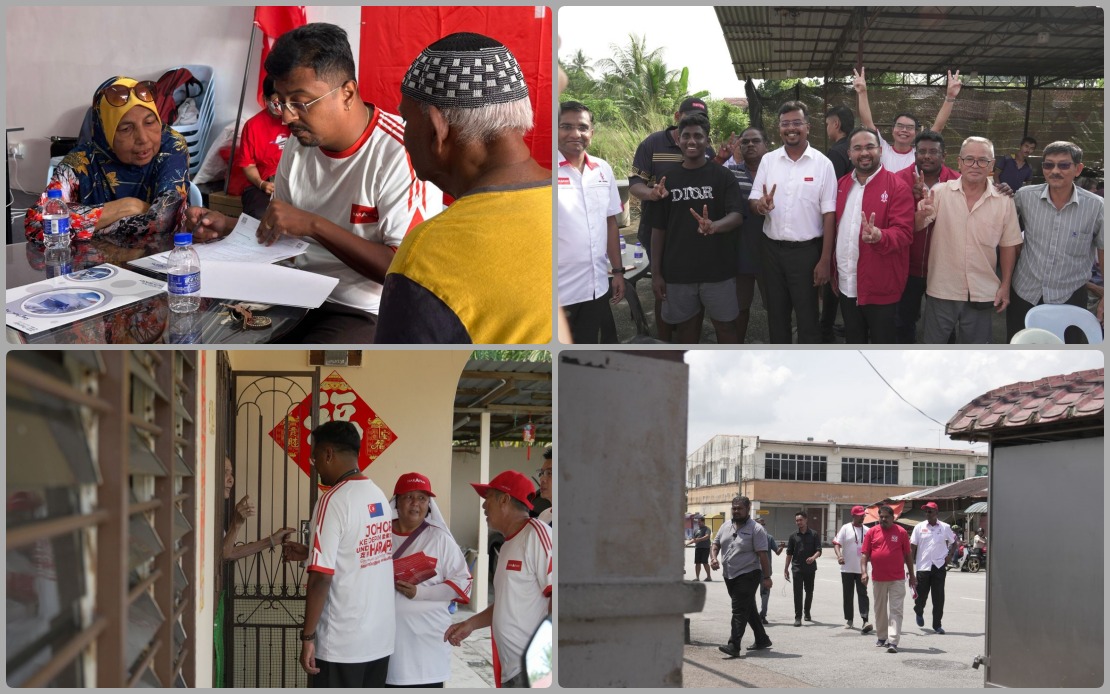
The Pakatan Harapan candidacy for the Paloh state assembly seat faces an unexpected disruption as Dr. A. Ruban was admitted to hospital in Batu Pahat on July 7 for urgent treatment of a slipped disc, a recurring spinal condition that has flared up during the demanding campaign period for the Johor state election.
According to his campaign manager Abdul Majid Abd Aziz, the medical emergency materialised after Dr. Ruban experienced severe pain that significantly impaired his mobility starting from the morning of his hospitalisation. The condition, which stems from previous spinal surgery, had remained dormant until the physical rigours of active campaigning prompted its recurrence. Abdul Majid attributed the deterioration primarily to the exhausting schedule associated with intensive field operations across the constituency.
The candidate's health challenge carries particular significance given the compressed timeline of the Johor campaign. With the state election scheduled for July 11 and early voting already concluded on July 7, the PH machinery faces the loss of their frontline representative during a critical juncture. Although Abdul Majid indicated that Dr. Ruban's condition remained non-critical and that discharge was anticipated within one to two days, the timing poses logistical challenges for the coalition's efforts to consolidate voter support in the final days before polling.
The hospitalisation underscores the physical demands placed on candidates during state election campaigns in Malaysia. The emphasis on ground presence and direct voter engagement through walkabouts and community interactions has become increasingly central to electoral strategy. For an individual with pre-existing spinal complications, maintaining such intensity without adequate rest periods created conditions for medical crisis. This incident may prompt broader reflection within political parties about candidate health management during high-pressure campaign phases.
Despite Dr. Ruban's temporary sidelining from field activities, the PH campaign infrastructure for Paloh remains mobilised. Abdul Majid affirmed that the party's grassroots organisation would sustain community engagement, ensuring that the candidate's policy positions and electoral messaging continue reaching voters through alternative channels and party representatives. This contingency approach reflects the operational sophistication of established political coalitions, which maintain campaign momentum through institutional structures independent of individual candidate presence.
The Paloh contest itself presents a complicated electoral landscape that extends beyond the immediate candidate health issue. The seat is contested by four candidates representing distinct political constituencies: Dr. Ruban championing Pakatan Harapan's reform agenda, D. Jeevakumar representing Perikatan Nasional's Islamist-nationalist coalition, independent candidate G. Kamaleswaren offering a non-aligned alternative, and incumbent Lee Ting Han defending Barisan Nasional's established position. This multi-way configuration means that variations in turnout or campaign effectiveness could substantially alter outcomes, making every day of electioneering consequential.
For Malaysian voters monitoring the Johor election, the incident illustrates the stakes and pressures involved in competitive multi-party electoral contests. Candidates are expected to maintain gruelling schedules across numerous locations, engaging directly with constituents through personal appearances and grassroots mobilisation. The physical toll, particularly on individuals with pre-existing health vulnerabilities, remains largely unspoken in political discourse despite being an inherent feature of modern campaign culture.
Barisan Nasional's incumbent position in Paloh, combined with its historical organisational advantages, provides a baseline advantage that the opposition coalitions must overcome. The emergence of both Perikatan Nasional and an independent candidate further fragments the anti-establishment vote, potentially benefiting the entrenched incumbent. Dr. Ruban's temporary absence from the field, even if brief, could influence momentum perceptions and voter decision-making in a closely contested race.
From a broader Southeast Asian perspective, Malaysian state elections continue to serve as critical bellwethers for national political sentiment and coalition durability. The Johor contest, as the sixteenth state election iteration, reflects the maturation of Malaysia's competitive multiparty democracy while simultaneously revealing structural challenges related to campaign intensity and candidate welfare. The solidarity displayed by PH in maintaining organisational presence despite their candidate's incapacity demonstrates institutional resilience, though it also highlights the individual sacrifices demanded by contemporary electoral politics.
The resolution of Dr. Ruban's medical situation will likely become a secondary narrative element within broader Johor election coverage, yet it carries implications extending beyond the Paloh seat. How political parties respond to candidate health emergencies, whether they implement systemic protections for vulnerable individuals, and whether campaign culture shifts to accommodate human limitations remain largely unanswered questions within Malaysian politics. Dr. Ruban's hospitalisation, therefore, functions simultaneously as a localised medical incident and as a wider commentary on the sustainability of high-intensity electoral competition.

