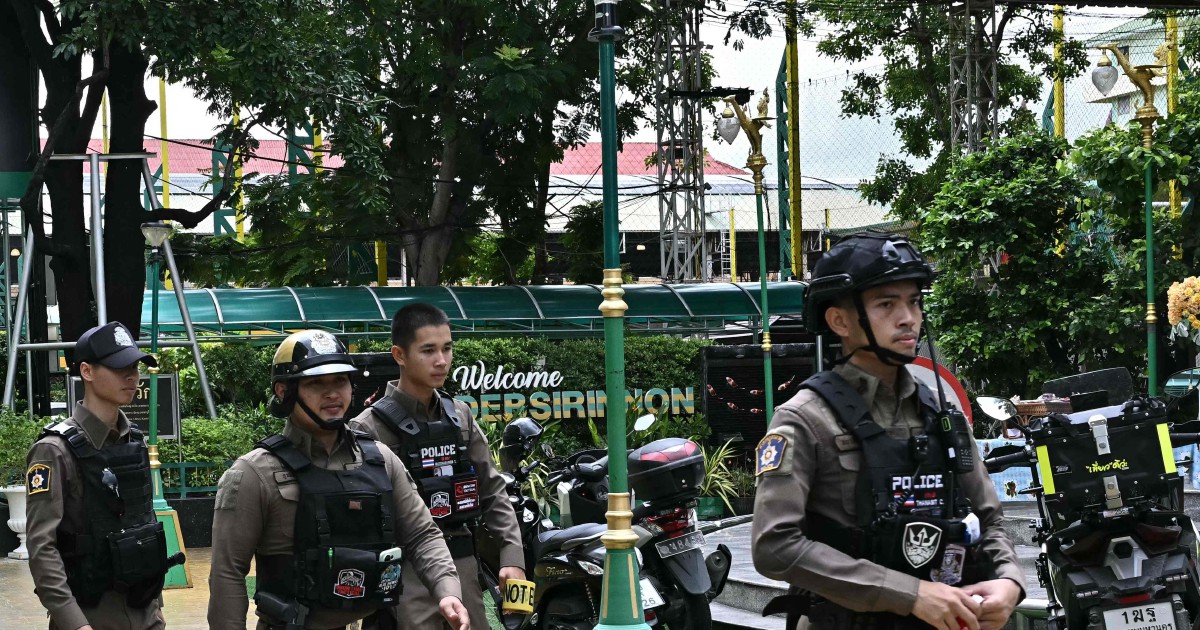
The arrest of at least eleven French citizens in Thailand since the beginning of the northern summer represents a significant bust in what Thai authorities are treating as an organised drug smuggling operation. According to a police source who spoke to AFP on Tuesday, the detainees were apprehended with multiple kilograms of cannabis discovered in their baggage, marking one of the largest European involvement cases in recent Thai narcotics arrests.
Thailand has positioned itself as a major transit hub in Southeast Asia's drug trade, and the kingdom's airports and border regions remain high-risk zones for smuggling operations. The arrest of European nationals—particularly those from France—points to a troubling pattern where tourism and leisure travel are being weaponised by trafficking networks to move narcotics across borders. Low-risk passengers fitting the tourist profile are frequently recruited by criminal organisations, often through social media recruitment or casual approaches in their home countries.
The timing of these arrests during the summer months is particularly significant. The peak European holiday season creates optimal conditions for smugglers seeking to blend trafficking activities among genuine tourists. Authorities in Southeast Asia have long documented how tourist season coincides with increased drug movement, as enforcement resources are stretched thinner across ports of entry and detection protocols become less rigorous when passenger volumes surge.
French law enforcement and judicial authorities are closely monitoring the situation, given the scale of French national involvement. France has experienced growing concerns about its citizens being ensnared in Southeast Asian drug operations, where penalties are vastly harsher than in Europe and legal protections are considerably fewer. The involvement of a double-digit number of French nationals suggests either a coordinated recruitment campaign or a poorly organised group that was easily penetrated by Thai narcotics task forces.
Thailand's drug laws remain among the world's strictest. Possession of cannabis with intent to distribute carries sentences ranging from five to fifteen years imprisonment, while trafficking charges can result in sentences exceeding two decades. France has no extradition treaty with Thailand for certain offences, complicating legal proceedings and leaving detained nationals with limited diplomatic recourse compared to situations in countries with formal bilateral agreements.
The modus operandi employed in these cases typically involves recruiters identifying individuals through online platforms or personal networks, offering what appears to be lucrative tourism opportunities or modest compensation for carrying luggage. Participants are often provided with pre-packed bags and minimal information about contents, insulated from direct knowledge of the substance they are transporting. This structural separation is deliberately designed to create plausible deniability, though Thai courts have shown limited patience with such defences.
The broader regional context reveals Thailand's dual role as both a major drug production area—particularly for methamphetamine—and a critical transit territory for substances originating from the Golden Triangle region and beyond. European demand remains substantial, making the 10,000-kilometre pipeline from Southeast Asia to France economically attractive for trafficking organisations despite enforcement risks.
Diplomatic channels between France and Thailand will likely intensify as the detention cases progress through the Thai judicial system. The French embassy in Bangkok typically provides consular assistance to detained nationals, though their ability to influence outcomes remains circumscribed by Thai sovereignty and strict local legislation. Prior cases involving Western nationals have occasionally resulted in reduced sentences following diplomatic intervention, though outcomes remain unpredictable.
For Malaysian readers and Southeast Asian observers, these arrests underscore the region's vulnerability to becoming a laboratory for international drug trafficking operations. Malaysia, like Thailand, faces similar pressures as a tourism destination exploited by trafficking networks. The incident serves as a cautionary reminder about the methodologies employed by criminal syndicates and the importance of public awareness regarding recruitment tactics targeting ordinary citizens.
These detentions also highlight an often-overlooked consequence of the global drug trade: the criminalisation of otherwise ordinary individuals who may have been financially motivated, deceived, or coerced into participation. While the severity of drug laws in Southeast Asia reflects regional policy priorities, the human cost of these enforcement approaches—particularly for foreign nationals unfamiliar with local legal systems—creates humanitarian and diplomatic complications.
The investigation's continuation will likely reveal details about the supply chain, the recruiter networks, and the destination markets for the seized cannabis. Such information would prove valuable to law enforcement agencies throughout Southeast Asia and Europe seeking to disrupt similar operations before passengers board flights from their home countries. Thai authorities have indicated they are pursuing additional leads connected to this network.

