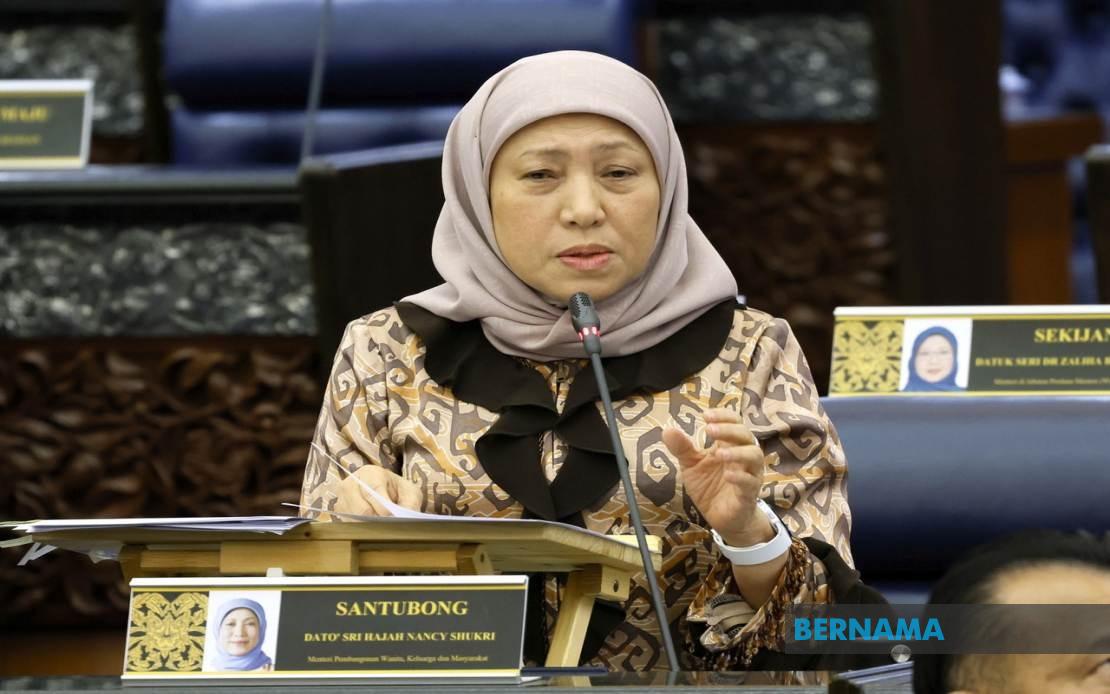
Parliament has taken a significant step towards professionalising social work in Malaysia by approving the Social Work Profession Bill 2026, which establishes a dedicated regulatory body to oversee practitioners and set standards across the sector. The legislation passed with majority support after deliberation from 23 Members of Parliament representing both government and opposition benches on July 14. The passage of this Bill culminates a ten-year journey to create formal recognition and oversight of the social work profession, addressing longstanding calls from practitioners and civil society organisations for structured governance in a field that handles vulnerable populations including children, persons with disabilities, the elderly, and families in crisis.
Minister of Women, Family and Community Development Datuk Seri Nancy Shukri indicated that the implementation will proceed incrementally, prioritising the establishment of the Malaysian Social Work Profession Council before extending mandatory regulatory mechanisms across the sector. This staged rollout reflects practical considerations around institutional capacity and coordination across different government agencies. The staged approach acknowledges that social workers already operate within existing government systems with established supervision, training protocols, and codes of conduct, and integrating public sector practitioners into a unified regulatory framework requires careful planning and inter-ministerial cooperation.
The Bill's immediate scope focuses on private sector practitioners, requiring registration of all social workers employed by non-governmental organisations, community-based organisations, corporate entities, and those operating independently. This initial phase allows the newly created Council to establish its foundational operations and develop the necessary regulatory instruments before broadening requirements to public sector workers. Public officers engaged in social work will only need to register if they undertake professional social work activities outside their formal government employment, creating a distinction between regulated professional practice and activities conducted within existing government job responsibilities.
The decision to exempt public sector social workers from immediate mandatory registration requirements proved contentious during parliamentary debate. Ipoh Timor MP Howard Lee challenged this exemption, arguing that government-employed social workers handling high-risk cases involving child protection, disability services, elderly care, and family support deserve the same professional standards and accountability mechanisms as their counterparts in the private and non-governmental sectors. His intervention highlighted a fundamental tension between recognising existing government supervision structures and establishing uniform professional benchmarks across all social work practitioners, raising questions about whether citizens receive equitable service quality depending on whether assistance comes from government or private providers.
Nancy acknowledged the government's long-term commitment to comprehensive regulation covering all social workers, public and private alike, though she emphasised that implementation must navigate existing bureaucratic structures where public sector social workers already operate under multiple layers of coordination across different ministries and agencies. She outlined that public officers currently function within established training systems, standard operating procedures, codes of ethics, and regulatory frameworks specific to their employing agencies, suggesting that introducing additional registration requirements demands careful alignment of these existing mechanisms rather than simply imposing new ones. This practical concern reflects the complexity of reforming large institutional systems that already contain embedded professional standards, though it leaves unresolved the question of whether existing systems adequately protect service users.
The Council itself will assume considerable responsibility for developing the regulatory infrastructure governing professional social work. Beyond managing registration and maintaining practitioner records, the body will establish qualifications and competency standards, create guidelines addressing practitioner safety and welfare, operate a complaints and disciplinary mechanism, and develop frameworks for professional reciprocity among Malaysian social workers. These functions represent the core machinery of professional self-regulation, transforming social work from an unstructured occupational category into a formally credentialed profession with enforceable standards and accountability procedures. The Council's creation therefore signals a maturation of the sector comparable to established professions such as medicine, law, and accounting.
The legislation deliberately excludes volunteers and informal caregivers, applying only to professional social work practitioners, thereby distinguishing between formally trained and credentialed professionals and the broader community-based care networks that support vulnerable populations. This narrower scope prevents the Bill from imposing burdensome requirements on community members providing care services, while concentrating regulatory focus on individuals who identify as and are compensated for professional social work. Matters concerning minimum wages and employment conditions remain subject to existing labour legislation rather than falling under the Council's purview, establishing clear boundaries around the Council's regulatory authority.
Kapar MP Dr. Halimah Ali raised important implementation questions, proposing that government provide targeted incentives to support the Bill's objectives, including grants to NGOs, educational scholarships for social work students, and placement inducements for professionals willing to work in underserved rural areas. Her intervention highlighted the risk that regulatory requirements alone may prove insufficient without accompanying support mechanisms that enable practitioners to maintain sustainable careers while serving disadvantaged communities. The financial sustainability of the sector, particularly for NGOs and rural services, depends partly on whether regulatory reform is accompanied by adequate resourcing and incentive structures.
Kepong MP Lim Lip Eng emphasised that professionalisation must be accompanied by genuine institutional independence and transparency, with fair and balanced enforcement of standards and consequences. His remarks underscored that regulatory bodies can become either protective mechanisms serving practitioners' interests rather than public welfare, or alternatively tools for enforcing professional standards while protecting vulnerable service users. The Council's credibility and effectiveness will depend on whether it operates with genuine autonomy from political pressure, maintains transparent decision-making processes, and applies enforcement mechanisms equitably across practitioners.
Beaufort MP Datuk Siti Aminah Aching highlighted the importance of building professional capacity and career pathways across Malaysia's diverse regions, explicitly mentioning the need for competitive career schemes in Sabah and Sarawak. Her concern reflected recognition that professionalisation alone offers little benefit to practitioners or service users in East Malaysia if economic incentives remain insufficient to attract and retain qualified professionals across the peninsula and the two states. Building a genuinely national profession requires ensuring that career prospects and professional development opportunities exist throughout the country rather than concentrating in urban peninsular centres.
The Council's operational costs will be funded through government annual allocations, establishing public sector support for the regulatory infrastructure without placing financial burdens on individual practitioners through registration fees or levies. This funding mechanism reflects government recognition of social work's public interest role while providing the Council with resources for its functions. The arrangement differs from some professional councils that rely partly on practitioner fees, potentially making registration more accessible across a profession where many workers earn relatively modest incomes, particularly in NGO and community-based sectors.
Nancy indicated that the Bill provides flexibility for ongoing refinement through regulations and guidelines that the Council will develop over time, recognising that a framework law must remain adaptable as the profession evolves and implementation challenges emerge. This regulatory flexibility allows the Council to respond to practical problems without requiring repeated parliamentary amendments, creating space for professional judgment and continuous improvement. The staged implementation strategy similarly allows lessons from private sector regulation to inform approaches for public sector integration, potentially resulting in more sophisticated final frameworks than could be designed through initial legislation alone.
The Bill's passage represents not merely technical legislative reform but a watershed moment for Malaysia's social work sector, formally acknowledging practitioners as professionals worthy of regulatory oversight and public accountability while establishing mechanisms through which the sector can develop standards, ensure competence, and protect vulnerable service users. For Malaysian society, the measure promises enhanced protection for children, persons with disabilities, and families in crisis through standardised professional practices. The framework also creates pathways for career development and professional recognition in a field that has historically operated with limited status or institutional support, potentially attracting more qualified individuals to social work and improving service quality across the sector.

