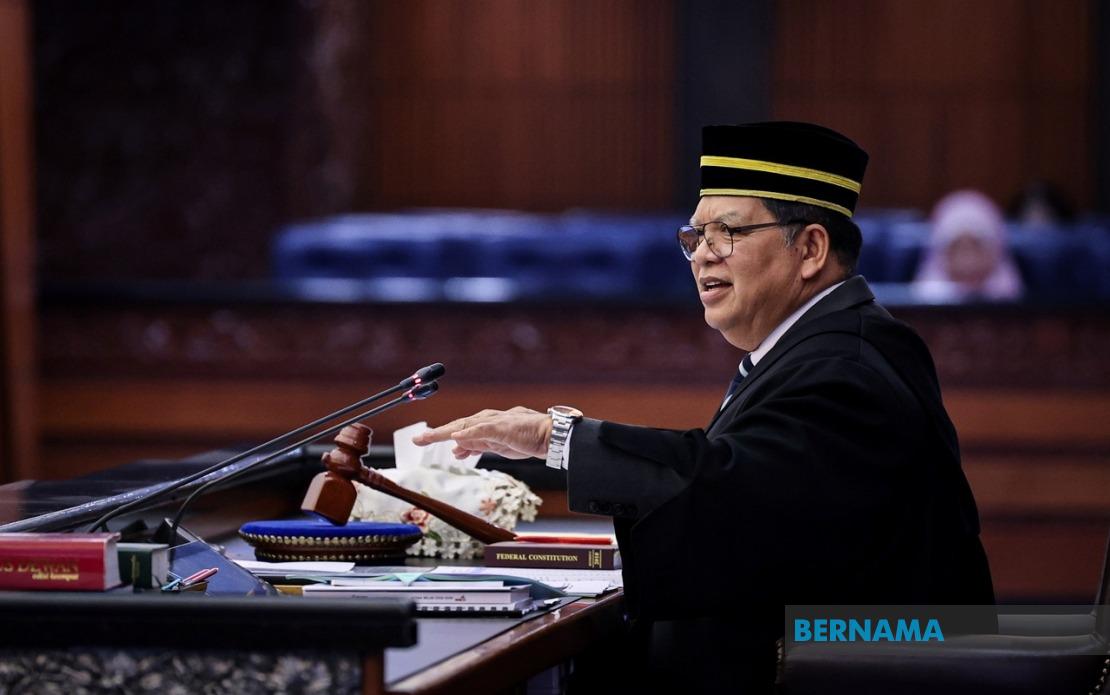
Malaysia's Dewan Rakyat wrapped up its second meeting of the fifth parliamentary term on July 16, having convened continuously since June 22 in what proved to be a substantive legislative session. The 16-day sitting produced tangible outcomes across multiple policy areas, with Speaker Tan Sri Dr Johari Abdul highlighting in his adjournment remarks that lawmakers had collectively advanced 13 pieces of legislation through the chamber, alongside several procedural motions and a discussion focused on the 2024 Annual Report of the Human Rights Commission of Malaysia (SUHAKAM).
The legislative agenda reflected a diverse portfolio of governmental priorities spanning transport safety, protection of vulnerable populations, digital governance, and economic regulation. Among the most significant measures approved was the Cybercrimes Bill 2026, which addresses the evolving challenge of digital threats in Malaysia's increasingly connected economy. Equally noteworthy was the Sexual Offences Against Children (Amendment) Bill 2026, signalling Parliament's commitment to strengthening safeguards for the nation's youngest citizens in an era of rising online predation and exploitation. The Road Transport (Amendment) Bill 2026 rounded out this trio of high-visibility measures, continuing incremental reforms to land transportation governance.
Beyond these prominent bills, lawmakers processed an expansive secondary slate of amendments and new legislation aimed at institutional strengthening and regulatory modernisation. The competition law amendments—comprising both the Competition (Amendment) Bill 2026 and the Competition Commission (Amendment) Bill 2026—underscore efforts to maintain a robust framework for fair market practices as Malaysia's economy continues to integrate with regional and global supply chains. The Communications and Multimedia (Amendment) Bill 2026 and its companion measure reforming the Malaysian Communications and Multimedia Commission reflect ongoing adjustments to digital sector oversight as technology adoption accelerates across households and businesses.
Additional legislation touched on agricultural administration, witness safety in criminal proceedings, professional credentialing, and public information management. The Control of Padi and Rice (Amendment) Bill 2026 addressed commodity governance in a sector foundational to rural livelihoods. The Witness Protection (Amendment) Bill 2026 bolstered mechanisms for safeguarding individuals providing court testimony, a necessity for effective criminal justice. The Social Work Profession Bill 2026 established formal credentials and standards for social workers, elevating the professionalism of frontline welfare delivery. The National Trust Fund Bill 2026 and Statistics Bill 2026 rounded out the package, governing fiduciary arrangements and statistical collection respectively.
Parliamentary activity extended beyond raw legislative output. During the 16-day period, three formal ministerial briefings took place within the main chamber, with an additional briefing conducted in the Special Chamber. Six further presentations by Select Committee chairs furnished legislators with committee reports on matters under investigation or review. This breadth of parliamentary work indicates an institution functioning across multiple dimensions simultaneously—not merely passing bills but also conducting oversight, receiving executive updates, and processing committee findings.
The session's inclusion of a debate on SUHAKAM's 2024 Annual Report is noteworthy for Malaysia's human rights governance architecture. The Human Rights Commission's annual assessment provides Parliament with systematic feedback on the nation's progress across civil, political, economic, and social rights dimensions. Such debates, while sometimes overshadowed by legislative votes, offer an opportunity for the legislature to examine rights implementation across government agencies and reflect on gaps in protection or enforcement.
Speaker Johari's remarks also included a health advisory directed at all 222 Members of Parliament, urging completion of medical screenings before October 30 and submission of health records to Parliament's administrative custody. This public health reminder, delivered during the adjournment speech, carries particular significance given the looming general election campaign period. Johari's admonition that lawmakers "take care of your health during the upcoming election campaign" reflects institutional concern about the physical and mental toll of intensive electoral activity, a phenomenon familiar to observers of Malaysian politics during campaign seasons.
The speaker additionally announced that Parliament would host an unspecified programme—the source text lacks complete detail—extending participation to MPs, parliamentary staff, Malaysian Youth Parliament alumni, and the general public. Such initiatives typically aim at civics education and democratic engagement, reinforcing the legislature's public accountability role beyond the confines of formal proceedings.
In his closing remarks, Johari extended gratitude to all members for their cooperation throughout the sitting, acknowledging too the contributions of government officials, parliamentary administrative personnel, media representatives, and other stakeholders involved in orchestrating the proceedings. This expression of institutional appreciation, while formulaic, underscores the collaborative infrastructure required for Parliament to function. The logistics of managing 16 consecutive sitting days—coordinating legislative schedules, briefing sessions, debates, and procedural activities—demand coordination across multiple government departments and support agencies.
The adjournment was formally to "a date to be determined," a common parliamentary practice that preserves flexibility for executive scheduling while leaving the door open for emergency recall should unforeseen circumstances warrant parliamentary convening. The typical pattern sees recesses extending several weeks to months between sittings, providing legislators time for constituency work, committee responsibilities, and government office holders opportunity to manage ministerial duties uninterrupted by parliamentary timetables.
For Malaysian political observers and policy stakeholders, the session's productivity suggests a functioning legislative institution capable of processing a substantive agenda despite the backdrop of an impending electoral cycle. The breadth of the bills passed—from transport to cybercrime to child protection—reflects both consensus on certain governance modernisation efforts and, conversely, the political management required to advance such a diverse package. The coming weeks will reveal whether electoral temperatures rise in ways that complicate the legislative agenda during the next parliamentary sitting.

