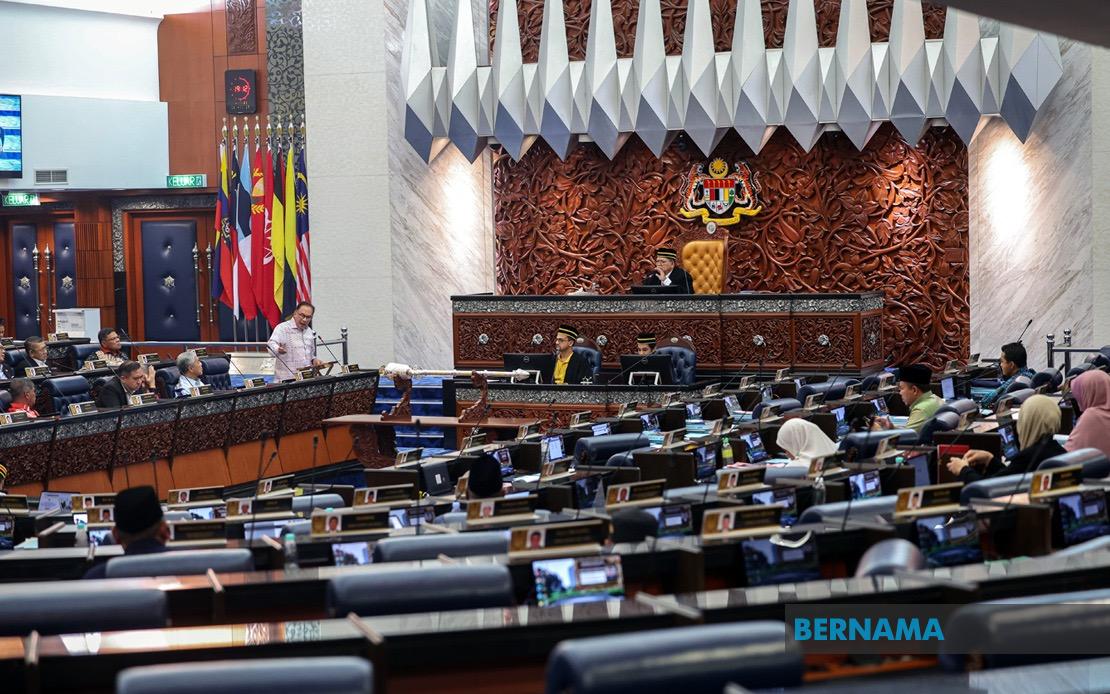
Parliament's Dewan Rakyat has thrown its weight behind a broad agenda to fortify Malaysia's defences against child sexual exploitation, with lawmakers from government and opposition benches united in demanding institutional overhaul and legislative tightening. The unanimous backing for the Sexual Offences Against Children (Amendment) Bill 2026 masks a vigorous debate about how deep and systematic the response must be to address a crime category that has shown stubborn persistence across the region.
The legislative amendment targets a critical vulnerability in Malaysia's current framework: the inability to prosecute offenders for crimes committed outside national borders, a loophole that has allowed predators to operate from jurisdictions with weaker enforcement. Abd Ghani Ahmad of PN-Jerlun articulated the international dimension clearly, emphasizing that Malaysia must leverage the Mutual Legal Assistance mechanism and extradition treaties to prevent child predators based abroad from evading accountability. This reflects a maturing understanding that child sexual exploitation has become transnational in character, with offenders often directing their crimes at victims across multiple countries using digital platforms, making geographic boundaries irrelevant to criminal intent.
The proposals for institutional restructuring reveal how fragmented Malaysia's current response remains. Enforcement agencies currently operate in silos: the Royal Malaysia Police handle investigations separately from the Immigration Department of Malaysia, which functions independently of the Attorney-General's Chambers, while the Department of Social Welfare manages victim support through a distinct channel. Abd Ghani Ahmad's call for coordinated action across these bodies reflects the insight that child sexual crime is not simply a police matter but an ecosystem requiring simultaneous intelligence-sharing, digital forensics expertise, prosecutorial strategy, and victim services. The inefficiencies of current arrangements mean investigations stall, evidence degrades, and victims navigate a bewildering maze of agencies without integrated care pathways.
Datuk Seri Doris Sophia Brodi of GPS-Sri Aman proposed establishing a dedicated task force for digital sexual crimes against children, a response to the reality that most contemporary child exploitation now occurs through online platforms. Such a specialized unit would need expertise spanning digital forensics, cyber intelligence, psychological profiling, and international law enforcement coordination—capabilities rarely concentrated in traditional police structures. Her emphasis on prevention through digital literacy education and parental awareness suggests recognition that criminalization alone cannot suffice; the scale of online grooming demands a preventive posture beginning in schools and family environments, where early warning signs of exploitation can be detected before abuse escalates.
Victim rehabilitation emerged as a persistent theme across the parliamentary contributions, signalling a philosophical shift from punishment-focused models toward trauma-informed approaches. Datuk Mas Ermieyati Samsudin proposed establishing a dedicated prosecution unit while simultaneously creating funding mechanisms for psychological treatment, legal representation, and long-term recovery support. This dual track acknowledges that a survivor's journey extends far beyond the courtroom verdict; the psychological injuries from child sexual abuse are profound and protracted, requiring sustained therapeutic intervention. Malaysia's public healthcare system currently lacks sufficient child psychology specialists in facilities accessible to rural and lower-income populations, creating a secondary victimization where survivors are denied rehabilitation because of resource scarcity.
Young Syefura Othman's proposal for a National Child Sexual Offender Registry reflects international best practice, though her emphasis on controlled access by enforcement agencies and child-serving institutions points to a nuanced understanding of privacy concerns. Registry systems prevent re-offenders from accessing positions involving children—a straightforward principle, yet one requiring robust background-checking infrastructure that extends beyond formal employment to volunteer positions in mosques, madrasahs, sports clubs, and religious study centres. The absence of such systematic vetting across these diverse institutions creates invisible pathways through which individuals with conviction histories can continue accessing vulnerable populations.
The amendment to the Sexual Offences Against Children Act 2017 marks a legislative evolution responding to technological and criminal adaptations that have outpaced existing statutory frameworks. When the original act was drafted a decade ago, online child sexual abuse material was less ubiquitous, cross-border coordination mechanisms were less developed, and the scale of digital grooming was not fully apparent. The updated bill must account for these realities while remaining flexible enough to accommodate future innovations in both criminal methodology and law enforcement technique.
For Malaysia and the region, the parliamentary consensus on this issue carries particular significance given Southeast Asia's geopolitical position as both a source and transit point for child exploitation networks. Vulnerable children in economically disadvantaged areas across the region attract predators from wealthier nations, while digital connectivity allows offenders to exploit locally-based children from anywhere globally. Malaysia's legislative position will influence regional standards, particularly if the country strengthens its extradition frameworks and demonstrates willingness to prosecute foreign nationals, sending deterrent signals across Southeast Asia.
The debate also revealed an implicit acknowledgment that child sexual crime functions within permissive social conditions. The emphasis on digital safety education and parental awareness indicates recognition that institutional responses must operate alongside cultural change. In some communities, taboos surrounding sexual abuse discussions create silence that enables offenders; in others, victim-blaming narratives compound trauma and deter reporting. Addressing child sexual exploitation therefore requires not only legal and institutional innovation but also gradual transformation of social attitudes that currently obscure the scale of the problem.
With 26 MPs participating in the parliamentary discussion, the breadth of engagement suggests this issue transcends typical partisan divisions, though the subsequent legislative implementation will test whether cross-party agreement translates into sustained political commitment when competing budgetary priorities emerge. The amendments must ultimately be accompanied by adequate resource allocation to specialized prosecution units, digital forensics laboratories, victim support services, and international liaison personnel—investments requiring sustained funding commitments beyond a single budget cycle.
The passage of this amended legislation will position Malaysia as a jurisdiction increasingly inhospitable to child sexual predators, particularly those operating transnationally. However, the true test will lie in implementation: whether coordinated task forces actually materialize, whether specialized prosecutors are genuinely empowered to pursue complex international cases, whether victims receive the rehabilitation support prescribed, and whether background-checking systems prevent offenders from accessing child populations. Parliamentary debate generates attention and impetus, but transforming institutional practice requires sustained follow-through and cultural transformation across law enforcement, social welfare, and child-serving sectors.

