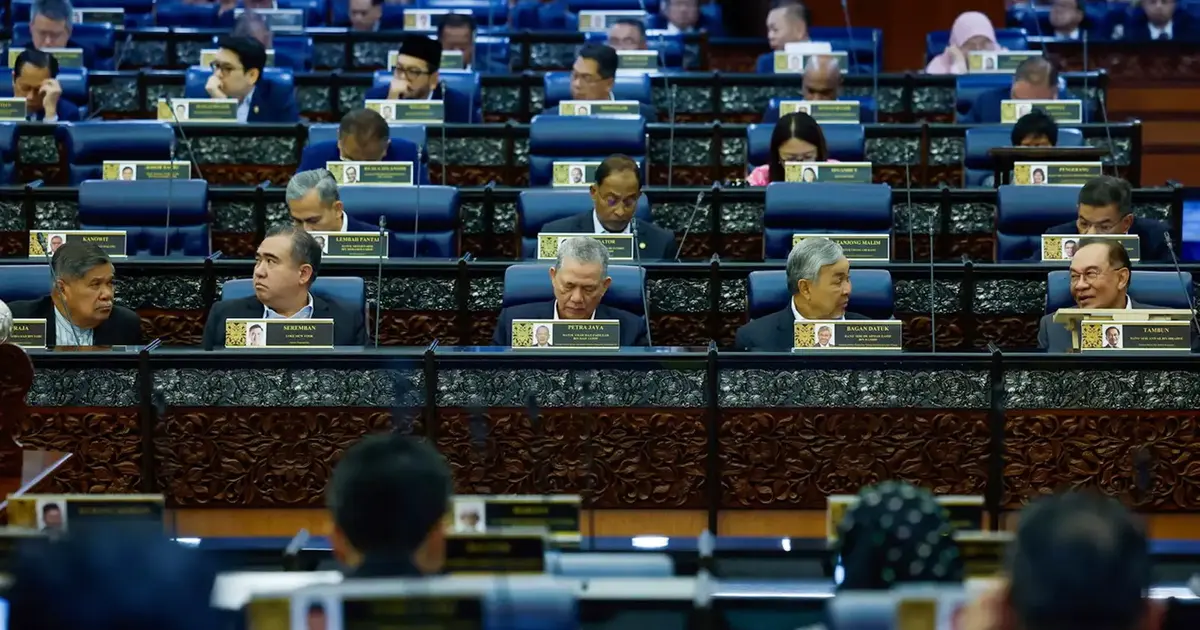
The stability of Malaysia's current government coalition does not depend on the Democratic Action Party (DAP) holding ministerial portfolios, according to PKR deputy secretary-general Saifuddin Shafi Muhammad, who has sought to quell speculation about a potential parliamentary dissolution should the party withdraw from executive posts. His remarks emerge as analysts continue to assess the durability of the ruling alliance and the leverage individual coalition partners wield within the broader governmental arrangement.
Saifuddin Shafi Muhammad's statement addresses a recurring concern in Malaysian political discourse: whether the departure of any significant coalition member from the cabinet would automatically trigger the collapse of the government. The PKR official contends that such an outcome is far from inevitable, emphasizing that DAP members of Parliament would maintain their fundamental commitment to supporting the government in legislative votes regardless of whether party representatives occupy ministerial or deputy ministerial positions. This distinction proves crucial to understanding how modern coalition governments in Malaysia navigate internal pressures and organizational dynamics.
The declaration carries particular relevance given the constitutional arithmetic of Malaysian governance. With a razor-thin or modest parliamentary majority, the government's longevity hinges on the combined voting strength of all coalition members in the Dewan Rakyat. However, the distinction between holding cabinet seats and maintaining legislative support represents a nuanced but politically significant difference. A party can, theoretically, withdraw from the executive branch while continuing to vote with the government on key legislation, thereby preserving the coalition's numerical advantage without necessitating a general election.
Historically, Malaysian politics has witnessed instances where coalition partners have reassessed their roles and responsibilities. The precedent of parties remaining within governing blocs while adjusting their ministerial representation demonstrates that cabinet composition and legislative allegiance are not inextricably linked. This understanding forms the foundation of Saifuddin Shafi Muhammad's argument, suggesting that the PKR-led coalition possesses sufficient structural flexibility to accommodate such changes without triggering a constitutional crisis.
The PKR leader's intervention appears designed to steady market sentiment and reassure observers that internal coalition management, should it become necessary, need not result in dramatic governmental upheaval. By framing DAP's continued parliamentary support as distinct from executive participation, he presents a pathway for the coalition to resolve potential disagreements without resorting to the extreme measure of dissolution and fresh elections. This rhetorical positioning also implicitly acknowledges that such negotiations may already be occurring or are at least being contemplated within leadership circles.
For Malaysian business and investor communities, such statements provide some comfort regarding governmental continuity. Political uncertainty typically generates economic anxiety, particularly regarding policy implementation and legislative predictability. If the ruling coalition can demonstrate resilience and adaptability in managing internal disputes, it reduces the risk premium attached to medium-term economic forecasting and capital allocation decisions. The assurance that the government can function effectively even with adjusted coalition configurations suggests a degree of institutional maturation in how Malaysia's political class approaches power-sharing arrangements.
Regionally, the statement also signals to Southeast Asian observers that Malaysia's coalition government possesses mechanisms for internal problem-solving without resorting to elections. As other nations in the region grapple with coalition politics and minority governments, Malaysia's experience with multi-party alliances offers lessons in stability and negotiation. A government capable of absorbing internal reorganization while preserving its parliamentary majority demonstrates a type of political sophistication that strengthens democratic institutions generally.
However, Saifuddin Shafi Muhammad's remarks should not obscure the underlying tensions that might prompt such discussions in the first place. Whether the impetus stems from policy disagreements, resource allocation disputes, or broader philosophical differences within the coalition remains unclear. His reassurance that dissolution is not inevitable may also function as a negotiating position, subtly suggesting to DAP that the party has less leverage than it might believe. If other coalition partners are willing to continue supporting the government regardless of DAP's ministerial status, the latter's negotiating position weakens considerably.
The PKR deputy secretary-general's comments reflect a broader sophistication about how multi-party governments can function beyond the traditional model of monolithic coalitions. By separating legislative support from cabinet participation, Malaysian policymakers are essentially arguing that governance remains viable across a spectrum of coalition configurations. This flexibility becomes increasingly important as political parties seek to balance their own organizational interests with governmental continuity.
Looking forward, Saifuddin Shafi Muhammad's statement establishes a negotiating framework within which coalition partners might address grievances or reallocate responsibilities. Rather than forcing binary choices—remain fully within the government or leave entirely—this approach suggests Malaysia's political leadership has internalized lessons from previous coalition crises and is attempting to build more resilient governmental structures. Whether such flexibility proves durable in practice will depend on maintaining sufficient consensus on major policy issues and equitable distribution of governmental benefits across coalition partners.

