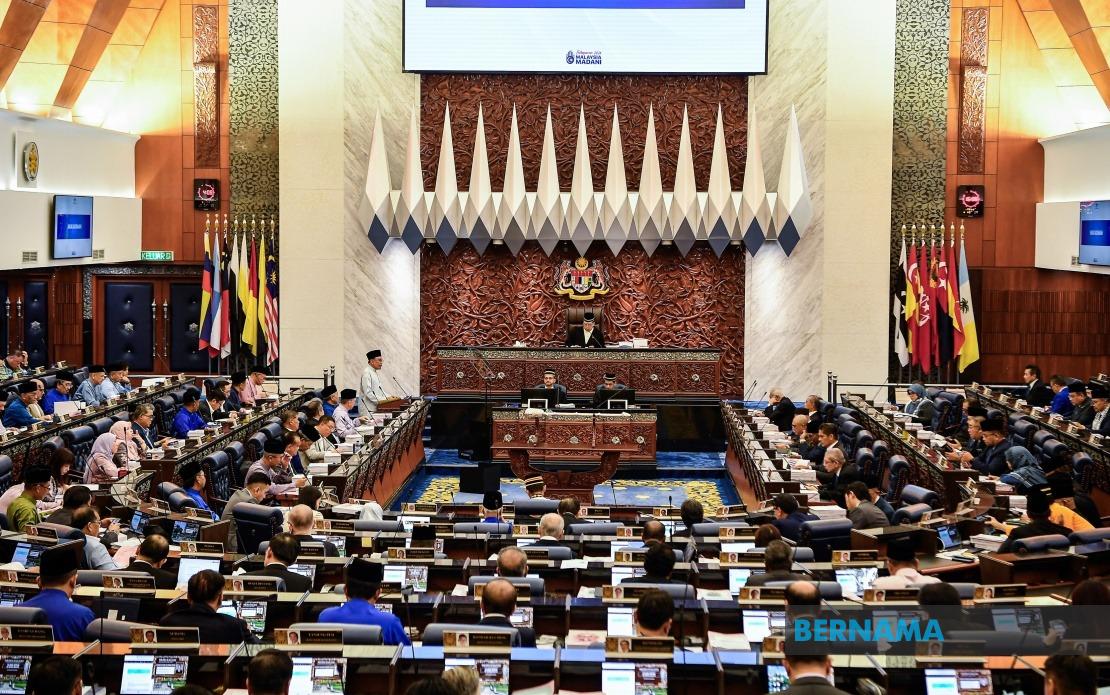
Malaysia took a significant step toward modernising its digital crime framework when the Dewan Rakyat overwhelmingly passed the Cybercrimes Bill 2026 on July 1, establishing a comprehensive legal architecture to address emerging threats in the online environment. The legislation, comprising 61 detailed clauses, received support from lawmakers across the political spectrum after deliberation involving 48 Members of Parliament from both government and opposition benches, signalling broad consensus on the need for updated protections in cyberspace.
The Bill's most prominently featured provisions target the creation and distribution of deepfakes and digitally manipulated intimate images—crimes that have proliferated globally as artificial intelligence and image-processing technology have become increasingly sophisticated and accessible. These offences represent a particularly acute concern for women and vulnerable populations, who disproportionately experience harassment through synthetic sexual imagery. By codifying penalties for such conduct, Malaysia joins a growing number of jurisdictions attempting to establish legal consequences for behaviour that violates personal dignity and privacy in the digital realm.
Deputy Prime Minister Datuk Seri Dr Ahmad Zahid Hamidi used his concluding remarks to emphasise that the legislation incorporates multiple institutional and procedural checks designed to prevent government overreach. He explicitly stated that the Bill does not confer unrestricted authority upon enforcement agencies nor does it supersede existing statutes, including the Official Secrets Act 1972—a clarification that directly addresses civil liberties concerns raised during parliamentary debate. This framing suggests that policymakers were attentive to the tension between effective cybercrime enforcement and the protection of individual freedoms, a balance that has proven contentious in similar debates across Southeast Asia.
The law establishes stringent requirements governing how authorities may access and seize digital information. Rather than granting investigators blanket powers to retrieve data, the framework mandates that officers demonstrate reasonable grounds for preservation action, coupled with evidence that stored information faces imminent risk of deletion, alteration, or destruction. This threshold represents an attempt to prevent fishing expeditions or speculative data collection, anchoring investigative powers to concrete circumstances rather than mere suspicion.
Further constraints govern the disclosure phase of digital evidence handling. The legislation requires that any demand for computer data must be conveyed through formal written notice to the individual or entity controlling that information, and such requests must arise within the context of a lawful investigation. These procedural requirements create an audit trail and afford data subjects opportunity to understand why their information has been targeted, principles consistent with fundamental justice and transparency values that resonate across the region.
For Malaysian businesses operating across digital platforms, the Bill presents both compliance obligations and competitive considerations. Companies handling customer data, whether Malaysian firms or foreign entities with local operations, will need to review their data governance practices to ensure alignment with the new regime. The legislation's emphasis on procedural regularity may actually benefit responsible businesses by establishing clear parameters for government requests, reducing uncertainty around when and how authorities may seek access to corporate information systems.
The cybercrime landscape that prompted this legislation has intensified across Southeast Asia over recent years. Instances of non-consensual intimate image sharing have escalated dramatically with the rise of messaging applications and social media platforms, while deepfake technology has begun enabling new varieties of fraud, impersonation, and political manipulation. Malaysia's legislative response arrives at a moment when neighbouring jurisdictions are similarly grappling with these phenomena, suggesting potential for regional coordination on standards and best practices.
The broad parliamentary support for the Bill reflects recognition that digital crime threatens fundamental aspects of modern life—personal security, reputational integrity, and democratic discourse. However, implementation will prove equally consequential as the legislation itself. Enforcement agencies will require adequate training to apply these powers judiciously, judicial officers must develop consistent interpretive frameworks, and civil society will need mechanisms to monitor compliance and investigate allegations of abuse.
The legislation also highlights Malaysia's evolving approach to digital governance more broadly. Rather than proceeding through reactive amendments or fragmented sectoral rules, the Bill consolidates cybercrime offences into a single, comprehensive statute, facilitating clarity for both the public and law enforcement. This systematisation reflects international best practice, particularly in how it organises offences, penalties, and procedural protections into a coherent whole.
Civil liberties advocates will likely maintain scrutiny as the Bill transitions from parliamentary approval to practical implementation. The specific interpretation by investigating officers of terms such as "reasonably required" and "lawful investigation" will ultimately determine whether the safeguards deliver their intended protection. Judicial review mechanisms and transparent reporting on government use of these powers will thus assume critical importance in ensuring the legislation achieves its objectives without eroding the privacy and autonomy it purports to protect.
The passage of the Cybercrimes Bill 2026 represents a deliberate recalibration of Malaysia's legal framework to address harms that have outpaced existing statutory protections. By targeting deepfakes and non-consensual intimate imagery whilst embedding procedural guardrails, parliament has signalled that digital security and individual rights need not represent an irreconcilable trade-off. How effectively this balance operates in practice will become evident only as courts, enforcement agencies, and affected citizens navigate the Bill's application across the diverse challenges of Malaysia's digital ecosystem.

