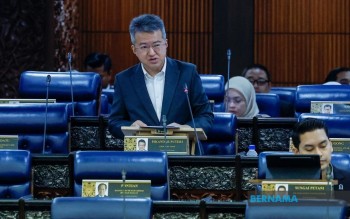
Parliament has given its approval to the National Trust Fund (KWAN) Bill 2026, marking a significant legislative step toward reforming one of Malaysia's most important long-term savings mechanisms. The Dewan Rakyat passed the bill on July 16 following debate among 15 members, with Deputy Finance Minister Liew Chin Tong guiding the measure through its final stage. The legislation represents a substantive overhaul of the fund's operational architecture, introducing mandatory contribution requirements, disciplined withdrawal protocols, and modernised governance structures that have been absent from the previous framework.
The National Trust Fund, established in 1988, currently manages assets valued at RM22.43 billion as of the end of 2024, according to figures provided during parliamentary proceedings. However, this substantial pool of resources has been built almost entirely through Petronas contributions, which account for RM13.5 billion of the total. The imbalance underscores a fundamental weakness in the fund's structure: contributions have been entirely voluntary, leaving the fund vulnerable to irregular funding flows and dependent on a single major contributor across nearly four decades of operation.
Legislators were reminded during debate of the 2021 episode in which RM5 billion was withdrawn from the fund, a transaction that sparked considerable public discussion about the adequacy of existing safeguards. That episode crystallised concerns among policymakers that the fund's loose governance standards—characterised by unlimited withdrawal authority and vaguely defined purposes—created unnecessary risk to a strategic national asset. Rather than treating the fund as a genuine sovereign wealth vehicle dedicated to inter-generational prosperity, the previous framework had permitted it to function as a discretionary reserve accessible for various government purposes without rigorous accountability mechanisms.
The new bill establishes a statutory contribution rate of 0.1 per cent, though Liew emphasised that this represents a floor rather than a ceiling for future contributions. The rate has been deliberately set as a legal minimum to ensure that the principle of inter-generational savings remains binding across successive fiscal cycles and political administrations. This design choice carries important implications: it ensures that even during periods of fiscal stress or political transition, the fund cannot be starved of resources through unilateral executive action. The contribution obligation now rests on statutory footing, meaning any government wishing to reduce or eliminate contributions must persuade parliament to amend the legislation—a considerably higher bar than the discretionary approach of the past.
Equally significant, the bill introduces withdrawal discipline that was previously absent. The lack of withdrawal constraints in the original framework meant that there were no legal barriers to accessing the fund's accumulated savings, provided decision-makers judged it politically acceptable. The revised legislation establishes clearer parameters around how and when withdrawals can occur, bringing the fund into closer alignment with international practice regarding sovereign wealth vehicles. This disciplinary mechanism is designed to protect the fund's long-term integrity from pressure to support immediate fiscal needs, a common challenge facing such vehicles in developing economies.
The governance reforms embedded in the bill address what many observers regarded as the fund's most glaring institutional weakness. The National Trust Fund had operated without the kind of transparent oversight structures, reporting requirements, and accountability mechanisms that contemporary standards for government financial management demand. The new legislation introduces modernised governance frameworks, though the parliamentary debate did not elaborate extensively on specific institutional changes. These are likely to include enhanced disclosure requirements, clearer authority for decision-making, and more robust internal controls over fund operations.
For Malaysian observers of fiscal policy, the bill's passage carries significance beyond the mechanics of fund administration. It reflects a growing parliamentary consensus that managing commodity windfalls and sustaining long-term fiscal sustainability requires dedicated institutional mechanisms insulated from short-term political pressures. In the context of regional peers such as Singapore's Government Investment Corporation and Norway's sovereign wealth funds, Malaysia's National Trust Fund has historically underperformed in terms of both asset accumulation and strategic governance. The legislative reforms represent an acknowledgment that this gap needs narrowing.
The requirement that any future rate changes must return to parliament for approval is particularly noteworthy in the Malaysian political context, where executive discretion over financial matters has historically been substantial. By anchoring the contribution rate in legislation and requiring parliamentary amendment for any adjustment, the bill constrains the ability of future finance ministers to unilaterally reduce funding to the sovereign wealth vehicle. This represents a modest but meaningful shift toward parliamentary oversight of long-term fiscal commitments.
The timing of the bill's passage also reflects broader economic considerations. With Petronas facing cyclical pressures in global energy markets and government revenues subject to economic fluctuation, establishing a more diversified and assured funding base for the National Trust Fund ensures that the inter-generational savings objective is not held hostage to the performance of a single revenue source. The shift from voluntary Petronas contributions to a statutory contribution mechanism, though set at a modest rate, creates a more stable foundation for the fund's growth trajectory.
As the bill now moves toward royal assent, stakeholders will look for clarity on how the governance enhancements will be implemented in practice. The success of the reformed framework will ultimately depend on whether successive administrations demonstrate genuine commitment to respecting the fund's separation from immediate fiscal pressures. International evidence suggests that sovereign wealth funds are only as effective as the political institutions that oversee them; legislative safeguards matter, but cultural acceptance of their necessity matters equally. Malaysia's lawmakers have now erected stronger legal barriers; whether those barriers will prove durable will become apparent in the years ahead.

