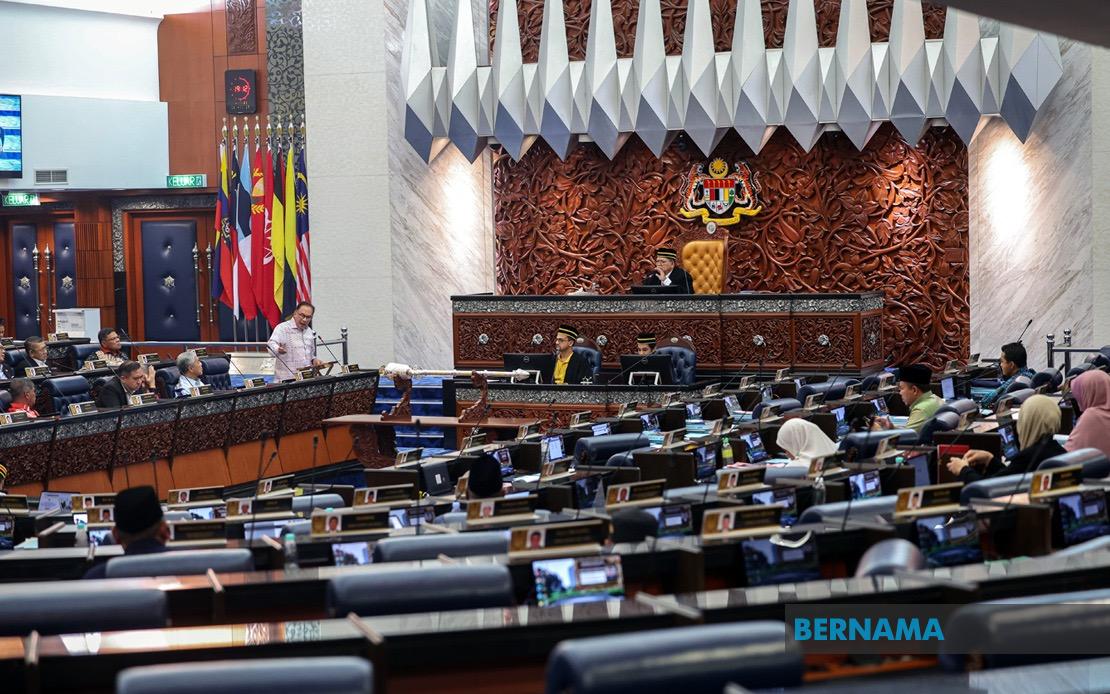
Parliament has given the green light to a three-tier penalty system designed to encourage employers to report vacant positions to the Social Security Organisation (PERKESO), marking a significant step in Malaysia's efforts to streamline labour market information and combat joblessness. The Dewan Rakyat passed amendments to the Employment Insurance System (Amendment) Bill 2025 on June 30 through a majority voice vote, following cross-party discussion involving 13 lawmakers from both government and opposition benches. The framework, which establishes progressively steeper financial consequences for repeated non-compliance, reflects Parliament's intention to balance regulatory enforcement with practical business considerations.
The penalty structure introduced through amendments to Clause 11 of the legislation establishes a clear escalation pathway. First-time offenders will face fines of up to RM1,000, which increases to RM3,000 for a second breach and RM5,000 for any subsequent violation. This graduated approach represents a softening of the government's initial proposal, which had suggested a maximum penalty of RM10,000. The decision to revise downward demonstrates the administration's responsiveness to stakeholder concerns and recognition that compliance demands must remain achievable for businesses of varying sizes and sophistication. The Dewan Negara had previously endorsed these modified provisions on March 12, clearing the way for today's parliamentary approval.
Deputy Human Resources Minister Datuk Khairul Firdaus Akbar Khan characterised the amendments as prioritising education and voluntary adherence over punitive measures. He emphasised that the ministry and PERKESO would continue issuing compliance guidance and conducting engagement sessions with employers across different economic sectors to explain their reporting obligations and how to meet them. Crucially, the minister indicated that employers would receive formal compliance notices providing a window to correct any shortcomings before any financial compound is actually imposed. This graduated enforcement approach suggests the government views the penalty mechanism as a last resort rather than a primary tool for achieving the Bill's objectives.
The formulation of these penalties drew directly from feedback gathered during nationwide engagement and advocacy initiatives that PERKESO conducted with employer associations and industry representatives. The decision to reduce the original maximum fine proposal from RM10,000 to RM5,000 underscores how stakeholder input shaped the final legislative outcome. Business groups had clearly advocated for more moderate penalties, arguing that excessive financial burdens could discourage compliance rather than encourage it, particularly among small and medium enterprises with limited administrative capacity. This collaborative refinement process highlights an increasingly common pattern in Malaysian policymaking whereby initial proposals are tested against real-world operational realities before parliamentary enactment.
Parliamentary speakers universally praised the emphasis on fair administration and acknowledged the practical challenges facing Malaysian employers. Several MPs stressed that any reporting system must be intuitive, straightforward and not impose excessive administrative overhead on companies, especially smaller operators who may lack dedicated human resources departments. The underlying concern reflected in these interventions is that overly complex or burdensome reporting procedures could inadvertently push non-compliance, defeating the legislative purpose. Lawmakers underscored that the data collected through mandatory vacancy reporting serves critical functions beyond mere regulatory compliance—it enables more effective job matching between workers and employers, provides accurate labour market insights for policymaking, and supports broader efforts to reduce unemployment through evidence-based strategies.
Azahari Hasan, representing Padang Rengas for Perikatan Nasional, specifically emphasised the importance of maintaining a reporting system characterised by operational simplicity and efficiency. He noted that the integrity and utility of employment data depends on widespread employer participation, which in turn requires that the compliance burden remain manageable. His comments reflected the recognition that Malaysia's competitiveness depends increasingly on having sophisticated labour market information systems that match job seekers with appropriate opportunities. Without reliable data on available positions from employers, government initiatives to reduce unemployment and support effective manpower planning become substantially less effective.
Nurul Amin Hamid, the Padang Terap representative from Perikatan Nasional, welcomed the shift away from the RM10,000 maximum fine towards a progressive structure beginning at RM1,000. However, he raised a significant concern regarding awareness levels among rural enterprises, which may have less familiarity with the Employment Insurance Act's requirements. This observation highlights a critical implementation challenge—rural employers, who often operate with minimal dedicated administrative staff and limited exposure to legislative developments, may inadvertently breach reporting requirements simply through lack of awareness rather than willful non-compliance. His intervention suggests the government must invest substantially in awareness campaigns and technical assistance, particularly in non-urban areas, to ensure the intended educational and compliance objectives are achieved.
Syerleena Abdul Rashid of Bukit Bendera, representing Pakatan Harapan, stressed the transparency imperative underlying effective job-matching mechanisms. She advocated for standardised job advertisements published through government portals, ensuring all qualified applicants have genuinely equal access to employment information and opportunities. Her perspective introduces an important equity dimension to the legislation—the vacancy reporting requirement serves not only administrative and labour market planning functions but also protects job seeker interests by promoting transparent, non-discriminatory access to information about available positions. Without reliable, centralised job advertising through government channels, informal networks and word-of-mouth hiring practices could perpetuate existing inequalities and restrict opportunity access for marginalised worker populations.
The legislative package carries particular significance for Malaysia's ongoing efforts to modernise its employment ecosystem and improve labour market efficiency. At a time when unemployment remains a policy concern and demographic changes reshape workforce dynamics, having accurate, timely information about job availability becomes increasingly valuable for matching skills with opportunities. The progressive penalty structure represents a pragmatic compromise—strict enough to encourage genuine compliance but graduated sufficiently to avoid overwhelming businesses adapting to new reporting requirements. The emphasis on education and voluntary compliance over immediate punitive action reflects evolved thinking about effective regulation.
The amendments also carry implications extending beyond Malaysia's immediate labour policy context. As Southeast Asian economies compete for investment and talent, sophisticated labour market infrastructure and transparent employment practices increasingly influence decisions by multinational firms and skilled workers. The Employment Insurance System reforms position Malaysia as committed to building more organised, efficient labour markets where information flows freely and opportunities are allocated through merit rather than informal connections. This institutional development, though procedural in appearance, contributes to the broader competitive positioning of the Malaysian economy.
Implementation will now become the critical test of whether the legislative framework achieves its intended objectives. PERKESO faces the substantial task of developing user-friendly reporting systems, conducting far-reaching awareness campaigns particularly targeting underserved rural areas, and administering the progressive penalty system fairly and consistently. The government's stated commitment to issuing compliance notices before imposing compounds suggests a measured implementation approach, though practical constraints on enforcement capacity may affect real-world outcomes. The coming months will reveal whether the combination of education, technical support, and progressive penalties successfully improves employer compliance with vacancy reporting requirements.

