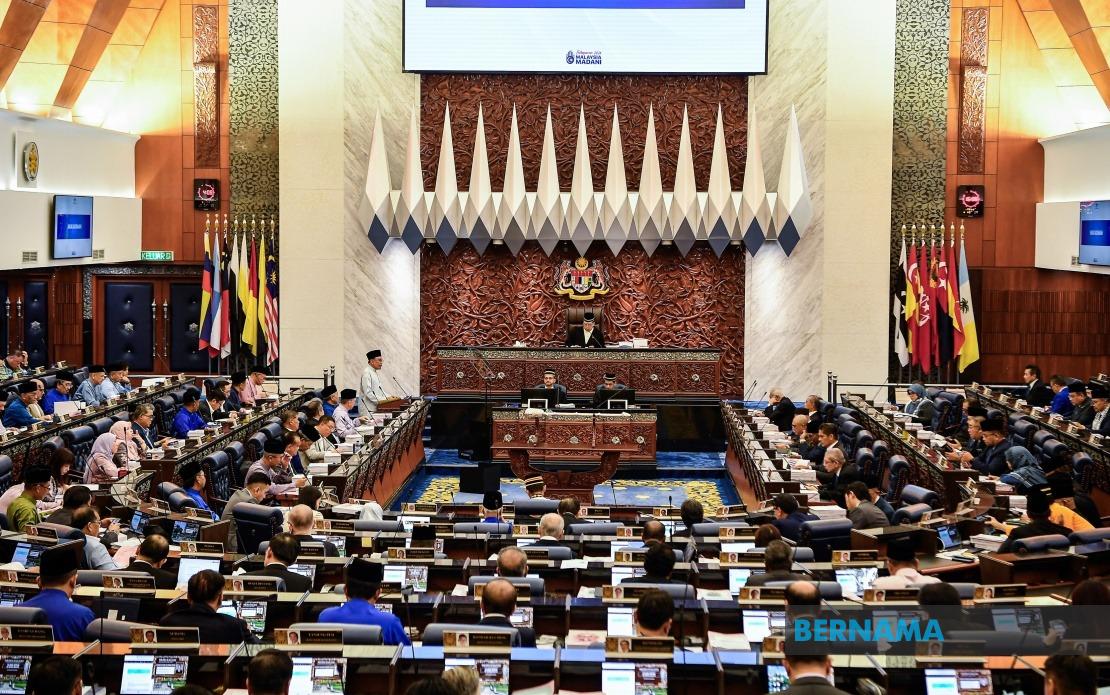
Parliament has formally endorsed significant amendments to the Malaysian Communications and Multimedia Commission framework, with lawmakers voting unanimously on July 15 to pass the MCMC (Amendment) Bill 2026. The legislative package seeks to equip the statutory body with enhanced authority and structural safeguards as it navigates an increasingly complex landscape of digital communications and multimedia regulation across Southeast Asia's third-largest economy.
The bill received support from 14 Members of Parliament representing both government and opposition sides, signalling broad consensus on the necessity for regulatory modernisation. Deputy Communications Minister Teo Nie Ching, who guided the legislation through its final parliamentary stage, emphasised that the overhaul ensures the commission can continue executing its dual mandate of regulating the industry while fostering its development. The amendments represent the first comprehensive update to the commission's operational framework since 1998, addressing structural deficiencies that have accumulated over nearly three decades of technological change.
A cornerstone of the reform concerns the appointment process for leadership positions. The existing mechanism, preserved since the commission's creation in 1998, grants the minister authority to nominate the chairman and commissioners based on criteria encompassing professional qualifications, demonstrated integrity, relevant expertise, and demonstrated capability to guide the organisation. The new amendment introduces a political safeguard by explicitly prohibiting the chairman from simultaneously holding membership in any legislative body—a provision designed to insulate the regulator from potential conflicts of interest that could compromise its impartiality when overseeing media and telecommunications operators.
The financial dimension of the amendments carries particular significance for Malaysia's infrastructure development and digital transformation agenda. The proposed elevation of the commission's procurement authority ceiling from RM5 million to RM50 million aligns with government-wide statutory body guidelines established by the Finance Ministry, specifically the Procurement Regulations for Federal Statutory Bodies WP7.5. According to those standards, federally funded institutions may theoretically authorise purchases reaching RM499 million, yet the communications ministry opted for a more conservative threshold, acknowledging that the previous limit had remained frozen for a quarter-century despite substantial shifts in acquisition costs.
Teo articulated the rationale for this financial recalibration, pointing to multiple pressures on operational budgets that have accumulated since 1998. Inflationary forces, the exponential advancement of telecommunications and computing technologies, and escalating material and labour costs have conspired to erode the purchasing power of the original RM5 million ceiling. The new RM50 million authority enables the commission to execute critical infrastructure contracts—including network monitoring systems, cybersecurity platforms, and spectrum management technology—without requiring ministerial approval for routine operational expenditures that fall within reasonable bounds.
During parliamentary debate, opposition voices highlighted concerns about the appointment mechanism despite overall support for the bill's substantive provisions. Kapar member Dr Halimah Ali, representing Perikatan Nasional, advocated for more transparent processes that might insulate commissioners from political patronage. She proposed adopting a recruitment model similar to that employed by the Human Rights Commission of Malaysia (SUHAKAM), whereby candidates would be vetted through open competitions emphasising expertise, professional track record, and credibility rather than ministerial discretion. Ali also recommended that all ministerial directives be formally recorded and subsequently tabled before parliament, creating a public record of potential political influence on regulatory decisions.
Masjid Tanah representative Datuk Mas Ermieyati Samsudin reinforced these concerns, calling for strengthened institutional checks on the commission's exercise of authority. She specifically flagged the Universal Service Provision (USP) Fund—a mechanism designed to subsidise telecommunications access in underserved communities—as requiring enhanced oversight through periodic parliamentary reporting requirements. Samsudin additionally advocated for more rigorous audit capabilities and transparency protocols governing ministerial directions, reflecting opposition concerns that inadequate institutional checks might enable executive overreach in regulating the communications sector.
GPS member Dr Richard Rapu offered the government coalition's perspective, characterising the amendments as foundational for establishing an institution capable of serving Malaysia's evolving digital economy. He contended that the revisions strengthen the commission's institutional architecture while positioning it as a more professionalised, autonomous regulatory authority equipped to address emerging challenges in telecommunications, digital services, and multimedia convergence. Rapu's assessment reflected confidence that the amendments, while modest in some respects, represent meaningful progress toward independence and contemporary governance standards.
The legislative outcome carries implications extending beyond Malaysia's borders, as regional telecommunications infrastructure increasingly involves cross-border data flows and integrated networks spanning Southeast Asia. The MCMC's enhanced financial and structural capacity will likely influence how it approaches harmonisation with counterpart regulators in neighbouring countries and engages with international standards bodies governing digital communications. For Malaysian operators and technology investors, the amendments signal that regulatory modernisation remains a government priority even as political consensus on specific governance mechanisms remains incomplete.
The debate itself reveals the landscape of Malaysian regulatory politics, where government and opposition broadly agree on institutional strengthening yet disagree fundamentally on mechanisms for ensuring political neutrality. The compromise embodied in the final legislation—maintaining ministerial appointment authority while requiring political disqualification of the chairman—reflects genuine tensions between executive prerogatives and institutional independence. This unresolved tension may resurface if future disputes emerge regarding the commission's enforcement decisions or regulatory direction, particularly in politically sensitive domains such as media ownership or online content regulation.
The passage of this legislation underscores Malaysia's determination to update its regulatory infrastructure as digital technologies reshape communications markets at accelerating pace. The commission now possesses enhanced authority to negotiate infrastructure acquisitions and modernise its technological systems without bureaucratic delays, while simultaneously facing heightened expectations regarding independence and transparency. Whether the amendments ultimately succeed in insulating the regulator from political pressure depends significantly on implementation choices and the integrity of future appointees—factors that parliamentary procedure alone cannot guarantee but can only encourage through structural safeguards.

