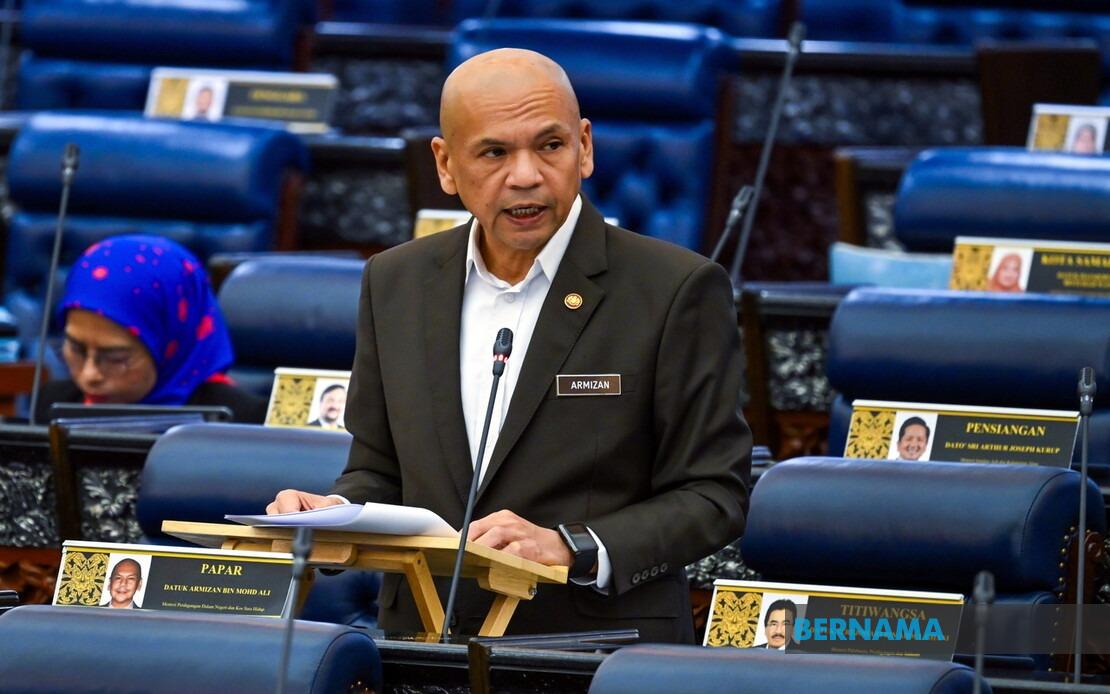
Parliament has endorsed sweeping reforms to Malaysia's competition law framework by passing the Competition Commission (Amendment) Bill 2026, a legislative milestone that equips the Malaysia Competition Commission with expanded investigative and enforcement powers. The Dewan Rakyat approved the measure through a majority voice vote on July 6 following debate from a dozen parliamentarians representing both government and opposition factions, signalling broad consensus on the necessity of strengthening market oversight mechanisms.
The comprehensive package introduces 34 separate amendments designed to modernise how authorities tackle increasingly sophisticated anti-competitive behaviour. Domestic Trade and Cost of Living Minister Datuk Armizan Mohd Ali underscored the bill's significance as a response to evolving market dynamics, particularly the growing complexity of cartel operations that continue to distort prices and limit consumer choice. His remarks reflected the government's determination to create a regulatory environment that discourages unfair trading practices while protecting legitimate business activity.
Central to the reforms is a crucial expansion of MyCC's information-gathering mandate. Previously, the commission's authority to demand information was circumscribed; the amendments now explicitly authorise MyCC to compel document and data provision specifically for conducting market reviews. This enhancement addresses a longstanding operational bottleneck that had hampered the regulator's ability to identify systemic distortions. Government agencies, private enterprises, and other stakeholders will now face clear obligations to cooperate with MyCC's investigative processes, removing ambiguities that previously complicated compliance.
The existing Competition Act, through Sections 4 and 10, already prohibits price-fixing, market allocation, production quotas, and bid-rigging arrangements alongside monopolistic abuse. However, the practical implementation of these protections had been constrained by administrative hurdles and unclear jurisdictional lines. The amendments streamline enforcement by clarifying MyCC's reach while introducing governance mechanisms to prevent regulatory overreach. Notably, Section 17A establishes a formal framework for delegating powers within the commission, ensuring that as MyCC's responsibilities expand, its internal operations remain efficient and properly supervised.
Parliamentary debate revealed substantive concerns regarding the bill's provision to grant MyCC officers direct authority to impose financial penalties and late payment charges. Opposition and government members alike flagged the risk that unfettered penalty-setting could invite abuse, particularly affecting smaller enterprises lacking resources to challenge regulatory decisions. Chong Zhemin, the Democratic Action Party representative for Kampar, articulated the challenge of calibrating penalties to serve their deterrent function without crushing business activity. His observation that fines must exceed the profits derived from violations—otherwise they become merely a cost of doing business—reflects sophisticated thinking about regulatory effectiveness.
Chong's contribution highlighted the critical distinction between deliberate cartels orchestrated by large corporations and inadvertent breaches by small firms operating with incomplete market knowledge. Overly punitive penalties applied indiscriminately could chill legitimate competition and innovation among smaller players, particularly in nascent sectors. The legislator advocated for transparent, consistently applied penalty guidelines that discriminate between egregious conduct warranting severe sanctions and minor infractions warranting remedial education and lighter consequences. This nuanced approach could preserve MyCC's deterrent power while maintaining proportionality.
Regional representation also shaped parliamentary discussion. Isnaraissah Munirah Majilis, the Warisan MP for Kota Belud, raised a compelling point about geographic enforcement disparities by proposing that MyCC establish a dedicated branch in Sabah. This proposal found echo among other legislators from Borneo constituencies, including Datuk Abdul Khalib Abdullah and Datuk Andi Muhammad Suryady Bandy, who identified enforcement gaps in Malaysia's eastern regions. Cartel activities and monopolistic behaviour frequently flourish in areas where regulatory presence is weak or distant, allowing businesses to collude on prices and restrict market access for competitors and consumers alike.
The absence of robust local enforcement capacity in Sabah and adjacent areas creates practical obstacles for complaint investigation and evidence gathering. By decentralising MyCC's operations, the government could accelerate response times and build relationships with regional business communities, facilitating voluntary compliance. Such expansion would also signal to consumers and smaller enterprises in Borneo that competition authorities take their concerns seriously, potentially unlocking underreported violations and improving market transparency across the federation.
The bill's passage reflects Malaysia's commitment to strengthening consumer protection amid economic pressures. Cartels artificially inflate prices across essential sectors—from food to fuel to construction materials—disproportionately burdening lower-income households and raising production costs for small and medium enterprises. By enhancing MyCC's investigative and enforcement tools, the government aims to create conditions where businesses compete on merit rather than through collusive arrangements. This approach aligns with regional and global best practices, positioning Malaysia's regulatory framework comparably with developed economies.
Implementation will be crucial. MyCC must develop clear, publicly accessible penalty guidelines that balance deterrence with fairness, reducing the scope for inconsistent decision-making. The commission should engage stakeholders—particularly small business associations and consumer groups—in refining procedural fairness mechanisms and appeals processes. Establishing the proposed Sabah branch and staffing it appropriately will require budget allocation and recruitment of qualified competition economists and legal experts capable of investigating complex market conduct.
Looking forward, the amendments position MyCC to address emerging challenges including digital platform monopolies, merger-related anti-competitive effects, and cross-border cartel activity facilitated by e-commerce. Southeast Asian economies are increasingly scrutinising how technology giants and regional businesses exercise market power, making robust competition enforcement essential for economic resilience. Malaysia's legislative action sends a signal that it intends to maintain competitive markets even as commercial landscape transforms, a position that will resonate with regional peers navigating similar governance questions about market power and consumer welfare.

