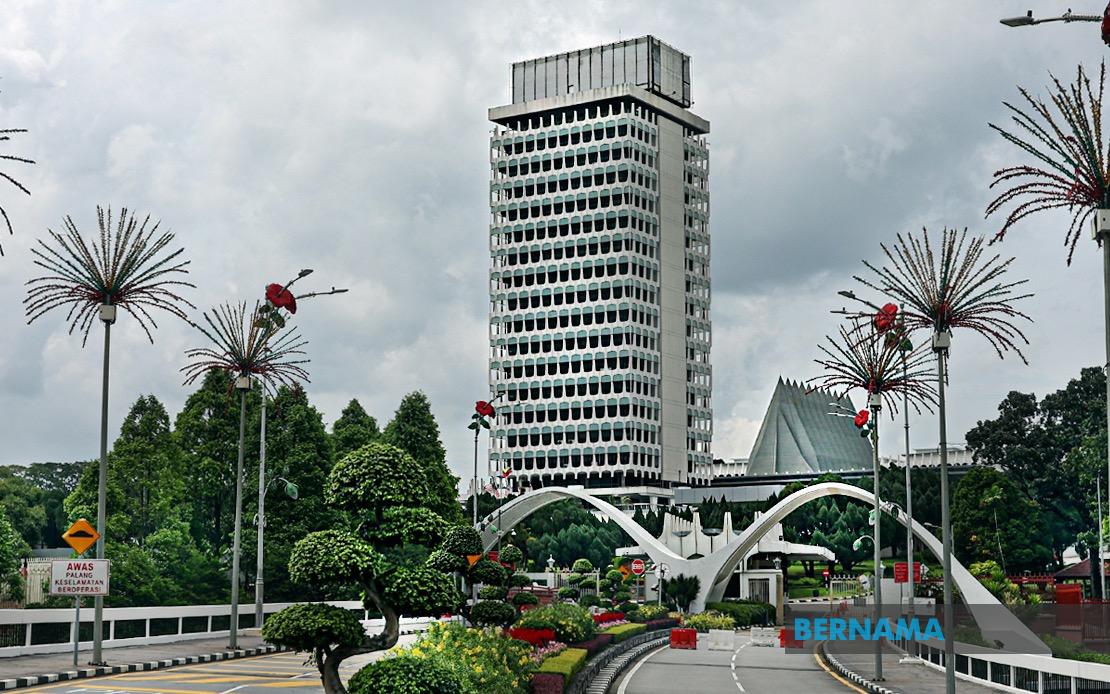
Parliament will turn its attention on June 25 to three pressing policy areas that reflect Malaysia's complex position in a volatile regional and global environment: the rollout of renewable energy schemes, the nation's diplomatic stance on Myanmar, and the delicate balance between technological advancement and data security. The 16-day sitting, which runs through July 16, will see lawmakers interrogate government ministers on progress and challenges across these fronts, signalling broad concern about how Malaysia navigates interconnected challenges in energy transition, foreign relations, and digital infrastructure.
The Corporate Renewable Energy Supply Scheme (CRESS) will draw scrutiny from Rodziah Ismail, the Ampang representative, who seeks details on implementation progress and the number of participating industries. Her questioning extends to the System Access Charge (SAC) rate review, a technical but economically significant matter that could influence Malaysia's competitiveness as a regional data centre hub. The implications are substantial for the technology and finance sectors that depend on reliable, affordable power. Concerns about operating costs for data centres, the effectiveness of the Corporate Green Power Programme (CGPP), and the viability of Battery Energy Storage Systems (BESS) will form part of the parliamentary record, ensuring government accountability on these mechanisms meant to support industrial decarbonisation while maintaining cost efficiency.
Beyond energy mechanics, parliament will probe the broader economic fallout from global energy volatility. Mohd Syahir Che Sulaiman intends to press the Minister of Economy on steps taken by the National Economic Action Council to address rising unemployment and contracting business activity. The question reflects deepening anxiety in the business community about the sustainability of current economic policies when external shocks—whether energy-related or stemming from broader global uncertainty—threaten livelihoods. The government's response will indicate whether targeted interventions exist or whether policymakers are still formulating responses to headwinds that appear structural rather than temporary.
Fuel subsidy policy, a perennially contentious issue in Malaysian politics, will also feature prominently. Datuk Seri Hasni Mohammad will challenge the Finance Minister on the rationale for standardising fuel subsidy targeting through MyKad registration and whether the 200-litre entitlement for both petrol and diesel adequately serves consumer needs. This debate touches on the perpetual tension between fiscal sustainability and consumer welfare, particularly for lower-income Malaysians who depend heavily on fuel subsidies. The standardisation approach signals a shift toward means-testing, but questions remain about fairness and implementation feasibility.
Malaysia's approach to Myanmar, a critical neighbour experiencing profound political turmoil since the 2021 military coup, will command significant parliamentary attention. William Leong Jee Keen will interrogate the Foreign Minister on how Malaysia's foreign policy stance towards the Myanmar government aligns with the Five-Point Consensus (5PC), the ASEAN-led diplomatic framework aimed at facilitating dialogue and preventing further escalation. The question assumes particular weight given Malaysia's geographic proximity to Myanmar and the potential refugee and security implications of instability. How faithfully Malaysia translates the 5PC into operational policy—balancing engagement with the junta, support for democratic aspirations, and humanitarian concerns—will reveal the practical limits of regional consensus-building in an era of polarised geopolitics.
Data sovereignty and artificial intelligence readiness emerge as parallel concerns reflecting Malaysia's ambition to position itself as a digital economy leader. Datuk Seri Amirudin Shari will probe the Digital Minister on alignment between state-level initiatives like Selangor's Dark Fiber Network and national data sovereignty frameworks. The question underscores fragmentation risks when digital infrastructure develops unevenly across states without coherent national standards. Furthermore, Amirudin seeks assurance that data sovereignty considerations are embedded in Malaysia's 2030 AI-ready nation roadmap, a legitimate concern given the geopolitical dimensions of data control and the potential vulnerabilities created by dependence on foreign cloud infrastructure or surveillance systems.
Education policy and Islamic religious instruction will receive parliamentary scrutiny through Datuk Idris Ahmad's questions to the Prime Minister on the Islamic Education curriculum's effectiveness and coordination mechanisms between federal and state religious authorities. This line of inquiry suggests ongoing concerns about educational outcomes and the risk of inconsistent standards across Malaysia's federal structure, where state Islamic Religious Councils operate with varying resources and capabilities. The question implicitly raises governance challenges in a multi-level system where curriculum design and implementation quality depend heavily on state-level capacity.
Sabah and Sarawak's constitutional settlement under the Malaysia Agreement 1963 (MA63) will also feature, with Isnaraissah Munirah Majilis pressing for clarification on implementation progress and timelines for increasing parliamentary representation for the two states to 35 percent of total seats nationwide. This issue resonates deeply with East Malaysian political identity and federal equity concerns. Movement on MA63 remains contested and incremental, making parliamentary questions an essential mechanism for tracking government commitment and maintaining pressure for promised reforms.
A Public Accounts Committee briefing on health insurance premiums and private hospital charges will address citizen concerns about healthcare affordability. The involvement of the Ministry of Finance, Ministry of Health, and Bank Negara Malaysia in this examination indicates recognition that rising health costs intersect with monetary policy, public health provision, and consumer protection. The briefing will likely generate broader debate about whether market mechanisms in private healthcare require stronger regulatory guardrails to prevent cost escalation that disadvantages middle and lower-income Malaysians.
Finally, parliament will continue deliberations on the Prisons (Amendment) Bill 2026, legislative business that addresses the penal system's operational framework. The convergence of these agenda items—renewable energy, foreign policy, data security, social equity, and institutional reform—demonstrates parliament's broad mandate to scrutinise government performance across sectors central to Malaysia's development trajectory. The sitting's extended 16-day schedule suggests substantive debate rather than ceremonial proceedings, allowing lawmakers to examine government responses and propose alternative approaches to challenges that will define Malaysia's regional standing and domestic prosperity in coming years.

