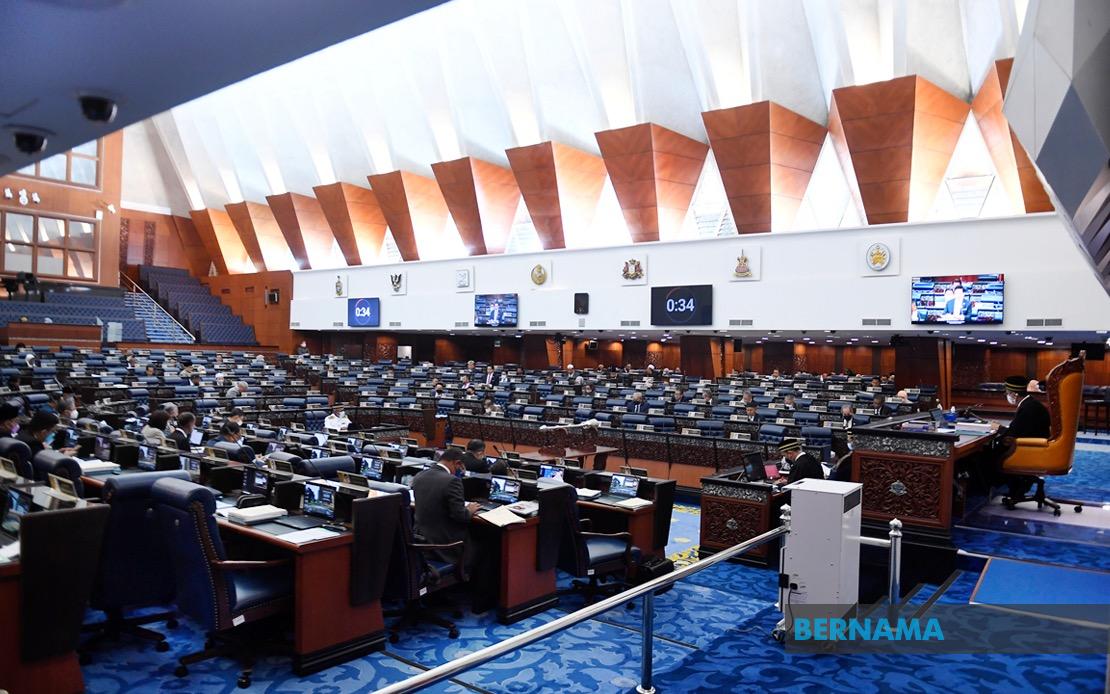
Parliament will turn its attention today to two contentious issues affecting Malaysia's federal structure and electoral integrity: the perceived imbalance in federal allocations to state governments and the enforcement mechanisms surrounding the ban on announcing government projects during election periods. Both matters strike at fundamental questions about how resources flow between the centre and the states, and how electoral rules are applied as the nation approaches state elections in Johor, Melaka and Negeri Sembilan.
Doris Sophia Brodi, the GPS member for Sri Aman, has put forward a parliamentary question challenging the federal government to justify its funding distribution model. Her query touches on longstanding grievances from several state administrations who contend that the allocations they receive do not reflect the revenue their territories contribute to the national coffers. The MADANI Government, now in its second year, faces pressure to articulate whether it has genuinely reformed the allocation mechanism or merely perpetuated inherited practices that favour certain states over others. This question carries particular weight for opposition-controlled and non-BN states seeking redress in the distribution formula.
The issue of state allocation equity extends beyond parliamentary rhetoric into practical governance. States with smaller populations or less developed infrastructure have historically argued they receive disproportionately small slices of federal funding, creating a vicious cycle where underfunded regions struggle to develop economically. Meanwhile, some claim that politically favoured states receive preferential treatment regardless of need or merit. By raising this matter in Parliament, Brodi is forcing the government to articulate its principles for resource distribution and defend them on the public record, a transparency mechanism that strengthens parliamentary accountability.
Parallel to this discussion, Shahidan Kassim from Perikatan Nasional will interrogate the government about its commitment to enforcing the election campaign code prohibiting announcement of new government projects or allocations after nomination day closes. This prohibition exists to prevent sitting governments from using public resources to campaign during election periods, a practice that would grant them an unfair advantage over opposition parties. The enforcement question becomes particularly relevant as Johor, Melaka and Negeri Sembilan approach their state elections, where the temptation to use federal announcements for political gain will be strongest.
The project announcement ban reflects tension between governance efficiency and electoral fairness. While governments argue they should be able to function normally during election periods, critics contend that strategic timing of infrastructure projects or development announcements effectively constitutes campaign activity financed by public money. Enforcement mechanisms become crucial because a rule without teeth merely creates an appearance of fairness. Shahidan's question seeks clarity on what specific measures will be deployed to prevent violations and what penalties will apply if they occur.
Beyond these governance questions, Parliament will address several issues reflecting contemporary Malaysian challenges. Ismail Sabri Yaakob has posed questions about digital literacy and artificial intelligence-generated misinformation, flagging deepfake videos and visual manipulation on social media as emerging threats to information integrity. This reflects growing concern across the region about synthetic media's potential to distort political discourse and undermine trust in genuine communications. The government's response will reveal whether it is preparing a comprehensive strategy or adopting piecemeal approaches to verification and labelling.
Chong Zhemin's inquiry into Malaysia's electricity grid capacity for data centres and artificial intelligence operations touches on crucial infrastructure planning. The AI and data centre sectors represent significant economic opportunities for Malaysia, but they demand reliable, abundant power supply. The government's readiness to meet this demand will determine whether Malaysia can position itself competitively within the region's digital economy or risks infrastructure bottlenecks that deter investment.
Questions about social safety nets, notably Awang Hashim's query on the effectiveness of the mySalam scheme for lower-income households and Syahredzan Johan's examination of the MADANI Book Voucher redemption rates, address whether government assistance programmes actually reach their intended beneficiaries. High non-participation or low redemption rates would suggest implementation challenges that require policy correction. These questions enable Parliament to monitor whether assistance translates into tangible benefit.
Mumtaz Md Nawi's focus on the Career Comeback Programme and women's workforce re-entry reflects recognition that Malaysia's talent pool requires deliberate cultivation. Many women exit the workforce for caregiving responsibilities and struggle to return, representing lost productivity and squandered human capital. The programme's effectiveness will indicate whether targeted government intervention can successfully address this structural labour market challenge.
Iskandar Dzulkarnain's question about the Program Jualan Rahmah MADANI provides Parliament with an opportunity to assess a flagship cost-of-living initiative that aims to make essential goods more affordable through government-subsidised sales. The inquiry seeks both implementation data and consideration of expanding frequency, suggesting the programme has gained acceptance but may require scaling to meet demand. This debate illuminates how the government addresses inflation pressures affecting household budgets.
Following these questions, the chamber will resume debate on the Sexual Offences Against Children Amendment Bill 2026, reflecting Parliament's engagement with child protection. Subsequently, consideration of the Employment Insurance System Amendment Bill and the Cyber Crime Bill 2026 will continue, addressing worker protections and digital security respectively. Together, these items demonstrate Parliament's workload spans from electoral integrity and federal-state relations through social policy and modern security threats.
The day's agenda reveals a Parliament grappling with both structural governance questions and contemporary challenges ranging from artificial intelligence to workforce participation. The questions posed by members across the political spectrum suggest Parliament remains a forum where these issues can be interrogated, though the sufficiency of government responses will ultimately determine whether parliamentary scrutiny translates into meaningful policy change.

