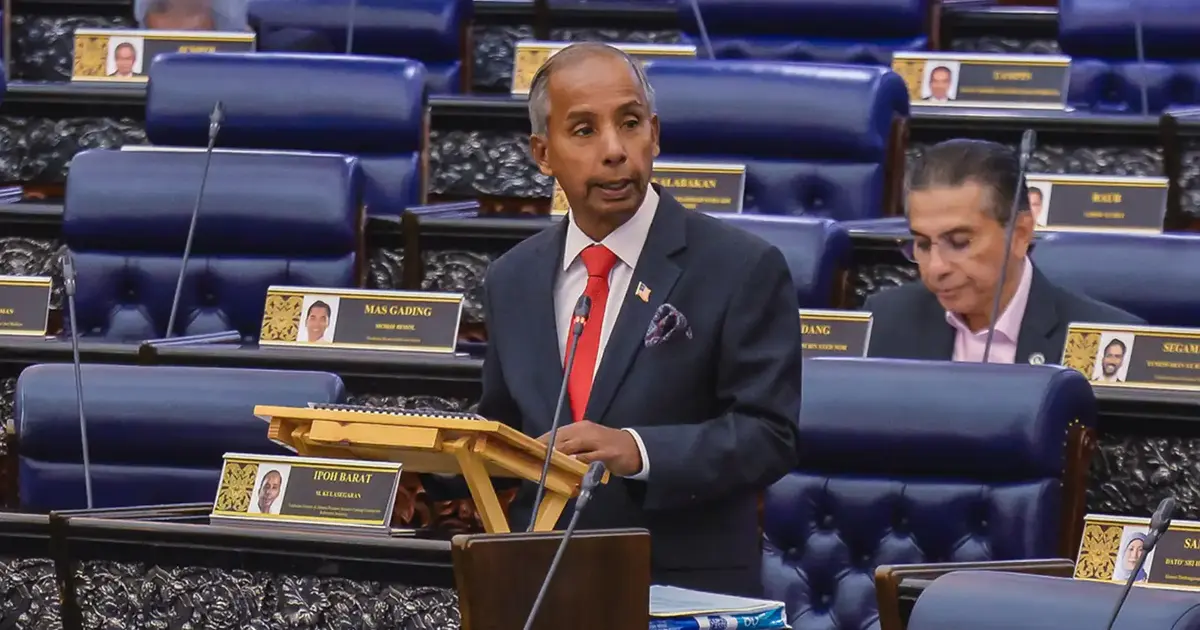
Parliamentarians could potentially obtain access to closed-circuit television footage documenting the Taiping prison disturbance, though the process hinges on approval from Malaysia's Cabinet, according to the deputy law and institutional reform minister. The official announcement reflects the government's cautious approach to releasing sensitive security documentation that intersects with both legislative oversight and active judicial proceedings.
The Taiping prison incident represents a significant security event within Malaysia's correctional system, and pressure from lawmakers to examine the footage reflects broader parliamentary concerns about operational transparency and accountability in state institutions. Opposition and government backbench members have pressed for direct access to visual records, viewing such transparency as essential to understanding the sequence of events and evaluating institutional responses. The footage would provide objective documentation of how authorities managed the disturbance and whether protocols were followed appropriately.
The deputy minister's emphasis on Cabinet approval underscores the delicate balance between legislative scrutiny and executive caution. The government must weigh competing interests: the parliament's constitutional role in holding institutions accountable, the judiciary's interest in preserving evidence integrity for ongoing cases, and law enforcement's operational security concerns. This tension frequently emerges when high-profile incidents occur within government agencies, as policymakers navigate between transparency demands and procedural safeguards.
Court cases connected to the Taiping prison riot remain active, and authorities have flagged this as a central constraint on immediate disclosure. Legal proceedings typically demand that evidence remain uncontaminated by external narratives or interpretations that might influence judicial determinations. Permitting widespread parliamentary viewing before trials conclude could theoretically provide fodder for media commentary that shapes public perception and potentially prejudices proceedings. This conventional justification, while administratively prudent, also represents the kind of barrier that transparency advocates argue unnecessarily restricts democratic oversight.
The situation reflects Malaysia's broader institutional framework, where separation of powers principles can create friction between different government branches. Parliament's investigative function and the executive's administrative prerogatives sometimes conflict, particularly when security incidents occur. The Deputy Minister's response indicates the executive is not categorically refusing access, but rather establishing conditions and requiring formal approval mechanisms. This suggests negotiations or formal requests from parliamentary leadership may eventually facilitate some form of access.
For Malaysian voters and observers, this episode carries implications beyond the immediate Taiping incident. It illuminates how government institutions manage accountability when crises occur within their jurisdiction. Prisons are fundamentally sensitive environments where force sometimes becomes necessary, yet operations must remain subject to constitutional checks. Public confidence in the correctional system depends partly on confidence that oversight mechanisms function properly and that authorities are willing to justify their actions under scrutiny.
Regional context matters as well. Southeast Asian democracies have grappled with similar questions about access to security documentation, particularly following high-profile incidents in state institutions. How Malaysia addresses this balance between transparency and procedural caution may influence regional norms regarding institutional accountability. Other ASEAN nations closely observe how established democracies navigate these tensions, using Malaysian approaches as reference points for their own governance frameworks.
The role of the Cabinet in this decision-making process is significant. Rather than the law minister or correctional authorities unilaterally determining access, the requirement for Cabinet approval demonstrates that the government treats this as a matter of broader policy importance. This elevation suggests the government recognizes the political dimensions of the decision and wants collective responsibility rather than individual ministerial exposure. Cabinet approval would theoretically represent a more considered institutional judgment, though it may also reflect an abundance of caution that frustrates those demanding immediate transparency.
Parliamentary access to security footage would likely come with restrictions, even if approved. Legislators might view footage under controlled conditions, potentially with redactions protecting operational security or ongoing investigative information. Such arrangements represent compromise positions: they provide some parliamentary access while preserving executive interests in sensitive security information. Precedent from other security incidents suggests that if Cabinet approval emerges, it will probably come bundled with procedural constraints.
The deputy minister's statement effectively kicks the decision to the Cabinet, avoiding a definitive yes or no from the law ministry itself. This approach maintains optionality while signalling that rejection is not automatic. Parliamentary delegations could potentially petition the Cabinet directly, or senior legislators might engage government leadership to advocate for approval. The outcome remains genuinely uncertain, hanging on executive deliberation rather than being predetermined by ministerial position.
For the broader principle of institutional accountability, this situation demonstrates both the strength and limitations of Malaysia's democratic structures. Parliament has legitimacy to demand answers about government operations, and the deputy minister acknowledges this by not dismissing requests outright. Yet the same system permits the executive to erect procedural barriers around sensitive information. Whether those barriers serve genuine interests or function primarily as obstacles to accountability remains a live question that political observers will continue monitoring.
The Taiping incident and subsequent parliamentary interest it generated reflects Malaysia's maturing democracy, where legislators increasingly assert oversight functions and constituencies expect institutional transparency. The challenge for policymakers lies in honoring this democratic expectation while managing legitimate operational and judicial concerns. The Cabinet's eventual decision will signal whether the government views parliamentary scrutiny as a constraint to manage or a function to accommodate within security operations.

