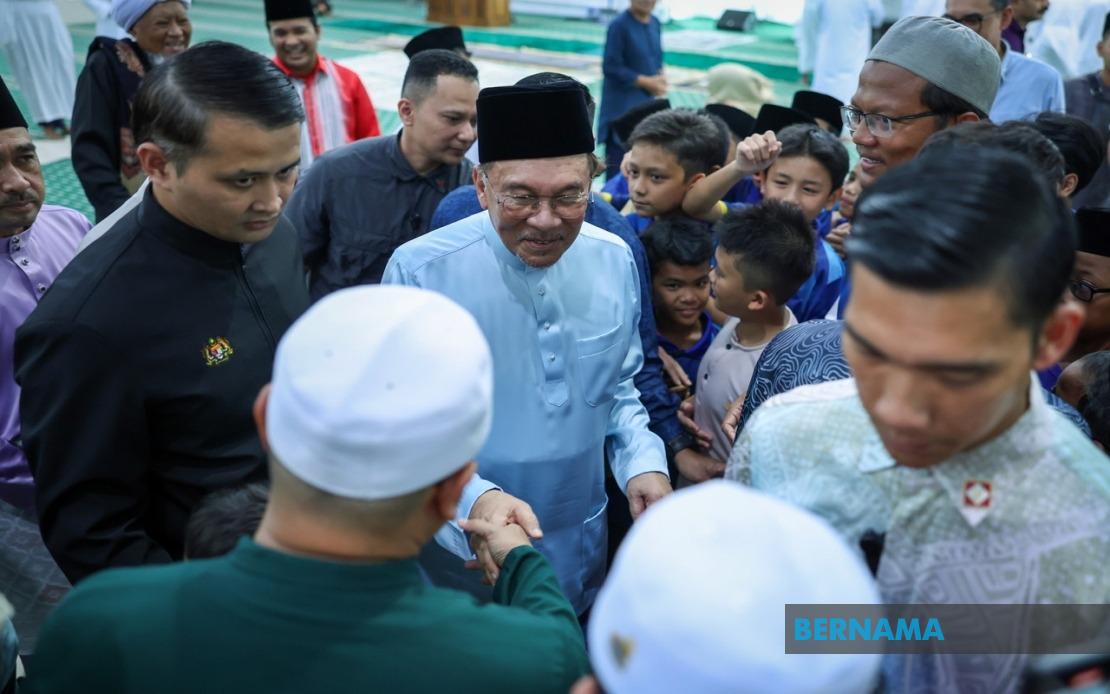
Prime Minister Datuk Seri Anwar Ibrahim has drawn a clear distinction between parliamentary allocations and personal entitlements for elected representatives, asserting that constituency funds are fundamentally meant to serve the broader population rather than individual MPs. Speaking after Friday prayers at Masjid Ar-Rasyidin in Alor Gajah, the Prime Minister emphasised that the principle underpinning these allocations has long been understood within government circles and should guide how resources are distributed across the country.
The timing of Anwar's remarks comes amid mounting pressure from several parliamentarians who have claimed the government has suspended or reduced funding to their constituencies. These grievances have largely originated from opposition-aligned MPs, creating tension around the administration's resource allocation methodology and whether political affiliation influences budgetary decisions. The Prime Minister's statement appears designed to address these concerns directly by reframing the conversation away from political considerations and towards the fundamental purpose of such allocations.
According to Anwar, constituency funds should be channelled towards tangible infrastructure and services that measurably improve residents' quality of life. He cited schools, religious educational institutions, places of worship, and essential drainage systems as appropriate beneficiaries of such allocations. This articulation suggests that the government's position is that funds must translate into concrete improvements visible to ordinary constituents rather than being absorbed through administrative overhead or political machinery.
The Prime Minister's RM2 million example serves to illustrate the scale and nature of allocations being discussed. His statement that such amounts should be earmarked for schools, madrasahs, mosques, and infrastructure repairs reflects a governance philosophy prioritising basic amenities and community welfare. This framing positions the allocation system as fundamentally separate from partisan political interests, suggesting that opposition MPs should continue receiving resources for their constituents' benefit regardless of their parliamentary standing.
Crucially, Anwar indicated that the government intends to ensure funds reach constituents directly if opposition MPs prove unwilling or unable to facilitate distribution themselves. This commitment to bypassing potential intermediaries represents a significant policy position, implying that the administration may implement mechanisms to deliver benefits to residents in opposition-held constituencies without relying on those MPs as conduits. Such an approach could reshape how constituency funds operate in practice, creating parallel distribution channels that undermine traditional MP authority over local resource allocation.
The Prime Minister's assertion that this principle has been established for an extended period carries implications for accountability. By suggesting that sitting and former government MPs would already understand this framework, Anwar appears to be suggesting that any current complaints about political discrimination in fund distribution reflect either misunderstanding or misrepresentation of long-standing practice. This positioning potentially weakens opposition claims by framing them as departures from established norms rather than new government policy.
During the same engagement, Anwar addressed a separate matter involving PKR deputy president Nurul Izzah, his daughter, who had requested to step down from her position. The Prime Minister indicated that Izzah has accepted an unspecified special programme requiring her temporary attention, though he stressed she remains engaged with party activities. While Anwar did not elaborate on the nature of this commitment, his comments suggest a planned reassignment rather than any form of suspension or disciplinary action.
The presence of Minister in the Prime Minister's Department (Religious Affairs) Senator Dr Zulkifli Hasan and Melaka Police chief Datuk Dzulkhairi Mukhtar at the event underscores the political significance of Anwar's remarks. Their attendance suggests coordination across multiple government entities regarding messaging around resource allocation and governance principles. For Malaysian readers, this signals that the constituency funding debate extends beyond simple budgetary administration into broader questions about how power and resources flow within a coalition government managing opposition-held constituencies.
The distinction Anwar articulates between allocations for constituents versus allocations for MPs themselves may appear semantically subtle but carries substantial practical consequences. It establishes that MPs function as custodians or facilitators of development in their constituencies rather than as personal beneficiaries of government funding. This conceptualisation challenges any historical practice where MPs might have claimed discretionary control over allocation spending or redirected funds towards party machinery or personal projects.
For opposition-aligned constituencies and their residents, the implications are potentially significant. If the government successfully implements systems ensuring direct fund delivery to communities in opposition-held seats, it could establish a precedent that insulates constituent welfare from partisan considerations. However, implementation challenges remain substantial, particularly in determining which projects qualify for funding and how resident priorities are identified without MP involvement in needs assessment.
The Prime Minister's comments also carry broader governance implications for Malaysia's federal system. As the country continues managing coalition dynamics and inter-party tensions, questions about resource distribution across constituencies held by different political parties will remain contentious. Anwar's clarification attempts to establish that principle trumps partisanship in this sphere, though converting stated principle into consistent practice across multiple ministries and state governments represents an ongoing challenge.
Looking forward, the constituency funding debate will likely remain prominent as opposition parties continue scrutinising whether their MPs' constituents receive equitable treatment. The government's commitment to ensuring direct delivery of services and infrastructure improvements, independent of MP intermediaries, suggests a potential shift towards more decentralised administration of these allocations. Whether this transition occurs smoothly or generates implementation complications will shape public perception of the administration's fairness and commitment to meritocratic governance principles.

